Advertisement
Women venture in Aloe vera farming for export markets
Thursday 05th January, 2023 04:30 AM|
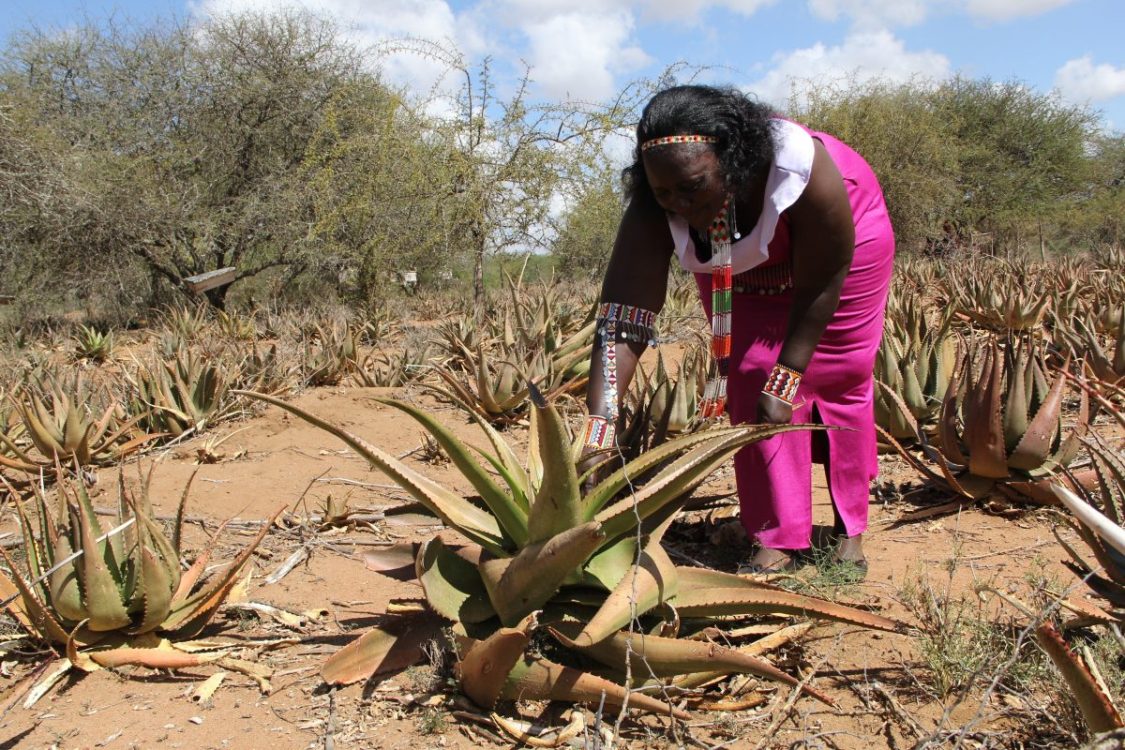
Indigenous women groups in Laikipia North sub-county are making a fortune through Aloe vera farming.
Land ownership has been a challenge and especially for the pastoral community even as the women grapple to make a living from the medicinal herb.
However, the enactment of Community Land Act of 2016, has seen majority of women included in land registers, which Ilpolei Twala Cultural Manyatta Women group director Rosemary Nenini applauds.
“Earlier, they would say if your husband is a community member, he would tag you along, which severely affected women, especially the widows. Now we are fully members of community land,” says Nenini.
She reveals that, after the land transition from ranches to community land, they have been able to engage in income generating activities such as aloe vera farming for export.
“ After the enactment of Community Land Act group ranches were turned into community land and this has really helped because all women’s names appear in the land registers unlike before. I tell men, we are not going anywhere with the land, it will still remain to be community land and all people will benefit,” notes Nenini.
Medicinal value.
She reveals that, after acquiring community land, majority of women from Laikipia North have benefited. 203 from Ilpolei Twala Cultural Manyatta Women group are direct beneficiaries of Aloe vera farming at Ilpolei.
“We grow Aloe vera, which is indigenous and has medicinal value. Right now, our Aloe is generating a lot of income for Twala women because we sell raw leaves to Lush Cosmetics, a UK based company,” she reveals.
“Aloe vera is a succulent plant known for its medicinal value. For instance, the sap can be applied on fresh wounds, it is used as an ingredient or raw material to produce several products, especially for the skin,” she says.
Nenini says before securing an export market for their Aloe vera in 2013, they used to do barter trade with their husbands, 12 Aloe vera roots for a goat. Men used the roots to make local brews mixed with honey, popularly known as “muratina.”
“Before, its roots were used by Maasai men to make traditional brew, but Laikipia permaculture trained us on how to do grow the crop and linked us with Lush Cosmetic in the UK,” revealed Nenini, who however, decries that after the outbreak of Covid-19 in 2020, export of the commodity declined.
She says, a kilogramme of Aloe vera retails at between Sh380 to Sh400 in the UK.
The 38-year-old adds that they have partnered with other women groups such as Munipicha, Nalepo Majooli, Melau, Nositua and Naserian, where they work together at the Ilpolei Twala Cultural Manyatta Women group.
She proudly says, with their partnership, they have been able to attract women from other areas who visit their farm to learn.
“I am very proud that Twala is coming up as a learning centre, women are coming to learn here on how we have succeeded as women, and how to acquire land,” notes Nenini.
Land registration
Eunice Kaparo, a member of Ilpolei Twala Cultural Manyatta Women group members says with land ownership, she has been able to practice passion fruit farming at her home.
Laikipia, which is among the 24 counties inhabited by indigenous communities, leads in community land registration for groups like Musul, Ilngwesi, Maiyanat, Lekuruki and Shulmai among others.
Ilpolei Twala Cultural Manyatta Women group which sits on a forty-acre piece of land is composed of two community lands, that is Mulichui and Illpolei.
Author
Latest News






Advertisement
More on News