Will Gigiri become UN’s biggest operational centre in Global South?
By Aloys Michael, May 31, 2026As headlines around the world focus on budget cuts, staff reductions and financial strain at the United Nations, a major development buried deep inside the UN80 Initiative Progress Report suggests Nairobi could emerge as one of the biggest winners from the organisation’s most ambitious reform programme in decades.
The report, released by UN Secretary-General António Guterres, outlines a sweeping restructuring of the UN system aimed at reducing duplication, improving efficiency and shifting operations closer to where they can be delivered more effectively.
While much of the attention has centred on a 21 per cent reduction in UN Secretariat posts for 2026, the report also reveals plans to expand common administrative platforms beyond New York to include Nairobi and Addis Ababa, potentially strengthening the Kenyan capital’s position as a critical nerve centre for UN operations.
“We will propose the establishment of common administrative platforms in Geneva, Vienna, Nairobi and Addis Ababa and the expansion of the platform in New York,” the report states.
The reforms come as the UN grapples with declining revenues, rising global conflicts and what the Secretary-General describes as a growing gap between global needs and available resources.
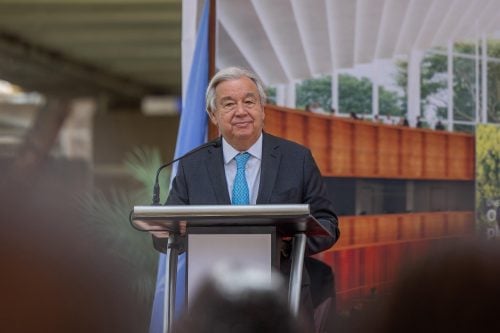
Yet Nairobi’s role appears set to grow.
The report discloses that more than 2,300 staff positions across the UN system are being geographically relocated from high-cost to lower-cost duty stations as part of efforts to improve efficiency and reduce operating expenses.
“There will be additional proposals to relocate functions to lower-cost duty stations, based on functional assessments, and proximity to operations and field presence,” the report says.
Although the UN has not specified how many of those positions could ultimately move to Nairobi, the city’s status as one of only four major UN headquarters globally makes it a prime candidate for expansion.
Diplomacy centre
The United Nations Office at Nairobi already hosts the headquarters of the UN Environment Programme (UNEP) and the UN Human Settlements Programme (UN-Habitat), making Kenya the only developing country to host a major UN headquarters.
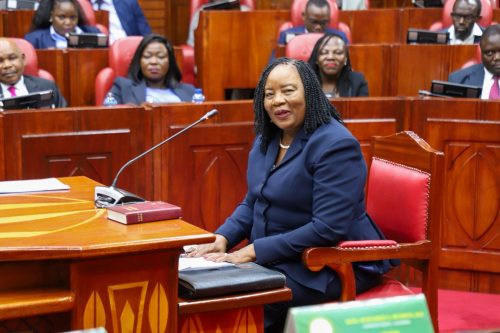
The latest reforms could significantly elevate that role.
The report notes that the New York common administrative platform currently serves more than 6,000 personnel and that similar systems are being expanded globally. The aim is to consolidate services, reduce duplication and improve operational support across the UN system.
For Kenya, the implications could extend far beyond diplomacy.
An expansion of UN operations could boost demand for office space, international schools, housing, hospitality services and aviation links. It could also strengthen Nairobi’s growing reputation as Africa’s diplomatic capital and a preferred base for international organisations.
The reforms arrive at a time when many global institutions are reassessing their geographical footprints, increasingly shifting functions away from traditional Western hubs toward regions closer to operations and beneficiaries.
The report argues that future UN structures should be guided by impact rather than institutional tradition.

“The objective is to ensure that country and regional arrangements are shaped by country priorities and needs, and effective mandate delivery, rather than by institutional inheritance alone,” it says.
That philosophy aligns closely with Nairobi’s strategic advantages. Kenya serves as a gateway to East Africa, hosts one of Africa’s busiest aviation hubs and sits at the centre of a region increasingly important to global humanitarian, climate and development agendas.
The reforms also coincide with efforts to redesign UN country and regional arrangements, improve shared services and strengthen system-wide coordination.
For Nairobi’s Gigiri district, home to the UN complex, the changes raise a provocative question: could it eventually become the largest operational hub for the United Nations in the Global South?
The answer remains uncertain. Much will depend on decisions by UN member states, future budget approvals and the pace of implementation.
However, while parts of the United Nations are shrinking, others are being repositioned for greater influence.
And if the reforms proceed as envisioned, Nairobi may find itself at the centre of that transformation.