Why Africa’s oil wealth has failed to end poverty – report
By Aloys Michael, May 11, 2026For decades, Africa’s vast oil and gas reserves have been marketed as the continent’s ticket out of poverty.
From the oil fields of Nigeria and Angola to the gas projects of Mozambique and Uganda, governments and multinational companies promised jobs, infrastructure and prosperity.
But a new report has delivered a damning verdict: Africa’s fossil fuel wealth has largely enriched foreign corporations and political elites while leaving millions trapped in poverty.
The report released on Monday, May 11, 2026, by Power Shift Africa and Oil Change International, dubbed Pipe Dreams: How Oil and Gas Fail to Deliver Economic Development in Africa, argues that the continent’s fossil fuel model has become a system of extraction rather than transformation.
Drawing evidence from 13 African oil-producing nations, the study concludes that oil and gas have failed to deliver sustained or inclusive economic development, instead fuelling inequality, corruption, debt and economic instability.
“At the heart of the crisis is a painful contradiction. The benefits have flowed to multinational corporations and elites, while communities bear the costs of pollution, lost livelihoods and economic instability,” the report reads.
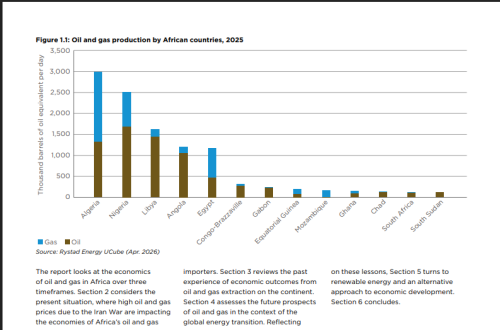
“The promise that fossil fuels will deliver development has not and will not be realised. Across Africa’s oil-producing countries, evidence shows that fossil fuels have enriched the wealthy few, undermined economic development, and left economies exposed to external shocks.”
The findings come at a time when several African governments are accelerating new oil and gas projects, arguing that fossil fuels are necessary for industrialisation and poverty reduction.
Uganda is preparing to export crude oil through the East African Crude Oil Pipeline (EACOP), while Mozambique and Namibia are pushing ahead with multi-billion-dollar gas developments.
In Nigeria and Angola, Africa’s two biggest oil producers south of the Sahara, around 40 per cent of the population still lives in extreme poverty despite decades of petroleum exports.
The report notes that many African oil exporters have recorded lower economic growth and higher inflation than non-resource-intensive economies on the continent in recent years.
One of the report’s most striking revelations is how little employment the oil sector creates. In Nigeria, despite generating billions of dollars annually, the oil industry employs just 0.01 per cent of the workforce. Angola’s oil sector employs only 0.3 per cent, while Congo-Brazzaville’s employs 0.1 per cent.
“The oil and gas economy is structured in ways that concentrate and export wealth,” the report says, describing the sector as an “enclave economy” disconnected from local industries and communities.
The Dutch disease
Instead of stimulating agriculture, manufacturing and domestic enterprise, the study argues that oil wealth often weakens them through what economists call Dutch disease, where resource exports inflate local currencies and make other industries uncompetitive.
Nigeria is presented as a cautionary tale. Before the oil boom, the country was among the world’s leading exporters of cocoa, palm oil, rubber and peanuts. But as oil revenues surged, agriculture collapsed and Nigeria became a net food importer by the 1970s.
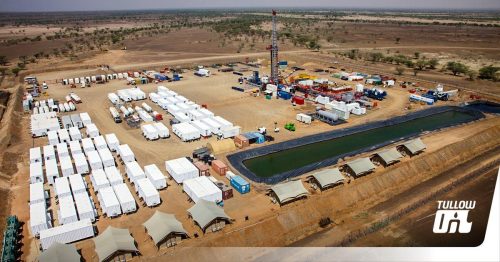
In the Niger Delta, environmental devastation compounded the economic decline. Thousands of oil spills and gas flares destroyed fishing grounds and farmland, pushing already vulnerable communities deeper into poverty.
“The result has been spiralling poverty, as the main source of livelihoods has been made unviable in many areas,” the report says.
The report also exposes how multinational corporations dominate Africa’s fossil fuel industry, often negotiating contracts that heavily favour foreign investors.
In Mozambique’s Coral South gas project, for example, the government is not expected to receive significant revenues until the mid-2030s because most early earnings are allocated to foreign companies led by Italian energy giant Eni.
Meanwhile, billions of dollars are lost annually through tax avoidance and illicit financial flows. The study cites estimates that Africa loses about Ksh5.16 trillion every year from illicit financial flows in the extractive sector alone.
Corruption bane
Corruption scandals have become another recurring feature of the oil economy. From Angola’s politically connected billionaires to Equatorial Guinea’s luxury mansions and superyachts linked to ruling elites, the report argues that fossil fuel wealth has too often fuelled kleptocracy instead of development.
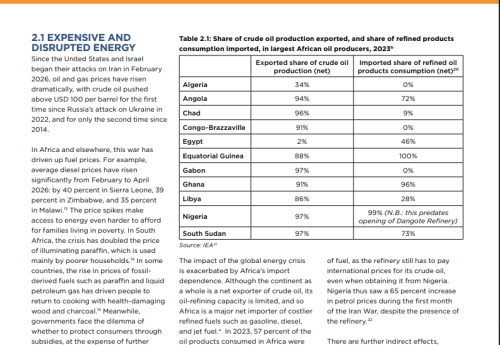
Beyond governance failures, the report warns that Africa now faces a dangerous economic trap as the global energy transition accelerates. Oil demand is projected to peak around 2030, potentially leaving new African producers saddled with stranded assets and unsustainable debt.
Countries such as Uganda, Namibia, Tanzania and Mozambique risk investing heavily in projects that may become less profitable just as production begins.
The study argues that renewable energy offers a more inclusive path for Africa’s development because it can create jobs, expand electricity access and reduce dependence on volatile global fuel markets.
“A renewable-led pathway could create millions of jobs across Africa by 2030 and beyond, far exceeding fossil fuel alternatives,” the report says, citing estimates that clean energy could generate up to 14 million jobs on the continent by the end of the decade.
Ultimately, the report challenges one of the most enduring narratives in African development, that oil wealth automatically translates into prosperity.
“The promise that fossil fuels will deliver development has not and will not be realised. Only a just transition to renewable energy can achieve that goal,” the report reads,