Advertisement
WHO declares second Ebola outbreak over
Tuesday 22nd June, 2021 12:00 AM|

Conakry, Monday
An Ebola outbreak which started in Guinea in February, infecting 16 people and killing 12, has been declared over, the West African country’s health ministry and the World Health Organisation (WHO) said.
“I have the honour of declaring the end of Ebola” in Guinea, WHO official Alfred Ki-Zerbo said on Saturday at a ceremony in the southeastern Nzerekore region where the disease surfaced earlier this year.
Health Minister Remy Lamah added: “In the name of the head of state (President Alpha Conde) I wish to declare the end of resurgence of Ebola in Guinea.”
You Might Also Like
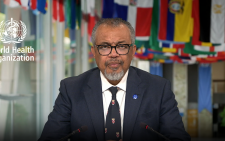
Health authorities were able to move swiftly to tackle the resurgence of the virus after lessons learned from previous outbreaks in Guinea and the Democratic Republic of the Congo.
“Based on the lessons learned from the 2014–16 outbreak and through rapid, coordinated response efforts… Guinea managed to control the outbreak and prevent its spread beyond its borders,” WHO chief Tedros Adhanom Ghebreyesus said in a statement.
Launched vaccination drive
In February, Guinea launched a vaccination drive to halt the spread of the disease.
“We managed very quickly to bring to fruition efforts around vaccination for Ebola and contain transmissions using really effective diagnostic approaches,” Sterghios Moschos, biomedical scientist and expert on viral diseases, told Al Jazeera.
Among these approaches, Moschos explained, was the implementation of ring vaccination schemes that allowed people, who were around individuals infected with Ebola, to be vaccinated very quickly and protected with 100 per cent efficacy.
Funds provided by the international community in response to the previous outbreak also played a key role in tackling this year’s Ebola crisis, Moschos explained.
“The international response that was put together to try and turn around the tide brought a lot of money to the local community which reinvigorated the health care professional training, but also brought in the local community an understanding of the disease,” Moschos said.
“Because culturally people didn’t have the experience of Ebola when the disease came across, they didn’t know how to respond to it,” he added.
Shortly after the infections were detected, national health authorities, with support from WHO) and partners, mounted a swift response, tapping into the expertise gained in fighting recent outbreaks both in Guinea and in the Democratic Republic of the Congo.
“I commend the affected communities, the government and people of Guinea, health workers, partners and everyone else whose dedicated efforts made it possible to contain this Ebola outbreak,” said Ghebreyesus, WHO Director-General.
– BBC
Author
People Daily
View all posts by People DailyLatest News
Advertisement
More on News