WHO: 40 per cent of rabies victims are children under 15
By Faith Lagat, August 23, 2025The World Health Organisation (WHO) has sounded a stark warning over the global rabies crisis, revealing that 40 per cent of victims are children under 15.
In a post on X on August 23, 2025, the agency highlighted the vulnerability of young populations in rabies-endemic regions such as Kenya.
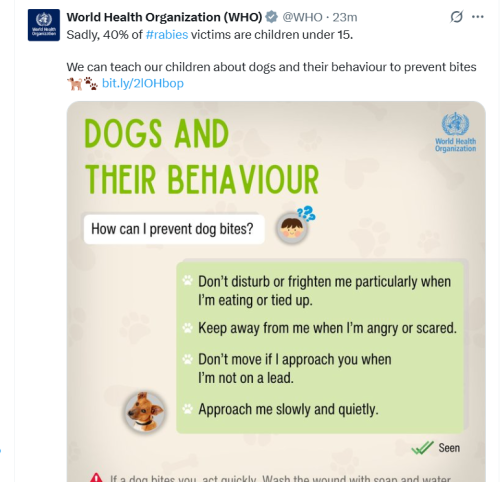
“We can teach our children about dogs and their behaviour to prevent bites,” the WHO stated, emphasising education as a vital tool in preventing this deadly yet preventable disease.
To guide communities, the organisation shared an infographic titled “DOGS AND THEIR BEHAVIOUR”, advising people to avoid disturbing dogs when eating or tied up, keep distance from aggressive or frightened animals, approach dogs calmly, and wash any bite wounds promptly before seeking medical attention.
Rabies burden in Kenya
Rabies, a viral zoonotic disease, kills a person every nine minutes worldwide despite being 100 per cent preventable.
The WHO noted that 99 per cent of human cases are caused by dog bites or scratches, making vaccination and early treatment essential.
The agency urged pet owners to vaccinate their dogs annually and stressed timely access to life-saving post-exposure vaccines for bite victims.
In Kenya, the Rabies Elimination Strategy aims to end human deaths by 2030, with strong surveillance at its core. A study published in Frontiers in Public Health in June 2025 by the International Livestock Research Institute (ILRI) and the University of Nairobi analysed national data from 2017 to 2023.
It found an average of 162 dog cases, 84 dog deaths, 53 human cases, and six human deaths per year. Researchers highlighted a weak correlation between dog bites and human cases, indicating under-reporting due to misdiagnosis, limited healthcare access, or delays in post-exposure prophylaxis.
Coordinated action needed
ILRI recommends vaccinating at least 70 per cent of domestic dogs, strengthening laboratory-based surveillance, and introducing cost-effective diagnostic tools. The WHO supports a One Health approach, combining mass vaccination, public education, and access to post-exposure treatment to eliminate dog-mediated rabies deaths by 2030.
Globally, rabies kills an estimated 59,000 people annually, with children under 15 disproportionately affected, and incurs a cost of approximately US$ 8.6 billion.
In Kenya, coordinated efforts integrating education, vaccination, and cross-sector collaboration remain key to protecting vulnerable populations. By combining prevention, treatment, and awareness, authorities aim to curb this fatal yet preventable disease, safeguarding children and communities across the country.