Advertisement
‘Whistleblowing’ against all odds – meet Tabitha Njoroge
Friday 06th March, 2020 12:00 AM|
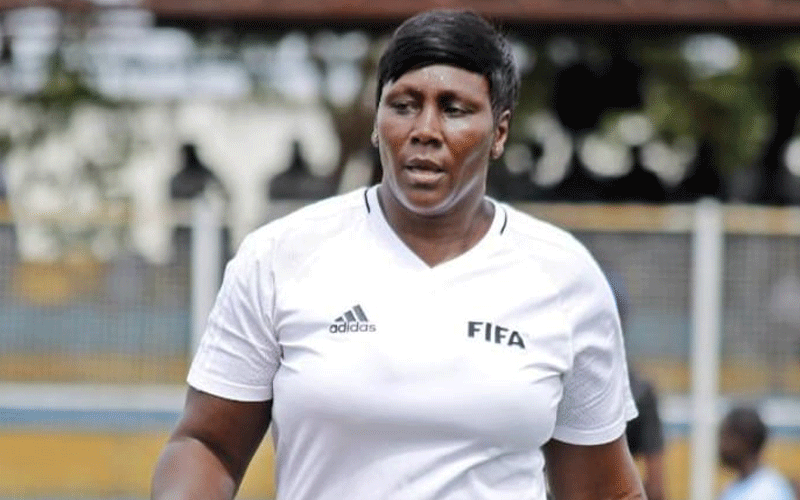
Ann Nyathira
When Tabitha Njoroge was starting out 15 years ago, there were only two women football centre referees and four assistant referees in Kenya. Today, about two thousand women are on the pitch, officiating matches.
Tabitha had always enjoyed watching football, but it was not until she saw a female referee on television officiating a match that the desire to be one was born.
For long, football officiating had been a male dominated field, making it difficult for her and other women to join the ‘boys’ club.
“I have been a referee for 15 years now and starting out was difficult. There were no many women referees to mentor and walk one through it.
One just had to grab the bull by its horns and do it anyway, even when the task at hand was made twice as hard by abuses and derogatory comments from different quarters,” she says.
She overcame adversity and doubt to become one of Kenya’s top referees, but things were not rosy.
“Other than knowing the rules of the games and avoiding making blunders, you have to work twice as hard as your male counterparts. That way they won’t see you as a woman, but a referee,” says Tabitha.
Sometimes the men would taunt her: ‘go get your family’ or ‘your place is in the kitchen where you should be doing some cleaning and cooking’.
Undeterred, she worked even harder to prove them wrong and earn her space. “That’s how we moved from local to Fifa-accredited referees,” says Tabitha.
The Fédération Internationale de Football Association (Fifa) is the highest international governing body of world football.
Tabitha believes the attitude towards female referees is changing for the better. When she was starting out, she says, there were certain teams that believed a woman could never enter the dressing room, citing it a taboo.
Some football stakeholders believed a woman wasn’t capable of handling big derbies such as the ‘Mashemeji Derby’ between Gor Mahia and AFC Leopards.
However, Tabitha says, women have officiated at such games and often performed better than some of their male counterparts.
For Tabitha and her fellow women referees, their love for the beautiful game has thrust them right in the middle of some of the biggest sporting audiences in the country.
They now blow whistles during games which they were previously excluded from for decades.
Tabitha says: “We are now mentoring others to join the space and change the way women are perceived in the game.
A decade-and-a-half ago when I was starting out, some men would deliberately scream nasty things at me to make me feel like I should not be refereeing.
“Not because I was not qualified, but just because I was a woman. We have since changed that narrative.”
She adds that women who are joining the football-refereeing career today are fortunate now that they experience less derogatory comments because of their gender.
But despite the occasional toils, she says there has “never been a better time” for the women who have decided to pick up the whistle.
“There is a significant number of female referees across the country now, particularly at the grassroots level.
To those who are starting out, just be professional in your work and your work will be appreciated.
Luckily today, the referees are a bit more supported compared to how it was back then,” she says.
Author
People Reporter
View all posts by People ReporterLatest News







Advertisement
More on News