Advertisement
Wetang’ula advocates for national healing after chaotic Saba Saba
Monday 07th July, 2025 07:00 PM|
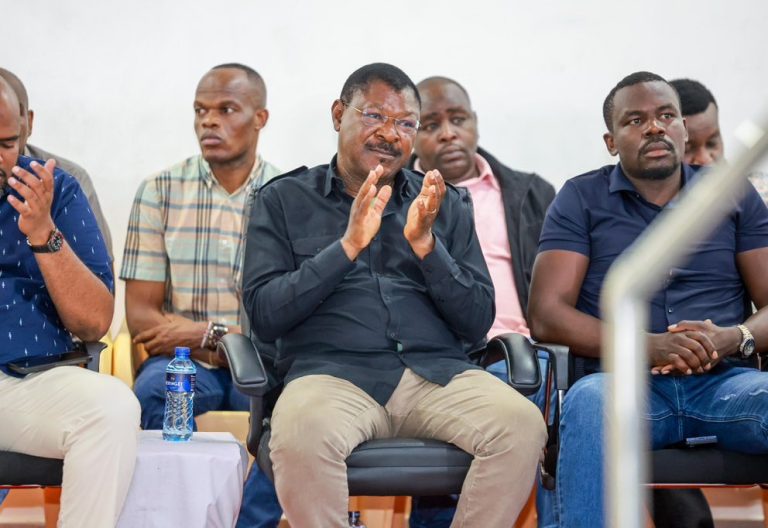
As Kenya marks the 35th anniversary of Saba Saba Day on Monday, July 7, 2025, Speaker of the National Assembly Moses Wetang’ula has called for a renewed focus on unity and healing, urging the nation to steer clear of the divisive tribal politics that threaten its democratic gains.
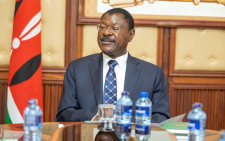
Speaking at an empowerment initiative in Mkunguni Square, Lamu West Constituency, alongside Deputy President Kithure Kindiki, Wetang’ula emphasised that this historic day—commemorating the 1990 protests for multi-party democracy—should serve as a catalyst for reconciliation rather than a platform for discord.
“Amid the protests that rocked the commemoration of the Saba Saba Day, I advocated for national healing and reconciliation,” he stated.
Call to reject divisive politics
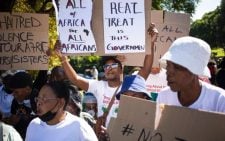
“Let Saba Saba inspire unity, not sow seeds of division,” Wetang’ula declared, addressing a vibrant crowd gathered under the banners of the Kenyan flag. His remarks come amid nationwide demonstrations led by human rights groups and Gen Z activists calling for good governance, an end to police brutality, and fidelity to the constitution.
You Might Also Like

While acknowledging the legitimacy of public grievances, Wetang’ula cautioned against leaders exploiting ethnic tensions for political gain. “I urged them not to listen to those who preach hatred, division, insults, or tribal discrimination,” he said.
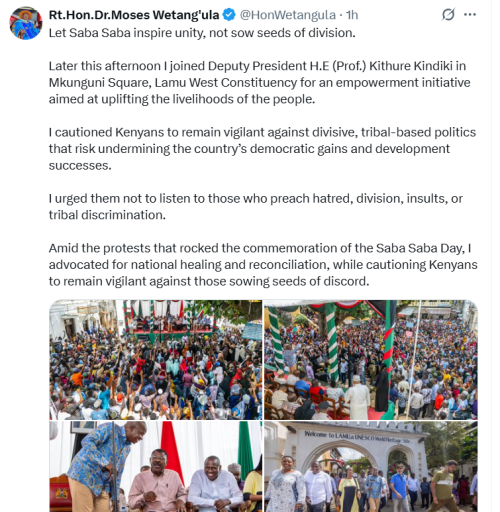
The timing of Wetang’ula’s message is symbolic, recalling the 1990 Kamukunji protests that catalysed Kenya’s multi-party era. Yet, as the country revisits its democratic journey, recent protests have also reignited conversations around citizen participation, justice, and accountability.
The Speaker’s presence in Lamu—a UNESCO World Heritage site—added cultural significance to the event.
Unity message
Wetang’ula’s advocacy for reconciliation invoked the spirit of the 2008 National Accord, signed after the post-election violence that claimed a number of lives. “Amid the protests that rocked the commemoration of the Saba Saba Day, I advocated for national healing and reconciliation,” he stated.
As Kenya stands at another political crossroads, Wetang’ula’s message underscores a critical choice: to use Saba Saba as a rallying point for national cohesion—or risk deepening historical fault lines. His call now lies in the hands of both the government and the governed to steer the country toward inclusive governance and long-term peace.
Author
Latest News

Advertisement
More on News