US increases Ebola funding by Ksh2.6B as Kenya steps up preparedness
By Kenneth Mwenda, June 11, 2026The United States has announced an additional $20 million (about Ksh2.6 billion) to support Ebola response and preparedness in East Africa, including Kenya, as concern grows over the spread of the virus in the Democratic Republic of the Congo (DRC) and Uganda.
According to a press release on June 10, 2026, the funding raises total direct US support for Ebola response efforts to more than $220 million. The money will also support wider humanitarian operations across the region, where health systems remain under pressure from repeated outbreaks.
The announcement comes at a tense moment in Kenya, where protests against a US-linked Ebola quarantine centre in Nanyuki have turned violent, leaving several dead.
Kenya included in Ebola preparedness plan
According to the US Department of State, the new funding will strengthen preparedness in countries surrounding the outbreak zone, including Kenya, Burundi, Rwanda and South Sudan.
The support will focus on:
- Emergency operations centres
- Disease surveillance systems
- Testing and laboratory capacity
- Border screening at entry points
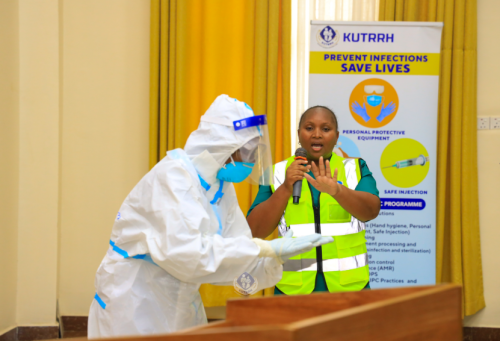
- Infection prevention and control systems
- Emergency response for suspected Ebola cases
The US said the aim is to stop cross-border spread before it reaches major population centres.
A statement from the Department of State noted:
“This additional funding will help support comprehensive preparedness activities in countries surrounding the current outbreak, including in Burundi, Kenya, Rwanda, and South Sudan.”
The US said it remains the largest financial contributor to Ebola response operations globally, working alongside the US Centers for Disease Control and Prevention (CDC) and regional governments.
Ebola outbreak pressure grows in DRC and Uganda
The current outbreak is centred in parts of eastern DRC, with spillover concerns in Uganda and other neighbouring states. Health agencies have stepped up surveillance after delays in detection and concerns over cross-border transmission.
The US says its partners are already active on the ground. In the DRC, UNICEF has delivered 150 metric tonnes of water, sanitation and hygiene supplies to frontline health facilities in Bunia, enough to support about 100,000 people for six months.
In Uganda, the International Organization for Migration (IOM) has trained about 1,000 Village Health Teams to improve community surveillance. In South Sudan, more than 30,000 travellers have been screened at entry points.
Health experts warn that weak border systems in parts of East Africa increase the risk of spread.
US-funded partners are also supporting case detection and treatment systems across affected regions.
In the DRC, mobile laboratories have been deployed to improve testing speed in outbreak zones such as Beni. MedAir and International Medical Corps are supporting about 100 health facilities, including Ebola treatment centres and general clinics that screen and isolate suspected cases.
Safe burial teams, decontamination units and community health workers are also active in high-risk areas.
UNICEF and other partners have trained rapid response teams that can disinfect homes and public spaces within 24 hours of confirmed infections.
These interventions aim to break transmission chains early, especially in densely populated and mobile communities.

Kenya protests over Ebola quarantine centre
While Kenya is part of the preparedness programme, the country is also facing domestic tension over a proposed US-supported Ebola quarantine facility at Laikipia Air Base in Nanyuki.
The centre is intended to hold asymptomatic US citizens exposed to Ebola before they develop symptoms. Kenyan authorities say it is part of wider regional protection efforts.
However, protests in Nanyuki have escalated, with residents accusing both the Kenyan and US governments of imposing risk on local communities without proper consultation.
During demonstrations, police used tear gas and water cannon to disperse crowds.
The US government says it has issued voluntary guidance for its citizens who may have been exposed to Ebola, including evacuation support from affected countries if needed. It also encourages US nationals in the region to enrol in the Smart Traveller Enrollment Programme for updates.
Kenyan health officials have maintained that border screening and surveillance systems are being strengthened in anticipation of possible cross-border cases.
The US CDC has also been coordinating with African health authorities on monitoring travel routes, especially between the DRC, Uganda and East Africa’s major transport corridors.