Advertisement
US-China trade rift widens as both powers court Europe
Sunday 15th February, 2026 01:13 PM|
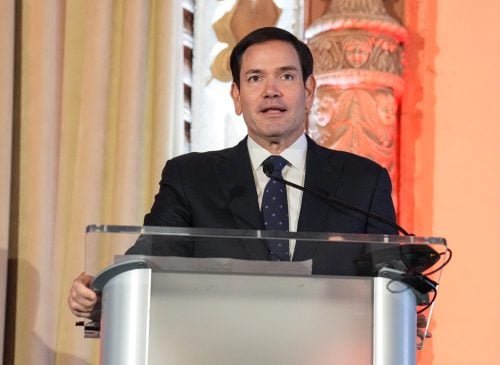
Minutes after top diplomat Marco Rubio proclaimed that the United States and Europe “belong together” in a conciliatory speech at the Munich Security Conference, his Chinese counterpart took to the stage with his own pitch.
“China and the EU are partners, not rivals,” Chinese Foreign Minister Wang Yi told his audience, speaking from the same stage.
“As long as we firmly grasp this point, we will be able to make the right choices in the face of challenges, prevent the international community from moving toward division and promote the continuous progress of human civilisation.”
The Rubio-Wang double bill came as an overhaul of US foreign policy has shaken up America’s longstanding bonds with Western allies, who now openly declare that the era of US-backed global security and rules is over.
You Might Also Like



Now, the race is underway to shape what comes next.
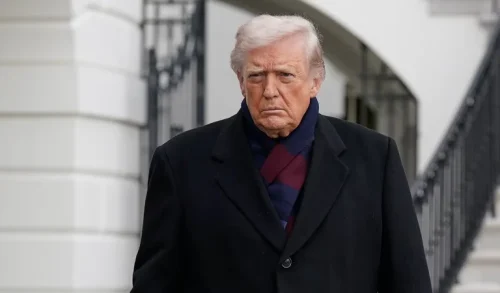
Rubio used his address at the annual security establishment get-together to reassure European leaders that President Donald Trump’s administration is committed to their alliance, even as it believes they need to do more to support it, and that the current international system should be “rebuilt.”
And Wang, a veteran diplomat who’s been the face of leader Xi Jinping’s foreign policy for more than a decade, was ready with his carefully calibrated rejoinder.
Problems with the current international system did not lie primarily with the United Nations, he said, but “certain countries that magnify differences, pursue a country-first approach, engage in bloc confrontation and revive Cold War thinking.”
China and Europe, he added – in an apparent admonition of US policy and statecraft –should together reject “unilateral practices,” safeguard free trade and oppose bloc confrontation.
Sideline meeting
US-China scramble
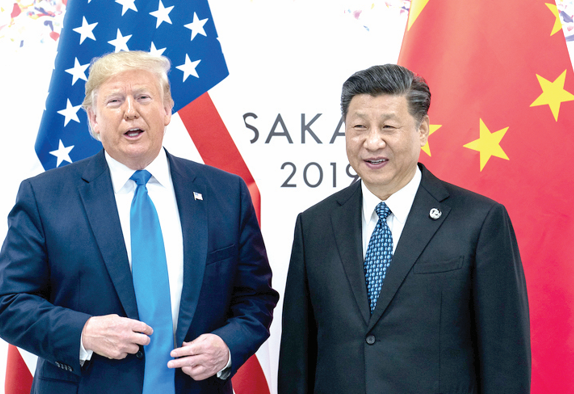
But Wang presented China’s pitch at a moment when Beijing is also looking to keep steady its ties with the US, ahead of an expected trip to China by Trump later this spring.
Stakes are high for the landmark meeting, which could cement the relative stability between the world’s two biggest economies that emerged after a Xi-Trump meeting in South Korea last fall.
When asked about the visit, Wang told a Munich audience that he was “confident” about the prospects for China-US relations but offered a warning of how their ties could go awry.
There were “two different prospects” for the countries’ relations: one in which the US can “understand China reasonably” and cooperate, and another in which the US seeks decoupling, opposes China in a “knee-jerk way” and steps on China’s “red lines,” including on Taiwan.
The latter path would likely “push China and the United States toward conflict,” he said.
Rubio also addressed the US-China relationship at the conference Saturday, with the known China hawk telling an audience during a Q&A that it would be “geopolitical malpractice” if “two of the big powers on the planet” didn’t communicate to manage areas where their interests don’t align.
Rubio and Wang also met on the conference sidelines Friday for talks that appeared to further set the stage for the expected Trump visit.
Author
Latest News





Advertisement
More on News