Advertisement
Unity among Coastal leaders is key to ensuring success of the blue Economy
Sunday 27th June, 2021 04:35 PM|
By MICHAEL CHERAMBOS
President Uhuru Kenyatta has in recent weeks gone all out to bring together political leaders from the coastal region.
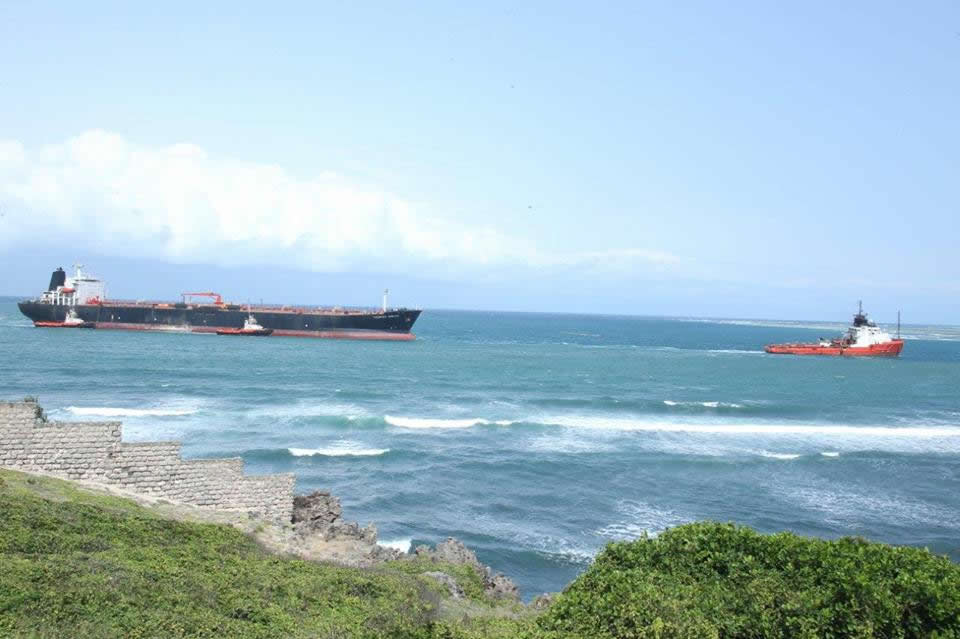
He has been categorical that unity is the key to addressing prevalent poverty in the region as it will empower coastal communities through the Blue economy, whose revival is expected to spur development in the region.
The sustainable utilization of Kenya’s ocean and blue economy resources has been singled out as an enabler of the Vision 2030 economic blueprint.
To realize this, President Kenyatta has made numerous strides in spurring the coastal blue economy.
In an initiative that began in 2017, the Presidential Blue Economy Task Force was able to identify critical interventions that would turn around the region’s economy through stakeholder participation, prioritization of ocean resources for economic growth, livelihood and jobs as well as the ocean’s ecosystem health.
This has involved various interventions in the various sectors, with maritime transport being a key consideration.
Some of the success stories so far with regard to the promotion of sustainable utilization of Kenya’s ocean resources include the reconstruction of the Liwatoni Fisheries Complex, the setting up of the Bandari Maritime Academy, training of 1,000 fishermen and the launch of the Kenya Coast Guard Service.
However, to fully capitalize on all these interventions, the region’s political leadership must be united and move towards a common goal of developing and improving the regions’ blue economy.
It has been proven through experience that the political leadership of a region plays a major role in influencing implementation of development projects as they can steer the ship towards a common purpose through unity or deter development through incessant strife among its people and the subsequent division.
For the coastal region, its economic growth is largely interdependent among the six counties, and characterized mainly by the blue economy covering fisheries and aquaculture, maritime transport, culture and tourism, environmental conservation and oil and mining.
This makes the region’s political leadership critical in establishing a workable formula that will ensure the impact is felt by all locals. This explains why President Kenyatta has emphasized on unity of the leaders.
He has been intentional in urging political leaders to forge a unified force as it is critical in enabling growth of the Blue Economy.
Through the coastal economic bloc, Jumuiya ya Kaunti Za Pwani, Kenyatta has said that the ocean and blue economy is one of the three value chains that should be prioritized county in development plans.
Keen on improving the livelihoods of Kenyans in the coastal region, the President has successfully brought together all the Coast governors to speak in one language in supporting development.
This unity of purpose is what has ensured the success of key projects that have been initiated by the national government that are openly benefitting resident in the Coastal region. Irrespective of the location of the projects, the various established projects are creating job opportunities, increasing revenue and sustaining livelihoods.
The recent agreement by Governors Hassan Joho (Mombasa), Fahim Twaha (Lamu), Dadho Godhana (River Tana), Granton Samboja (Taita Taveta), Salim Mvurya (Kwale) and Amason Kingi (Kilifi) to support marine projects initiated by the National government will have an overarching effect on the region’s economic growth.
For instance, the Sh10 billion Kenya Marine Fisheries Social-Economic Development project launched by Kenyatta will see at least 19 sub-counties in Lamu, Kilifi, Kwale and Tana River counties benefit from the project that is expected to create 60,000 jobs in the coming years with a projected revenue of Sh100 billion through harvesting of 300,000 metric tonnes of fish.
For success of such projects, unity among leaders is key since it will facilitate implementation and ensure sustainability.
This way policies, strategies and mechanisms will prove easier and faster to implement to lay ground for the success of projects.
Unity is also a key impetus in mobilizing financing for the Blue Economy, having sustainable development strategies that are people centred and promoting gender equality among other areas that can ensure success of the Blue economy.
Michael Cherambos comments on topical issues. [email protected]
Author
People Daily
View all posts by People DailyLatest News







Advertisement
More on News