UN: Hormuz crisis threatens Africa’s food security through fertiliser shock
By Aloys Michael, June 30, 2026The biggest threat from the Strait of Hormuz crisis may not be petrol; it may be the rising cost of growing food.
A new United Nations report released on Tuesday, June 30, 2026, warns that disruptions along the strategic shipping route could deepen food security pressures in vulnerable economies by increasing the cost and availability of critical agricultural inputs, especially fertilisers.
The report by the United Nations Conference on Trade and Development (UNCTAD), titled “Strait of Hormuz Disruptions Beyond Reopening: Lasting impacts on vulnerable economies,” says the economic impact of the crisis extends far beyond energy markets.
While attention has focused on oil prices and fuel supplies, the report highlights another major risk: higher fertiliser costs that could affect farmers, food production and household budgets across developing regions, including East Africa.
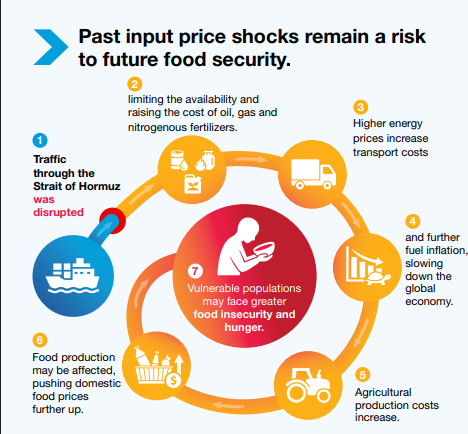
“Disruption to traffic through the Strait of Hormuz limited the availability and raised the cost of oil, gas and nitrogenous fertilisers,” UNCTAD says
The report warns that higher energy prices increase transport costs and further fuel inflation, creating pressure across food supply chains.
For East African farmers, already dealing with high input costs, the shock could come at a difficult time. Fertiliser prices directly influence the cost of planting and harvesting staple crops such as maize, wheat and other cereals.
If production costs rise, farmers may be forced to reduce fertiliser use, pass costs to consumers or cut production, all of which could increase vulnerability in food markets.
The UN report explains that energy disruptions can quickly spread into agriculture because modern farming relies heavily on fuel, transport and fertiliser supply chains.
“Agricultural production costs increase,” the report states, warning that food production may be affected and domestic food prices could rise further.
For Kenya and the wider East African Community (EAC), the concern is that a distant geopolitical crisis could eventually reach local markets through the price of food.
Higher fertiliser and fuel costs could increase expenses for farmers, traders and transporters. Those costs are eventually reflected in the price consumers pay for basic commodities.
The impact could be especially serious for households already facing high living costs. Food inflation can reduce purchasing power and force families to spend a larger share of their income on essentials.
“Vulnerable populations may face greater food insecurity and hunger when energy and agricultural input shocks persist,” UNCTAD says.
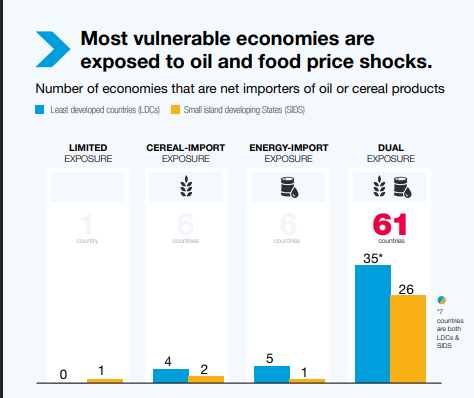
The report notes that vulnerable economies are particularly exposed to oil and food price shocks, especially where governments have limited resources to cushion citizens.
For governments in East Africa, the crisis could increase pressure to intervene through measures such as fertiliser support programmes, strategic food reserves or policies aimed at stabilising food markets.
However, public finances remain a challenge. UNCTAD warns that trade shocks hit hardest where countries have limited ability to respond, citing debt pressures and constrained resources.
The report adds that the effects of the disruption may last beyond the original crisis because “short-lived energy shocks can have long-term consequences.”
Although the reopening of the Strait of Hormuz may ease pressure on global energy markets, recovery will not happen evenly. Shipping networks and supply chains require time to adjust.
For Africa, the lesson is that food security is closely tied to global trade routes. A disruption thousands of kilometres away can affect what farmers pay for inputs and what households pay for food.
The next Hormuz shock may therefore not arrive at the fuel pump; it may arrive in the farm field and the family kitchen.