Advertisement
Trump lays out case for possible attack on Iran
Wednesday 25th February, 2026 12:46 PM|

United States President Donald Trump briefly laid out his case for a possible attack on Iran in his State of the Union speech to Congress on Tuesday, February 24, 2026, saying he would not allow the world’s biggest sponsor of terrorism to have a nuclear weapon.
Even while assembling a massive military force in the Middle East, Trump has done little to explain to the American public why he might be leading the U.S. into its most aggressive action against the Islamic Republic since its 1979 revolution.
In his speech, Trump pointed to Tehran’s support for regional proxies, its killing of protesters and the country’s missile and nuclear programmes as threats to the region and the United States.
“The (Iranian) regime and its murderous proxies have spread nothing but terrorism and death and hate,” the Republican president said about 90 minutes into his annual address to a joint session of the Senate and House of Representatives.

You Might Also Like
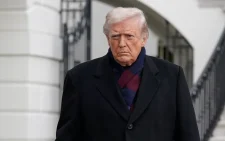


He accused Iran of restarting its nuclear programme, working to build missiles that “soon” would be capable of reaching the United States and of being responsible for roadside bombings that have killed US service members and civilians.
Iranian state media have claimed that Tehran is developing a missile capable of reaching North America.
“They’ve already developed missiles that can threaten Europe and our bases overseas, and they’re working to build missiles that will soon reach the United States of America,” Trump said during his State of the Union address.
In 2025, the US Defence Intelligence Agency said Iran could potentially develop a militarily viable intercontinental ballistic missile by 2035 “should Tehran decide to pursue the capability,” but did not say if it had made such a decision.
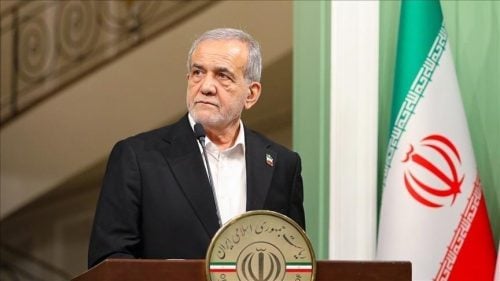
Tehran currently possesses short- and medium-range ballistic missiles with ranges that top out at about 1,850 miles (3,000 kilometres), according to the US Congressional Research Service.
The continental United States is more than 6,000 miles from Iran’s western tip.
The run-up to Trump’s address was overshadowed by the build-up of US military forces in the Middle East and preparations for a possible conflict with Iran that could last for weeks if Tehran does not reach a deal to solve a long-standing dispute over its nuclear programme.
Trump has repeatedly expressed frustration with negotiators’ failure to reach an agreement. “They want to make a deal, but we haven’t heard those secret words, ‘We will never have a nuclear weapon,’” Trump said in his speech.
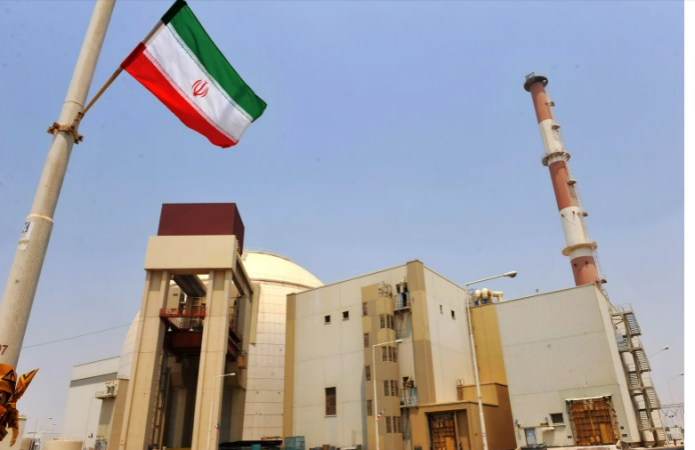
Iran’s Foreign Minister Abbas Araghchi said on Tuesday that a deal with the US was “within reach, but only if diplomacy is given priority”, days ahead of a fresh round of talks between the two sides in Geneva.
“We have a historic opportunity to strike an unprecedented agreement that addresses mutual concerns and achieves mutual interests,” Araghchi said in a post on X.
Iran says its nuclear research is for civilian energy production but asserts that it has a sovereign right to nuclear enrichment.
Trump also faulted the government in Tehran for the deaths of thousands of protesters during recent anti-government demonstrations, although the specific figure he cited, that 32,000 people had been killed, is much higher than most public estimates.
Secretary of State Marco Rubio held a briefing on Iran hours before the speech for Congress’s “Gang of Eight”, composed of the leaders of the Senate and House of Representatives and the two chambers’ intelligence committees.
“First and foremost, if they want to do something in Iran, and who the hell knows what it is, they should make it public and discuss it with the public and not keep it in secret. When you do these military operations in secret, it always causes longer wars, tragedy, more expenses and mistakes,” Senate Democratic Leader Chuck Schumer told a press conference shortly before the classified session.
Author
reuters
View all posts by reutersLatest News








Advertisement
More on News