Advertisement
Treasury under fire for snubbing MPs over debt
Friday 08th August, 2025 04:00 AM|
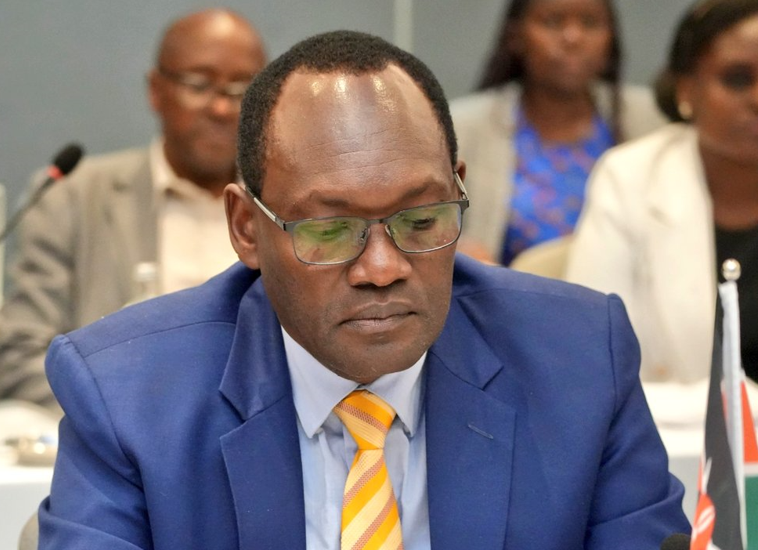
National Treasury failed to be represented before Parliament to address a contentious Sh30 billion debt owed to Kenya Power for rural electrification.
The amount which Kenya Power has booked in its financial statement as a receivable item from the national government has been deemed by Treasury as “not commercially viable,” sparking outrage from MPs who say marginalised areas remain in the dark.
The Public Investments Committee on Commercial Affairs and Energy had scheduled a roundtable meeting to find solutions for persistent power outages in marginalised regions. The committee expressed outrage over the continued neglect of critical energy infrastructure in rural Kenya. The meeting was to include key stakeholders from the energy sector.
Among those invited were the Ministry of Energy, Kenya Power, and the National Treasury.
You Might Also Like



However, only the Ministry of Energy, represented by Principal Secretary Alex Wachira, showed up for the meeting. The absence of the National Treasury’s PS, who is the designated accounting officer, made the meeting inconclusive.
Last-mile agenda
The committee members voiced their frustration over the Treasury’s actions, with David Kiplagat (Soy MP) stating that the Treasury’s excuse for not funding the debt was an “insult” to the government’s last-mile agenda.
“This government does a lot in the social space, even when it’s not commercially viable, because it’s a moral responsibility. We have a two-page document from the PS Treasury saying the Sh30 billion owed to KPLC is not commercially viable to fund. That is an insult to the government’s last-mile agenda. The PS should come back with submissions that align with government policy,” he said.
The debt in question is owed to KPLC for the Rural Electrification Scheme (RES). The committee had convened to deliberate on this debt and other issues related to inadequate energy infrastructure. The persistent power outages in marginalised regions have been attributed to non-functional lithium batteries and inadequate fuel infrastructure at mini-grid stations.
With total receivable at Sh39 billion, the state utility could be forced to write it off, leading to lost revenue and serious financial repercussions for a company just emerging from years of loss making. The committee’s Vice-chair John Ariko of Turkana South, raised concerns that the Treasury’s continued inaction was sabotaging rural electrification programmes.
He pointed out that these programmes are meant to uplift marginalised communities. Ariko’s remarks highlighted the human impact of the Treasury’s delay, noting that many rural areas still live in darkness.
“We are speaking of places like Elwak, Kakaba, Mfangano, Fatuma Solar in Mandera, Halado, and Fiba mini-grids in Wajir, and many more. These areas still live in darkness because batteries don’t work, and fuel tanks are too small,” he said.
“Treasury owes KPLC Sh30 billion, and now tells us they will only ‘consider’ repayment in the next fiscal year. Is it because they walk around with money in their pockets?” posed Ariko.
The committee’s scrutiny of the energy sector follows an examination of Auditor General’s reports on KPLC and the Kenya Electricity Transmission Company Ltd (Ketraco) for the financial years 2018/2019 to 2022/2023.
These reports flagged several issues, including outstanding receivables, stalled rural power projects, and pending wayleave compensations. Key transmission lines such as Ndhiwa-Sondu and Narok-Bomet have been affected by these issues.
Maina Mathenge of Nyeri added to the chorus of condemnation, stating that the PS Treasury had a constitutional duty to appear before the committee.
The PS was required to account for funds flagged by the Auditor General. Mathenge stressed the seriousness of the matter and the constitutional obligation of the Treasury to be accountable.
Ariko also weighed in again on the matter, labelling the Treasury’s actions as “shameful” and unacceptable.
“This matter is not a joke. The PS Treasury should have addressed these issues long ago. It’s unacceptable to profile regions and say they are not viable for electrification. That’s not just wrong, it’s shameful,” he stated.
Key stakeholders
The committee will now reschedule the meeting for the following week, hoping that all key stakeholders, including the National Treasury, will be present to find a way forward.
The parliamentarians’ strong sentiments reflect a growing concern over the financial health of the energy sector and its impact on the nation’s development goals.
The debt owed to KPLC is a critical issue that, if not resolved, could continue to hinder electrification efforts in remote and underserved areas.
The committee’s persistent push for accountability underscores its commitment to ensuring that public funds are used effectively and that government policies are implemented as intended.
Author
John Otini
View all posts by John OtiniLatest News


Advertisement
More on News