Advertisement
Transparency gaps, technical glitches flagged in February 26 by-elections
Sunday 01st March, 2026 04:31 PM|

The Elections Observation Group (ELOG) has raised concerns over transparency gaps and technical glitches in the February 26, 2026, by-elections, while describing the overall process as generally credible, peaceful, and compliant.
In its preliminary statement released on February 27 and circulated on X on March 1, ELOG highlighted weaknesses during the closing, counting, and results declaration stages.
About 20% of presiding officers did not publicly read ballot box seal serial numbers, a key step for public verification.
Additionally, 27.3% of polling stations failed to post results forms immediately, limiting access for voters and party agents and undermining real-time transparency.
You Might Also Like

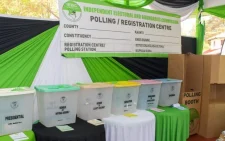
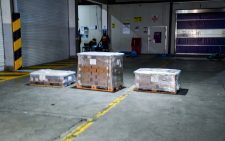
“The counting phase was conducted in a calm, orderly, and procedurally compliant environment. Ballot box seals were intact before counting. However, critical transparency gaps were observed: 20% of presiding officers failed to read seal serial numbers publicly, and 27.3% of stations failed to post results forms publicly,” it said.
Observers report technical challenges
ELOG deployed 18 stationary observers across Isiolo (40%), Kakamega (30%), and Embu (30%) counties, covering Isiolo South Constituency and the wards of West Kabras, Muminji, and Evurore.
Observers monitored all phases from polling station opening at 6:00 a.m. to results announcement, achieving full data coverage. While polling stations opened in an orderly manner with full security presence and core transparency safeguards, KIEMS biometric identification experienced failures in 30% of observed stations.
Fallback alphanumeric kits were successfully used in 90% of these cases, but recurring issues exposed vulnerabilities in electronic voter verification.
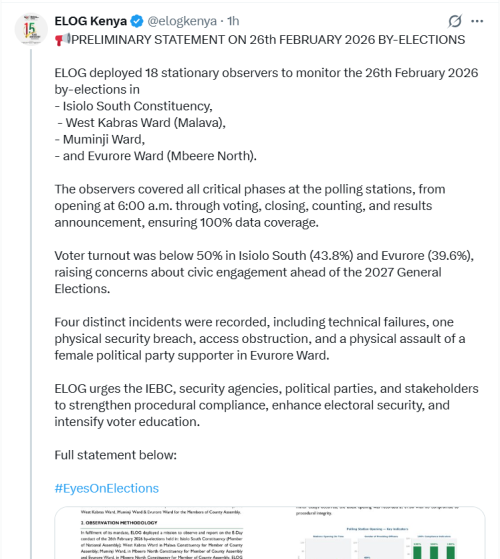
Voter turnout was low in several areas, with Isiolo South at 43.8%, Evurore at 39.6%, West Kabras at 49%, and Muminji at 55.2%, raising concerns about civic engagement ahead of the 2027 general election.
Incidents and recommendations
Four critical incidents were documented, including technical failures, access obstruction, one election-related arrest, and the physical assault of a female supporter in Evurore Ward.
Observers also reported rival party members blocking vehicles over “vote guarding” concerns, reflecting mistrust in security. Candidates from the United Democratic Alliance (UDA) won all four seats, with Mohamed Tubi claiming about 93% in Isiolo South.
ELOG noted improvements compared to the November 2025 by-elections, with no “super agents” or organised violence observed. Still, the group emphasised that unresolved transparency failures, technical glitches, low participation, and security lapses are systemic vulnerabilities that could threaten future elections.
ELOG urged the IEBC to enforce standardised training, hold officials accountable for non-compliance, consistently prosecute electoral offences while protecting vulnerable groups, and intensify voter education campaigns to boost participation and confidence in the electoral process.
Author
Latest News








Advertisement
More on News