TI-Kenya presses EACC to enforce anti-bribery compliance
By Faith Lagat, July 31, 2025Transparency International Kenya (TI-Kenya) is urging the Ethics and Anti-Corruption Commission (EACC) to ramp up enforcement of the Anti-Bribery Act, 2016, citing widespread non-compliance across public and private institutions.
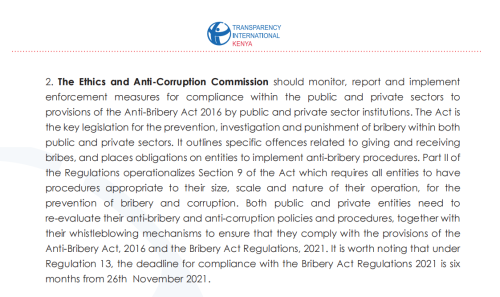
“Both public and private entities need to re-evaluate their anti-bribery and anti-corruption policies and procedures, together with their whistleblowing mechanisms, to ensure that they comply with the provisions of the Anti-Bribery Act, 2016, and the Bribery Act Regulations, 2021,” read part of their report released on July 31, 2025.
The call, issued alongside the release of the Kenya Bribery Index 2025, highlights the persistent threat bribery poses to service delivery and public trust in governance systems.
According to TI-Kenya, the Anti-Bribery Act remains the cornerstone legislation in combating corruption, detailing offences related to offering and receiving bribes, while also requiring organisations to establish anti-bribery procedures.
“The Ethics and Anti-Corruption Commission should monitor, report, and implement enforcement measures for compliance,” TI-Kenya said, stressing that enforcement is essential for holding institutions accountable and eliminating loopholes that facilitate bribery.
The organisation also emphasised that institutions must re-examine their internal controls, including whistleblowing mechanisms, to align with both the Act and the Bribery Act Regulations, 2021. Part II of the regulations operationalises Section 9 of the Act, requiring organisations to implement anti-bribery measures proportionate to their size, scale, and operations. Despite a legal deadline of May 26, 2022, for compliance with Regulation 13, many entities have yet to meet this obligation.
Lingering gaps in enforcement
Findings from the 2025 Bribery Index paint a grim picture of ongoing corruption, with high-risk sectors such as policing, land services, and the judiciary still topping the list of institutions most vulnerable to bribery. TI-Kenya noted that only 17 percent of respondents reported bribery incidents, reflecting low public confidence in existing reporting channels.
The organisation urged the EACC to prioritise publishing compliance reports, conducting regular audits, and taking enforcement action where institutions fail to meet legal thresholds.
“Without meaningful enforcement, the Act remains a paper tiger,” the statement read, adding that a more aggressive stance by the EACC would deter impunity and rebuild trust in anti-corruption systems.
TI-Kenya also called on institutions to bolster whistleblower protections and create safe avenues for citizens to report corruption without fear of retaliation. Enhanced reporting frameworks, it noted, are critical to increasing accountability and empowering the public to take an active role in the fight against bribery.
As Kenya continues to grapple with high-profile corruption scandals, TI-Kenya maintains that full compliance with the Anti-Bribery Act and its accompanying regulations is not optional but a fundamental requirement for a transparent, accountable society. The organisation concluded that the EACC’s leadership and enforcement actions will determine whether anti-corruption reforms take root or remain elusive.