Advertisement
State’s student loans groupings face concerns of discrimination
Monday 18th August, 2025 02:00 AM|
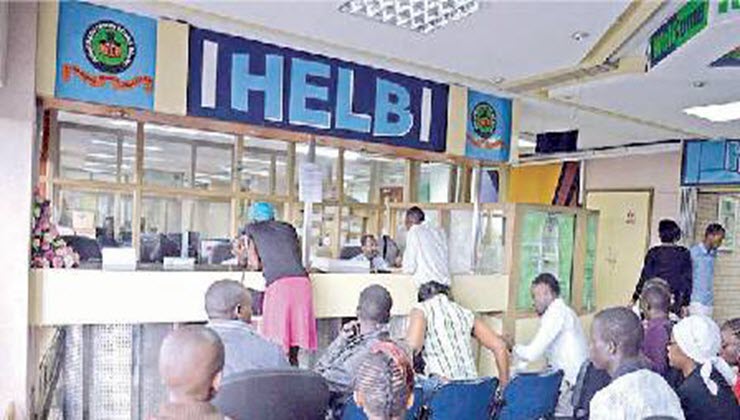
President William Ruto’s administration has consistently projected a commitment to lowering the cost of university education. But beneath the rhetoric, the administration has refused to soften its stance on a controversial funding model that categorises students by financial need and the cost of their chosen programmes.
Education Cabinet Secretary Julius Migos Ogamba announced at the weekend that, under the directive to ease the burden of higher education, students will now pay between Sh5,814 and Sh75,000 per semester.
“The variation depends on the student’s financial background and the programme they are enrolled in,” Ogamba explained.
So far, the Higher Education Loans Board (Helb) has awarded loans to 136,634 first-year applicants for the 2025/2026 academic year under the Student-Centred Funding Model. Students have been asked to confirm their upkeep loan allocations through the HELB portal and coordinate with their universities for tuition settlement.
You Might Also Like
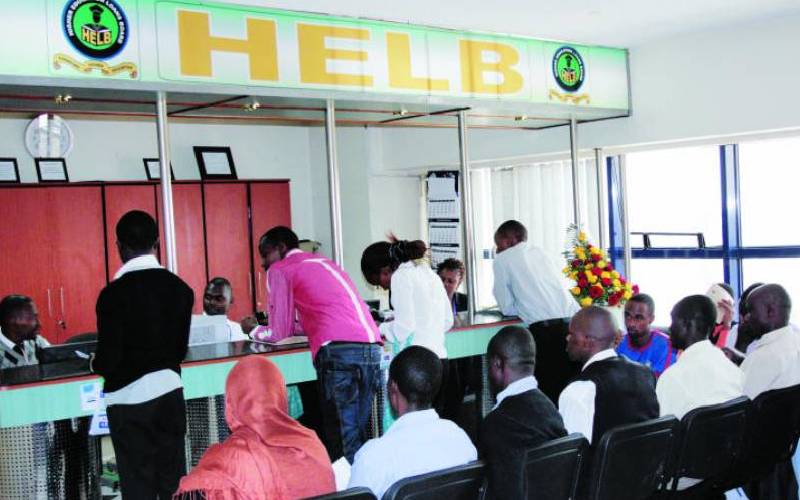

According to the CS, this arrangement underscores government’s resolve to ensure “no qualified student is left behind because of financial constraints.”
But for many, the model represents more exclusion than inclusion.
The Student-Centred Funding Model was suspended in October 2024 after the Kenya Human Rights Commission (KHRC), the Elimu Bora Working Group and the Students’ Caucus challenged it in court, arguing it had been imposed without genuine public consultation. Justice Chacha Mwita agreed with the petitioners, declaring it unconstitutional in December.
Government officials have however defended the model. Former Universities Fund CEO Geoffrey Monari argued it was rolled out after “robust public participation” and struck a better balance between equity and efficiency than the previous system. In March this year, the Court of Appeal overturned the High Court ruling, reinstating the model while awaiting a final decision.
Controversy persists
Still, controversy persists. At the heart of the dispute is the Means Testing Instrument (MTI), a tool used to classify students according to their level of need.
Youth groups argue the MTI is unfair and often fails to capture the true realities of struggling households. Seme MP Dr James Nyikal dismissed it as “impractical”.
“I don’t see how you can do it online because you have to take time and at least go and see how the subjects are living. Or if you developed an instrument, you have to validate it by seeing how it performs. And if you have done it for a year, then you should verify whether this really gives you the results you expect,” Dr Nyikal told a local TV station.
Education stakeholders, including the founder and chief mentor of Swahilipot Hub in Mombasa, Mahmoud Noor, has also called for a thorough review of the model.
“The model is commendable because it considers needy students who lack the resources to access education. However, if poverty prevents these students from benefiting, the equalising aspect of education loses its significance,” he noted, pointing out flaws in the MTI used to assess students’ financial need.
Noor pointed to the reality in remote areas such as Turkana, Tana River, and the north-eastern counties, where poverty is compounded by lack of internet access.
“Some of these students cannot afford a smartphone, let alone access a cyber café. Expecting them to apply online is simply unrealistic,” he said.
Despite repeated warnings, the government appears unmoved, determined to enforce a model that critics say could deepen inequality in the very sector meant to level the playing field.
Author
Reuben Mwambingu
View all posts by Reuben MwambinguLatest News







Advertisement
More on News