Advertisement
Stakeholders raise red-flag over 2027 election violence
Tuesday 22nd July, 2025 03:20 AM|
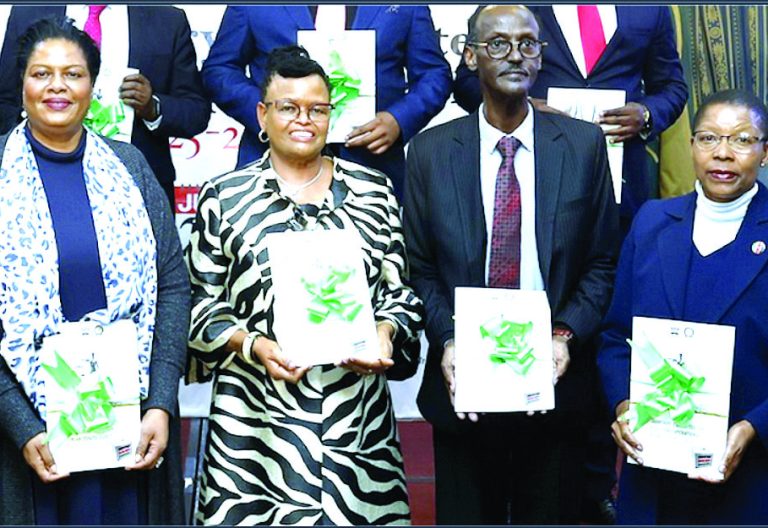
Players in the justice system are raising concerns over the likelihood of election-related violence erupting in 2027, similar to the aftermath of the 2007 polls.
Utterances by politicians and the resurgence of militia groups sighted during the recent protests have been cited as critical indicators that the country may experience a repeat of election violence
Chief Justice Martha Koome said data from the government’s security machinery revealed that there are about 300 active criminal gangs in the country.
“In the National Council on the Administration of Justice meeting last week on Tuesday, we were shocked by the revelation in the National Crime Centre report that there are about 300 militias that are operating in this country. They are unleashing violence, especially during these political meetings,” she said during the launch of the Judiciary Committee on Elections’ operational plan for 2025 to 2028 on July 21, 2025.
Hate speech
You Might Also Like
She told the incoming committee which will be chaired by Supreme Court Judge Njoki Ndung’u the criminal gangs and hate speech being spewed by politicians are some of the challenges that they will encounter.
“Right now, we are being told to be wary of the risks that have manifested themselves and will probably continue escalating up to 2027,” the CJ said.
According to Koome, government agencies involved in electoral matters also need to roll out such plans in earnest since the country has already entered into the electioneering period prematurely and the prospects of highly competitive general elections.
“Every organisation, including the political parties’ tribunal, must come up with their own operational plan. Equally, Director of Public Prosecution (DPP) will come up with their own plan of how to prosecute electoral offensives, including hate speech I believe the Independent Electoral and Boundaries Commission (IEBC) will have to come up with many (operational plans) so that they can engender confidence in all the processes, including the procurement of votes and the voter register,” Koome added.
Law Society of Kenya (LSK) President Faith Odhiambo asserted that it was shameful for elected leaders to issue inflammatory sentiments that undermine the integrity of the IEBC.
Such talks, she emphasised, will bring the country to the brink of collapse and anarchy, adding that they will also undermine the will of the person who will be declared as the winner by the electoral body.
Collapse and anarchy
“Statements being made openly and without shame, by persons elected under oath to defend the constitution, present a challenge in the next election, and simply cover it by saying we (they) will steal the vote. The question of not serving just one term, and it would be stupid to do the same, and whichever the will of the people, they will ensure they do what they want. This is very dangerous, because it undermines the institution of the IEBC, the very institution that people have relied on to deliver a credible election, and to ensure that people accept what is democratically determined, and people move together as a country,” Odhiambo said.
Electoral Law and Governance Institute for Africa (ELGIA) Executive Director Felix Odhiambo noted that the 2027 general elections, as comparable risks to 2007 underscored by the fact that the incumbent president will be seeking to be re-elected.
He also echoed Koome’s remarks, stating that the re-mobilisation and re-arming of the militias by politicians across the country exposes a chilling reminder of the aftermath of the 2007 polls.
On her part, Attorney General Dorcus Oduor stated that she was issued a writ by the Judiciary to take necessary steps within 12 months to enact a law governing political campaigns in any forum conducted outside the election period.
Both government and opposition allied politicians are touring various parts of the country, making politically charged addresses that point to the start of early campaigns.
“We will be calling upon the same stakeholders to come and contribute to the law that would manage campaigns outside the election period,” she said.
Judiciary estimates that it will cost the taxpayer about Ksh903.8 million to run the committee for five years under five thematic areas, including the establishment of an electoral dispute resolution management system
The report states that while 188 post-election disputes were filed in the 2013 election cycle, the number increased significantly in 2017, when the JCE oversaw and coordinated the resolution of 540 pre-election and 389 post-election disputes.
According to JCE, this increase was attributed to legal reforms aimed at improving electoral dispute resolution processes implemented by the Committee and other stakeholders.
“In the 2022 general election, the Committee monitored the adjudication of 314 pre-election and 222 post-election disputes. The decline in EDR cases filed in 2022 arguably points to the consolidation of the EDR system. Over the previous two electoral cycles, the jurisprudence stabilised, making decisions more predictable,” the reports added.
Among the hindrances that the incoming Njoki Ndung’u-led committee will encounter include limited budgetary allocations due to dwindling resources resulting from prevailing economic conditions and competing budgetary needs within the Judiciary.
Foster public confidence
Additionally, the report highlights disobedience of court orders after a resolution has been passed by the committee, cautioning that such a move may generate impunity and erode public confidence in the judicial process.
“The plan we have serves not only as a roadmap for our preparedness towards the 2027 general elections, but also as a blueprint for how the judiciary will continue to defend the integrity of the electoral process, the independence of the judiciary, and to foster public confidence in judicial education of electoral disputes,” Koome said.
Supreme Court judge, also outgoing JCE chairman, Mohamed Ibrahim, proposed an increase of days to listen and determine presidential election petitions from 14 to 45 days.
He also proposes that the number of apex court jurists be increased from 7 to 9 judges.
Author
Samuel Kariuki
View all posts by Samuel KariukiLatest News





Advertisement
More on News