South Sudan at risk of return to full-scale war, UN warns
By Al Jazeera, February 27, 2026A United Nations investigative body has warned that South Sudan risks “a return to full-scale war” unless it can urgently put an end to entrenched impunity and widespread abuses amid escalating violence in the world’s youngest country.
The report by the UN’s Commission on Human Rights in South Sudan (CHRSS), released on Friday, February 27, 2026, at the Human Rights Council session in Geneva, found that civilians were enduring severe abuses including killings and “systematic” sexual violence, arbitrary detention, forced displacement and deprivation amid a deepening humanitarian crisis in one of the world’s most impoverished countries.
It said “escalating atrocity risks” and the collapse of political safeguards in the country made “urgent preventive action imperative”, calling on regional and international actors to engage with diplomatic pressure, sanctions and enforcing the UN arms embargo until concrete improvements in human rights and accountability are achieved.
“Preventing further mass atrocity crimes, institutional collapse, and the destruction of South Sudan’s fragile transition requires urgent coordinated national, regional and international re-engagement,” the report said.
The report, drawing on a year of investigations and testimony, blamed the actions of political and military elites – in detaining opposition leaders, eroding power sharing and attempting to change the terms of a 2018 peace agreement – for placing a peace framework in the country under major strain and increasing instability.
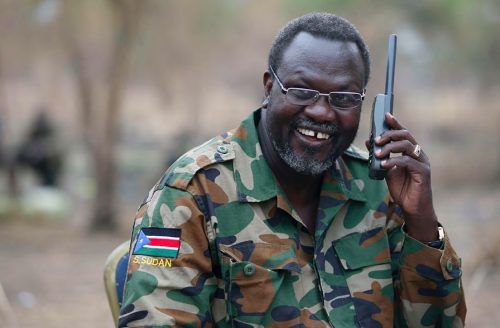
It noted that the arrest and removal from office of First Vice President Riek Machar last year, and his prosecution for murder, treason and crimes against humanity, had undermined “the core power-sharing guarantees” of the peace agreement, and triggered “political uncertainty and armed clashes on a scale not witnessed” for a decade.
Machar, an ethnic Nuer, was suspended last year as South Sudan’s number two after opposition Nuer White Army fighters overran a military garrison in the town of Nasir.
Civil war broke out in South Sudan in 2013, two years after gaining independence from Sudan, when President Salva Kiir, a member of the Dinka ethnic group, the country’s largest, first dismissed Machar as vice president, accusing him of plotting a coup.
The report also noted that intensifying military operations had been marked by a “dangerous shift in tactics”, including air strikes on civilian-populated areas.
It said that the deployment of forces from neighbouring Uganda, a guarantor of the 2018 peace agreement, had “materially strengthened” government forces militarily and “raised credible concerns” of violations of a UN arms embargo.
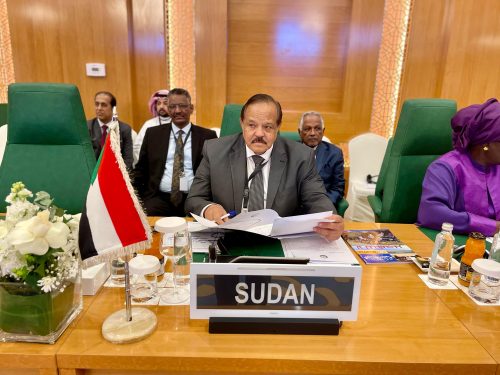
The CHRSS report noted that joint aerial bombardments by the Ugandan and South Sudan armies had targeted civilian areas, “predominantly affecting [ethnic] Nuer communities in opposition-affiliated areas”.
Renewed conflict
An estimated 400,000 people were killed in the five years of a war waged largely along ethnic lines, before calm was restored with a peace deal in 2018.
But escalating fighting in recent months has brought renewed fears of a return to civil war.
Beginning in December, a coalition of opposition forces – some loyal to Machar, leader of the Sudan People’s Liberation Movement in Opposition (SPLM/IO) – seized a string of government outposts in Jonglei state, an opposition stronghold northeast of the capital, Juba, that is the homeland of the Nuer ethnic group.
Following the territorial losses, South Sudan’s army announced a major military operation against opposition forces in late January, ordering civilians and aid groups to leave areas of Jonglei state, a move that the International Crisis Group said showed the country had “returned to war”.