Sifuna claims UDA is turning 10-point agenda into propaganda document
By Ndiritu Wanjiru, April 30, 2026Nairobi Senator Edwin Sifuna has once again criticised the ruling United Democratic Alliance (UDA), accusing the party of turning the much-discussed 10-point agenda into a propaganda tool.
The 10-point agenda is a political engagement initiated by President William Ruto and the late Orange Democratic Movement (ODM) leader Raila Odinga.
Speaking during a morning interview on a local radio station on Thursday, April 30, 2026, the ODM Secretary General has maintained that “UDA’s interest is not to implement anything that is in writing.
“UDA’s interest is not to implement anything that is in writing; they just want a document from which they can run their propaganda and say, ‘Ooooh, tumeungana, tumefanya nini. ‘I knew it. I said it in Kisumu: “Baba, this is going to be a PR disaster,” and I said it as the foremost PR officer of the party because I am the spokesperson for the party. I took it to the president’s team, and those guys didn’t read it because their interest was not in the text,” Sifuna said.

Sifuna: The 10-point agenda was based on political optics
Sifuna has said the 10-point agenda was from the beginning more about political optics than real commitment, saying the main players were more concerned about managing public perception than implementing agreed reforms. He said the lack of fidelity to the written commitments has raised questions within ODM about the sincerity of the process.
The 10-point agenda was conceived amidst political tensions that arose after the 2022 general election, with protests over the high cost of living and electoral disputes. It was presented as a structured set of priority areas to ease political tension and guide engagement between Kenya Kwanza and Azimio leadership, with issues such as cost of living, electoral justice, youth unemployment, inclusivity, debt management and institutional reforms taking centre stage in the discussions.
10-point agenda report
The report of the five-member NADCO committee on the implementation of the 10-point agenda agreed upon by President William Ruto and the late ODM leader Raila Odinga was released on March 10, 2026, and contained a wide array of recommendations on policies and legislative and institutional issues that require further action.
The committee, chaired by former nominated senator Agnes Zani, arrived at the recommendations after extensive stakeholder consultation throughout the country, through public forums and memoranda submissions.
“The committee observes that based on these engagements, there is progressive implementation of the 10-point agenda, but there are several policies and legislative and institutional issues that need further action to enhance effectiveness and delivery,” the committee said.
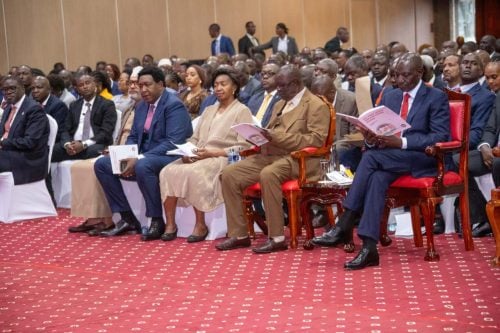
Nairobi Senator Edwin Sifuna and his allies in the Linda Mwananchi Movement, on the other hand, released a parallel report opposing the status of the 10-Point Agenda Agreement at Ufungamano House in Nairobi on March 10, 2026.
Among its 11 overall recommendations is the establishment of a broad-based mediation committee between the Senate and the National Assembly to fast-track outstanding bills and also improve protections for protesters by passing new laws to ensure respect for Article 37 of the constitution.
.