Ruto: 1,800 local teachers from Wajir, Mandera and Garissa employed to serve the region
By Ndiritu Wanjiru, June 1, 2026President William Ruto has stipulated education reforms and investment in training teachers as part of key interventions that the government has put in place to transform Northern Kenya and address long-standing marginalisation in the region.
Speaking during the 63rd Madaraka Day celebrations in Wajir County on Monday, June 1, 2026, Ruto noted that through what he described as a focused programme, 1,800 local teachers from Wajir, Mandera and Garissa counties have already been recruited and will serve in the region.
“Today, through this programme, a record 1,800 local teachers from the three counties of Wajir, Mandera and Garissa have been employed and will be deployed in the region,” Ruto said.

The president further revealed that 4,616 young people from the region are currently enrolled in teacher training colleges.
“Additionally, 4,616 young people from this region are enrolled in teacher training colleges, the highest number in our history,” he said.
“We have hired more than 100,000 teachers in just three years, with 20,000 more set to be hired this year, making it one of the most ambitious teacher recruitment drives in our nation’s history,” he added.
The president said one of the biggest achievements in Northern Kenya has been efforts to train and employ local teachers to address chronic staffing shortages.
“Three years ago, we agreed that the lasting solution to teacher shortages in this region was to train more local teachers,” Ruto said.
Unlocking Northern Kenya through education
He noted that the government operationalised Wajir Teachers Training College, Kutulo Teachers Training College and Mandera Teachers Training College to complement Garissa Teachers Training College.
Ruto said the strategy would provide a sustainable solution to teacher shortages that have affected schools in Northern Kenya for decades.
“This is how lasting solutions are built, by investing in people and not just infrastructure,” he said.
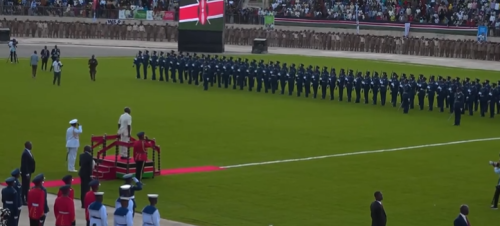
Ruto has said that the government has prioritised education in Northern Kenya as part of efforts to promote inclusion and unlock economic opportunities. The president further said education remains the most powerful tool for addressing poverty, exclusion and underdevelopment in historically marginalised regions.
“Of all the investments we are making in Northern Kenya, none is more important than education, which is also the theme of this year’s Madaraka celebrations,” Ruto said.
“Education, skills and the future. Of all the tools a nation possesses, education is the most potent. It is the bridge between promise and possibility, between poverty and prosperity and between exclusion and belonging,” he added.