Robert Alai warns weak revenue framework undermines county service delivery efforts
By Aloys Michael, June 4, 2026Kileleshwa Member of County Assembly (MCA) Robert Alai has raised concerns over the management of the county’s own-source revenue, warning that the absence of a clear legal and operational framework continues to undermine financial accountability in devolved governments.
Speaking on Thursday, June 4, 2026, in an interview on a local TV station, Alai said counties rely on two major sources of revenue to finance devolved functions: own-source revenue collected locally and exchequer remittances from the national government.
“Counties have two main sources of revenue for devolved functions: own-source revenue and exchequer remittances. The biggest challenge is the lack of a clear framework for managing own-source revenue, which remains a grey area. As a result, each governor comes in with their own system,” Alai said.
His remarks come days after the Senate Standing Committee on Finance and Budget approved its report on the Division of Revenue Bill, 2026, setting the stage for debate in the Senate over the allocation of resources between the national and county governments.
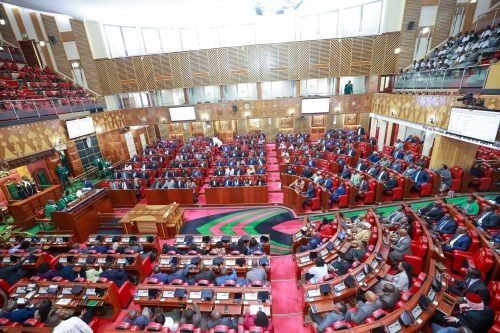
According to a statement issued by Parliament, senators focused their discussions on the impact of national revenue shortfalls on county governments, noting that reduced revenue collection at the national level has significantly affected the timely disbursement of funds to counties.
“The Senate Standing Committee on Finance and Budget has adopted its report on the Division of Revenue Bill for the 2026/2027 Financial Year. While considering the report in Parliament Buildings earlier today, the primary focus of the deliberations centred on the impact of national revenue shortfalls on county governments,” Parliament stated.
The committee further noted a significant difference between the Senate and the National Assembly on the amount of revenue that should be allocated to counties. Senators recommended an equitable share of Ksh454 billion, compared to the Ksh420 billion proposed by the National Assembly.
County allocations
“The Committee noted a significant divergence in the proposed revenue sharing framework, proposing an equitable share of Ksh454 billion to counties. This stands in contrast to the Ksh420 billion proposed by the National Assembly, with senators maintaining that the higher allocation is necessary to sustain devolved functions amidst rising operational costs,” the statement added.
The Senate committee argued that counties are increasingly facing financial pressure due to rising service delivery costs, delayed funding and growing expenditure demands. Senators warned that inadequate allocations could weaken essential services at the grassroots level.
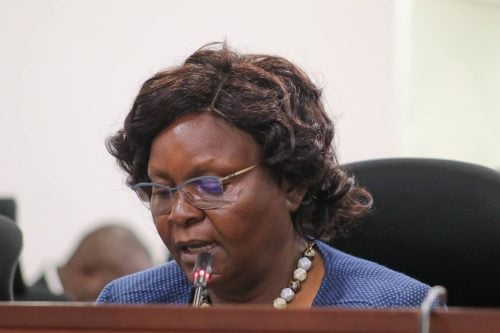
Alai’s concerns over own-source revenue management add another dimension to the county funding debate.
While counties continue to seek larger allocations from the national government, questions remain about how locally generated revenue is collected, managed and accounted for.
The MCA suggested that inconsistent systems adopted by successive governors have created gaps in transparency and accountability, making it difficult to standardise revenue management across all 47 counties.
Meanwhile, the Commission on Revenue Allocation (CRA) had proposed an even higher allocation of Ksh458.94 billion to county governments for the 2026/2027 financial year.
Appearing before the National Assembly Committee on Budget and Appropriations in February, the CRA, led by Chairperson Mary Wanyonyi Chebukati, said the proposed allocation was informed by projected national revenues of Ksh2.9 trillion for the 2026/2027 financial year, up from Ksh2.7 trillion in the current fiscal year.
The commission also questioned the balance in resource distribution between the two levels of government, arguing that a Ksh5 billion increase for counties compared to a proposed Ksh152.5 billion increase for the national government raises concerns about equitable sharing of resources.
Chebukati emphasised that the commission’s recommendations took into account the expanding service delivery responsibilities assigned to county governments under devolution.