Advertisement
Retailers role in promoting circular economy
Wednesday 06th April, 2022 04:11 AM|
This year’s United Nations Environment Assembly was a monumental one: It saw the endorsement of a historic resolution to end plastic pollution globally. The resolution, aimed at addressing the entire life-cycle of plastic, is targeted at curbing plastic pollution at all stages including design, production, and disposal.
Indeed, the adoption of this resolution is very timely for our country, given the ongoing efforts by the government to formulate and adopt policies geared towards sustainable waste management and the adoption of a circular economy in Kenya.
These policies seek to curb pollution and promote a clean and healthy environment and include Bills such as the Sustainable Waste Management Bill 2021 and the EPR Regulations 2021. The EPR Regulations, for example, are meant to “provide for extended producer responsibility for all products and packaging in all phases of their life cycle to enhance environmental sustainability.”
Nevertheless, the successful implementation of these regulations and the aforementioned resolution to tackle pollution and transition to a circular economy, will require action from all the relevant stakeholders including manufacturers, importers, distributors, convertors and retailers.
However, conversations around this transition have majorly focused on the role of players such as government and manufacturers, leaving behind key stakeholders.
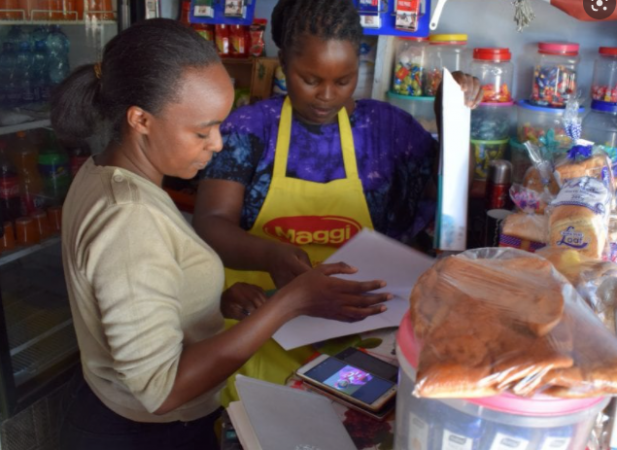
Retailers, for example, can play a huge role due to our unique position in the value chain, interacting with consumers on one side, and manufacturers on the other. As retailers, we have the opportunity not only to integrate circularity into our operations, but to drive positive change in the consumption behaviours of our consumers.
First, we ought to provide consumers with durable goods of high quality to reduce wastage, and that can be put back into the value chain and takes into consideration the potential to repair or return a product to its initial condition. For example, IKEA; a furniture, and home accessories retailer, has a program where customers can return old furniture and get a gift voucher to spend in the store instead of this furniture ending up in landfills.
Second, we must also be innovative in how we manage and dispose of the waste coming from our outlets and engage reliable waste collectors who not only collect and dump waste in landfills but recycles it. A great example is Taka Taka Solutions; which collects and recycles waste from retail establishments such as malls and supermarkets. Moreover, the waste collector provides its clients with solutions for better onsite management of waste such as bins, waste compactors and even data on the types and amounts of waste generated.
Third, we have the opportunity to engage with manufacturers to push for reduced packaging and reduced consumption of virgin raw materials. This can be achieved through advocating for a shift to sustainable, refillable and reusable or biodegradable materials which will reduce single use plastic packaging. Bio Food Kenya, for example, is now packing its yoghurts in recycled plastic, their cheese in bio-degradable packaging and their milk bottles are more recyclable.
When it comes to consumers, we have the opportunity to drive increased collection and recycling of post-consumer waste. This can be done by establishing collection points at our outlets combined with consumer awareness programs on recycling, sorting which will increase collection and recycling rates of post-consumer waste.
Another way we can accomplish this is by joining a PRO like Kenya Extended Producer Responsible Organisation (Kepro) to partner with like-minded organisations. By bringing together all stakeholders in the waste value chain, Kepro is working with stakeholders, to increase the collection and recycling of post-consumer waste and spearhead the achievement of a circular economy in Kenya.
As we move forward in this journey towards a circular economy as retailers, it is important to note that embracing this new model will not only lead to a better environment but presents us with the opportunity to retain customers and generate additional income and sales.
—The writer is a Kepro Board Director and Chief Executive Officer of Retail Trade Association of Kenya— [email protected]
Author
PD columnist
View all posts by PD columnistLatest News








Advertisement