Advertisement
Report paints grim picture of public health services
Friday 22nd December, 2023 05:00 AM|
The shocking state of the country’s healthcare system has been revealed with a new report showing that over 90 per cent of public health institutions are ill equipped to deliver basic services.
From inadequate equipment to lack of trained doctors and nurses, a serious shortage of drugs, the health facility census released yesterday painted a picture of a nation in which falling sick amounts to a death sentence.
The Kenya Health Facility Census Report, unveiled by Health Cabinet Secretary Susan Nakhumicha, disclosed that only seven per cent of facilities are ready to offer basic outpatient services.
“Only half of assessed facilities, about 57 per cent, had a proper pharmacy with only six and 15 per cent having all the 28 tracer drugs,” the report that reviewed 12,384 facilities across all the 47 counties.
The assessment, which started in August and went on for four months, targeted 14,366 health facilities with lower level facilities without a designated pharmacy not included.
The number of healthcare workers is also reported to be low, despite human resource being critical in the delivery of the Universal Health Care programme.
Only 12 counties have the required core health worker numbers per population comprising a nurse, a clinical officer and a doctor, the report reveals. These are: Nairobi, Tharaka Nithi, Nyeri, Lamu, Vihiga, Mombasa, Uasin Gishu, Laikipia, Taita Taveta, Kirinyaga, Embu and Kisumu.
Counties with the lowest number of human resources are Narok, Turkana, Wajir, West Pokot, Tana River, Trans Nzoia, Marsabit, Bomet, Kwale, Kilifi, Busia and Nyandarua. The national average is less than the World Health Organisation’s (WHO) recommended ratio of one doctor per 1,000 patients. Kenya is at one healthcare worker per 17,000 patients.
According to the report, 44 counties do not have at least three nurses per hospital as required in the healthcare workforce staffing norms.
The core health workforce density for every 10,000 people is against the target 23/10,000) with Nairobi having the highest and Narok the lowest density of health professionals. “Four per cent of Level Two (hospitals) had none of the required personnel with the most available personnel being nurses,” indicates the report, also noting that dental staff and radiology services were scarce across all levels.
The report also reveals a serious shortage of basic outpatient services. Radiology services for instance, are available in 11 per cent of the facilities, whereas readiness to offer the service stands at a low of 21 per cent.
Readily available
“Ultra sound and x-ray services were most readily available, and in Primary Health Facilities x-ray services are not widely available,” the report.
Less than one fifth of facilities provided specialised radiology services such as IOPA, CT-scan, OPG, colonoscopy and mammography. Only 40 per cent of 902 facilities in the country offer basic maternity services, the report reveals.
Failure to have comprehensive maternal care is the main cause of maternal deaths that stand at 365 deaths for every 10,000 live births, according to Kenya Demographic Health Survey. Of the 902 hospitals offering maternal services assessed across the country, almost all had oxygen (97 per cent), a delivery bed, (98 per cent), delivery packs (98 per cent) and a nurse available (99 percent).
On the other hand, emergency obstetric care service was only offered by a third of facilities while slightly above half had emergency tray and vacuum extractor available. Whereas the government encourages women to deliver in hospitals, it was found that only 10 per cent of the hospitals had a clinical officer and a medical officer.
“Thirteen per cent of facilities had all the equipment required to offer basic maternity services while one per cent of the facilities had none of the equipment. Majority of the facilities had delivery packs (92 per cent) and delivery beds (86 per cent)”,” reads the report.
The report noted that only five per cent of the facilities offering maternity services had all the equipment required to provide comprehensive maternity services. Additionally, of the facilities that offered maternity services, 18 per cent reported to be conducting Caesarian section (CS), 42 per cent had blood transfusion services and 16 per cent had Continuous Positive Airway Pressure machines.
“The readiness to provide maternity services was only five per cent, revealing the critical infrastructure, basic amenities and human resources gap that compromise the quality of maternal services being offered,” warned the report.
In the findings, only 21 per cent of the facilities offering comprehensive maternity services had a gynaecologist while 63 per cent had a maternity theatre.
“Whereas reported basic maternity services available were found to be 40 per cent, basic maternity services readiness was noted to be very low with significant gaps in availability of equipment. Readiness to provide comprehensive maternity services was also very low with notably inadequate maternity beds and specialist health workforce”. According to the report, out of 12,375 health facilities assessed, only 22 per cent offer critical services. Kenya has a total of 2,304 critical beds, out of which 779 are available in public hospitals, representing 34 per cent.
Only 25 government facilities offer ICU services whereas 28 government facilities offer High Dependency Unit (HDU).
The report noted that eight per cent of facilities provided theatre services with the vast majority having general theatres. Maternity theatres were available in half of the facilities providing theatre services. The least available were paediatric, ENT and ophthalmic theatres.
“Overall, there were few facilities offering critical care services with a lower availability of paediatric beds when compared to adult beds and less than optimal availability of all required equipment in both HDU and ICU,” says the report.
Even with the changes within the medical insurance scheme, the report has revealed that few public hospitals are accredited with the National Health Insurance Fund (NHIF), compared to private and faith-based institutions.
Overall, only 40 per cent of facilities assessed were NHIF accredited, out of which, 45 per cent are government accredited, with a third being private.
Across levels of care, NHIF accreditation was highest in government Level Two facilities (57 per cent) while a third of public Level three facilities were accredited.
“Accreditation was generally higher in non-governmental and faith-based facilities in higher levels of care (Level Three upwards),” says the report, which also highlights the shortage of essential drugs in hospitals. About a half of facilities (57 per cent) had pharmacy services but only six and 15 per cent had all tracer drugs and non-pharmaceuticals respectively.
Mental health drugs were the least available with only 23 per cent of facilities having them in stock. Notably, three of every 1,000 facilities that reported having a pharmacy did not have any of the tracer drugs.
“Nearly half of all facilities do not provide pharmacy services and the vast majority of those who offer the service did not have the whole basket of tracer drugs,” the report reveals.
Vast majority
“Average availability of tracer drugs, nevertheless, was fair at 62 per cent representing an increase of 24 per cent from 44 per cent in the 2018 health facility assessment.”
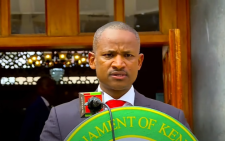
Nakhumicha said the government was committed to implementing UHC through primary health care as a priority agenda. “Therefore determining the level of availability and readiness of health facilities to offer services, as well as the quality of care across the sector, is paramount in planning for UHC implementation,” she said.
“The Kenya Health Facility Census report provides objective information on the availability of health facility services and the systems that facilities have in place to deliver the services at required standards of quality,” she said before unveiling the report.
Despite the gaps, the CS expressed optimism that the report will guide the ministry’s decisions.
“Many Kenyans have been wondering why we had to go to the extent of changing the law. Of all facilities, only seven per cent are ready to provide services and only six per cent have pharmaceutical services,” the CS said.
The report recommends that for UHC to be achieved, access to efficient, quality services is critical, especially in primary care facilities. It also called for readiness of facilities to provide health care services, which are mainly threatened by inadequate equipment and human resource gaps. “Access to specialised services needs to be strengthened,” report added.
Author
George.Kebaso
View all posts by George.KebasoLatest News








Advertisement
More on News