Raymond Omollo: Attempted cybercrime can land you 4 years in jail or Ksh7M fine
By Kiprono Keileb, October 23, 2025Interior Principal Secretary Raymond Omollo has highlighted the legal consequences of attempting or aiding cybercrime, emphasising that the law treats preparatory acts as serious offences.
“What if someone tries to commit a cybercrime but doesn’t succeed? A person who attempts to commit or prepares to commit a cyber offence is still guilty under the Act,” Omollo said in a statement posted on his X account on Thursday, October 23, 2025.
He explained that individuals found guilty of attempting cyber offences face severe penalties. “Penalty: Fine up to Ksh 7 million, or imprisonment up to 4 years, or both,” Omollo noted.
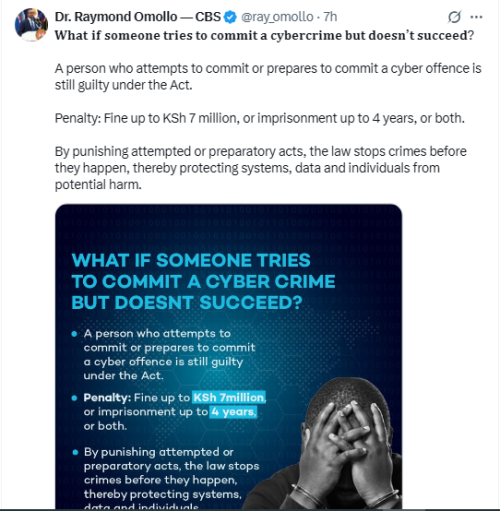
He further stressed that punishing attempts helps prevent crimes before they happen. “By punishing attempted or preparatory acts, the law stops crimes before they happen, thereby protecting systems, data and individuals from potential harm,” he added
Elsewhere, Head of Presidential Special Projects and Creative Economy, Dennis Itumbi, has come out in defence of the controversial Computer Misuse and Cybercrimes (Amendment) Act, 2024, dismissing claims that it is a new law.
Aiding Cybercrime
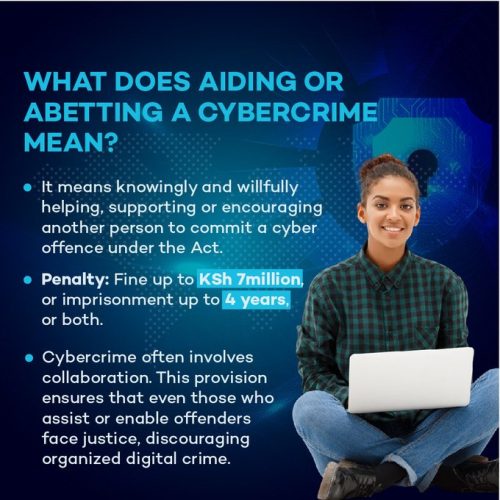
Omollo also addressed the implications of aiding or abetting cybercrime. “What does aiding or abetting a cybercrime mean? It means knowingly and willfully helping, supporting or encouraging another person to commit a cyber offence under the Act. Penalty: Fine up to Ksh 7 million, or imprisonment up to 4 years, or both,” he said. He noted that because cybercrime often involves collaboration, this provision ensures that those who assist offenders face justice, discouraging organised digital crime.
Phishing
In addition, Omollo explained the legal definition of phishing, a common online scam. “Phishing happens when someone creates or operates a fake website, or sends deceptive messages, to trick people into revealing personal information or to gain unauthorised access to computer systems. Penalty: Fine up to Ksh 300,000, or imprisonment up to 3 years, or both,” he said. Omollo emphasised that this provision safeguards users against identity theft, financial fraud, and other forms of online deception.
Raymond Omollo’s explanations come in the wake of President William Ruto’s assent to eight bills, among them the Computer Misuse and Cybercrimes (Amendment) Bill, 2024, which has sparked widespread debate and concern among various stakeholders. The bill, which introduces new provisions on online conduct and digital accountability, has drawn mixed reactions, with critics warning that some of its clauses could infringe on freedom of expression, while supporters argue it is necessary to curb the growing wave of cybercrime and misinformation.
Through his statement, Omollo sought to inform the public about the scope of Kenya’s cybercrime laws and the importance of adhering to them. By clarifying the consequences of attempted offences, aiding or abetting, and phishing, the Interior PS underscored the government’s commitment to protecting digital spaces, promoting accountability, and safeguarding citizens from online threats.