Paul Muite blasts Ruto’s govt over Ksh104B SHA software deal
By Kenneth Mwenda, January 17, 2026Senior Counsel Paul Muite has criticised the government over the Social Health Authority (SHA), calling out what he says is mismanagement of public funds.
His reaction came after President William Ruto stated that, given two or three more years, he would “straighten out SHA forcefully,” using the phrase “atanyorosha SHA kama risasi.”
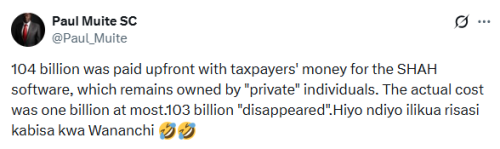
On X, Muite pointed out that taxpayers already paid Ksh104 billion upfront for the SHA software. He claimed private individuals still own the system, while experts estimate the real cost at about Ksh1 billion. That leaves Ksh103 billion unaccounted for.
“104 billion was paid upfront with taxpayers’ money for the SHAH software, which remains owned by “private” individuals. The actual cost was one billion at most.103 billion “disappeared”.Hiyo ndiyo ilikua risasi kabisa kwa Wananchi,” he wrote.
The dispute highlights ongoing anger over SHA, the system that replaced the National Hospital Insurance Fund (NHIF) in October 2024 as part of Kenya’s move towards universal healthcare.
The government awarded a Ksh104.8 billion contract to a consortium led by Safaricom for an Integrated Healthcare Information Technology System. Officials say the cost is recoverable over ten years.
SHA costs
Muite also called the software “unnecessary” for the transition from NHIF to SHA. Many share this view, saying that the old system could have been upgraded at a fraction of the cost.
Instead, billions of shillings flowed out while ordinary people face delays, claim rejections, and extra out-of-pocket costs when seeking treatment. Hospitals complain of portal downtime, slow authorisations, and unpaid claims. Some facilities have been suspended over fraud, yet questions about the technology deal remain unanswered.
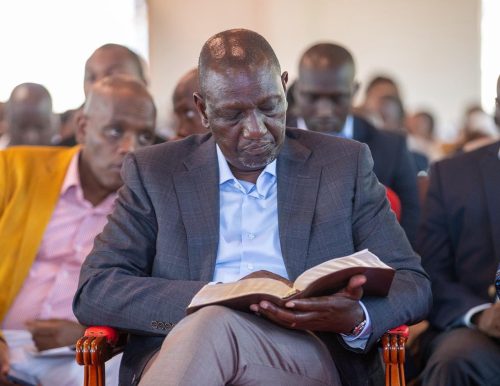
President Ruto defends SHA, highlighting over 29 million registrations and cases where families receive free care for serious illnesses. He says the digital tools reveal corruption hidden under NHIF. Yet audits continue to show fraudulent claims, ghost hospitals, and weak oversight. Many Kenyans feel the system takes money from them while failing to deliver consistent services.