NTSA boss addresses claims of receiving orders from Ruto’s UDA
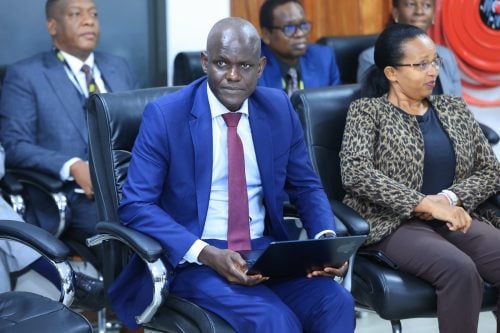
By David Nthua, July 1, 2026The National Transport and Safety Authority (NTSA) Director General, Nashon Kondiwa, now says that NTSA’s decisions are not simply instructions from the United Democratic Alliance (UDA) Party.
Kondiwa spoke during an interview with a local television station on Tuesday, June 30, 2026.
During the interview, he was put on the spot about whether the transport authority receives directions from UDA headquarters amid debate over a mandatory vehicle inspection directive.
Nashon Kondiwa distances NTSA from UDA
The question came at a time when NTSA has found itself at the centre of a political storm over road safety enforcement, traffic cameras, vehicle inspection rules and payment systems for fines.
/X
During the interview, he was asked directly: “Do you receive your instructions from the UDA party HQ?”
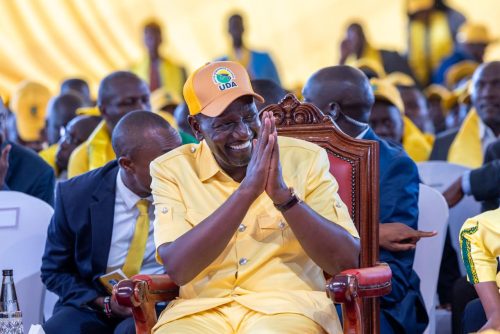
Kondiwa responded by saying NTSA draws guidance from several policy and legal instruments, including the manifesto President Ruto used during the 2022 campaign, the NTSA Act, the Constitution and the country’s long-term development vision.
“The manifesto is a clear document. You combine it with the NTSA Act, you combine it with the Constitution of the country, and with the long-term vision of the country, and then you find your dimension,” Kondiwa said.
His answer places NTSA in the middle of a wider political argument: whether government agencies are implementing lawful public policy or advancing the ruling party’s campaign agenda through state institutions.
By the time of publication, UDA had not responded to Kondiwa’s remarks. The story will be updated if and when a response is received.
Traffic cameras and road signs
Kondiwa also defended the use of road signage in traffic enforcement, saying motorists are already expected to obey speed limits and other road instructions, whether or not there is an additional notice warning them that cameras are monitoring the road.
“We have road signage, which is enough communication. The communication that there is a camera monitoring is additional, but a road is supposed to communicate with the people.
“The moment you see a speed limit sign, as a driver, what you are trained to do is to obey that road signage,” he said.
His remarks come as motorists continue to question the fairness, visibility and enforcement logic behind speed cameras and traffic penalties.
Critics have argued that traffic enforcement should focus more on road safety than revenue collection, while NTSA maintains that road users have a legal duty to obey traffic signs, speed limits and safety rules.
Why fines are paid through banks
Kondiwa also addressed questions on why some NTSA fines are being paid through banks instead of the eCitizen platform, which has become the main gateway for government services.
He said the authority introduced physical verification to protect motorists from fraud.
“Most payments on eCitizen are made via M-Pesa or credit card, eliminating cash transactions and physical interaction.
“However, out of an abundance of caution and to safeguard Kenyans against fraud, we introduced an additional layer of physical verification. As a result, motorists must visit a bank in person to pay NTSA fines,” Kondiwa said.
The explanation is likely to attract further debate from motorists who have grown used to digital payments through eCitizen, M-Pesa and card channels.
The issue also carries a political weight because public anger over transport levies, vehicle inspection fees, traffic fines and enforcement systems has become part of the wider cost-of-living debate facing the Kenya Kwanza administration.
Kondiwa’s remarks show NTSA is trying to present its decisions as a mix of law, policy, technology and road safety priorities.
However, the political question remains whether Kenyans will view the authority’s current direction as public-interest enforcement or another burden on already stretched motorists.