Not just energy: How the Iran war could trigger a global food crisis
By Al Jazeera, March 18, 2026Amid the ongoing war in Iran, the soaring price of oil since shipping was disrupted through the Strait of Hormuz has caused great alarm.
On March 2, Ebrahim Jabari, a senior adviser to the commander-in-chief of Iran’s Islamic Revolutionary Guard Corps (IRGC), announced that the Strait of Hormuz – through which 20 per cent of the world’s oil and gas is transported – was “closed”, a move that sent oil prices soaring higher than Ksh13K per barrel.
Nearly half of the world’s traded urea – the most widely used fertiliser – and large volumes of other fertilisers are exported from Gulf countries via the Strait of Hormuz, making global agriculture highly exposed to any disruption there.
Recent disruptions to gas supplies and shipping have already forced fertiliser plants, which use natural gas to manufacture fertiliser, in the Gulf and beyond to shut or cut their output.
After its LNG facilities were attacked, Qatar’s state-run energy firm, QatarEnergy, halted output at what is the world’s largest urea plant after it shut down gas output.
Since LNG output from Qatar has dropped off, India has cut output from three of its own urea plants. Bangladesh has also shut four out of its five fertiliser factories.
The US is already close to 25 per cent short of fertiliser supply for this time of year.
Compounding shortages, urea export prices from the Middle East have surged by about 40 per cent, rising from just less than $500 to a little more than $700 per metric tonne as of last Friday, according to Argus, a specialist energy and commodity price reporting agency. The price is currently close to 60 per cent higher than this time last year.
Fertilizer produced by Gulf countries
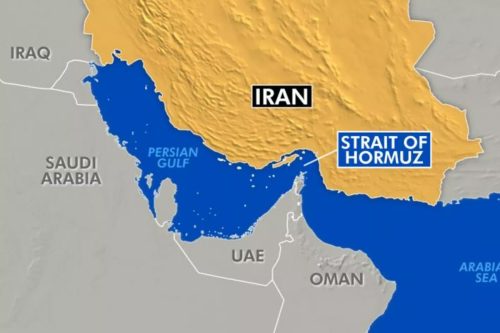
According to one shipping services company, the Signal Group, 20 per cent of the world’s fertiliser originates in the Gulf, while 46 per cent of global urea supply comes from the Gulf.
The Qatar Fertiliser Company (QAFCO), considered the world’s largest urea supplier, alone supplies 14 per cent of the world’s urea.
Analysis by Kpler, a data and analytics company, shows that as much as one-third of global fertiliser trade could be disrupted if the closure of the Strait of Hormuz persists – only a handful of Indian, Pakistani and Chinese-flagged vessels have been allowed to pass safely in recent days.
According to Morningstar analyst Seth Goldstein, nitrogen fertiliser prices could roughly double from current levels, and phosphate prices could climb by about 50 per cent, the Reuters news agency reported this week.
As of 2024, Asian countries were most heavily dependent on Gulf fertiliser exports, receiving 35 per cent of Gulf urea exports, 53 per cent of sulphur exports and 64 per cent of ammonia exports, according to Kpler.
These exports are particularly vital for key agricultural markets, particularly India, Brazil and China, with significant volumes also going to Morocco, the United States, Australia and Indonesia.
India is particularly dependent on the Middle East for fertilisers, sourcing more than 40 per cent of its urea and phosphate fertilisers from the region.
Meanwhile, Brazil is almost entirely reliant on imports for its fertiliser supply, nearly half of which transit through the Strait of Hormuz.
Why will fertiliser shortages hit food production so hard
The timing of this disruption is especially bad because it falls in the middle of sowing season, or spring plantation season, which generally runs from mid-February to early May in the Northern Hemisphere.
For commercial farming, fertiliser is essential for almost every crop if growers want strong yields. But different crops require different kinds and amounts of fertiliser.
The world was already reeling from a urea shortage when Europe was forced to cut its supplies after it lost access to cheap Russian gas in the wake of the onset of Russia’s war on Ukraine in 2022.