Advertisement
New bill seeks improved jurors’ retirement package
Saturday 28th June, 2025 12:40 AM|

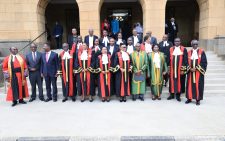
Judges in Kenya who reach the retirement age will soon be entitled to improved retirement packages, including enhanced benefits for their spouses and children, if the Judges Retirement Benefits Bill, 2025, is approved by Parliament.
The bill, which has been tabled for its first reading, proposes that judges who have served for 10 years or more will be eligible for a pension upon retirement. Those who have served for less than ten years will be entitled to a gratuity in accordance with the law.
Currently, judges in Kenya serve until they reach the age of 70, but can choose to retire after the age of 65. The Chief Justice has a maximum term of 10 years but may continue to serve on the Supreme Court if their term expires before reaching the mandatory retirement age.
The bill reads: “The primary objective of this bill is to provide pension and other retirement benefits to judges of superior courts and for connected purposes. This bill has been under development since the late 1990s and marks a significant step toward realising the constitutional principles regarding the judiciary, its independence, and the remuneration and benefits of judges.”
You Might Also Like


Under the new bill, judges eligible for pension will receive a monthly transport allowance equivalent to one-seventh of their basic salary for a period of 120 months, payable as a lump sum upon retirement.
They will also be entitled to medical cover for themselves and their spouses, on the same terms as that provided to serving judges. Additionally, retired judges will be eligible for diplomatic passports and access to government lounges at airports across Kenya for the duration of their retirement.
The bill further states: “This Act shall apply to judges in office at the commencement of this Act, judges appointed after the commencement of the Act, and judges who retired after 27th August 2010, but before the commencement of the Act, in accordance with Article 167(1) of the Constitution.”
A judge who retires after reaching the retirement age but has served for less than ten years will be entitled to a service gratuity. This gratuity will be calculated as one-four-hundred-and-eighth of their pensionable emoluments for each completed month, multiplied by five.
The bill also seeks to address the fate of judges who are removed from office due to mental or physical incapacity. Their pension will not be less than 50 per cent of what they would have received had they retired at the mandatory retirement age. The pension will be calculated based on the judge’s pensionable emoluments at the time of removal.
If a judge dies before reaching the retirement age, the surviving spouse will be entitled to a monthly pension equal to 50 per cent of the pension the deceased judge would have received.
In the case of a retired judge’s death, the surviving spouse will continue to receive 50 per cent of the monthly pension that was payable to the retired judge, provided the marriage took place before retirement. If the judge remarries after retirement, the pension for the surviving spouse will not be payable.
If the judge dies before qualifying for retirement, the surviving spouse will receive a gratuity equal to one month’s pensionable emoluments for each year of service. If the judge is survived by more than one spouse, the gratuity will be divided equally among them.
In cases where the deceased judge is survived by both a spouse and children, the surviving children will also be entitled to a portion of the pension.
The bill specifies that the applicable percentage for children’s pensions will be 12.5 per cent for one child, 25 per cent for two children, 37.5 per cent for three children, and 50 per cent for four or more children.
However, the bill states that a child born after the judge’s retirement, or as part of a marriage entered into after retirement, will not be eligible for pension benefits.
For judges appointed after the commencement of the Act, the bill also provides for the establishment of the Judges’ Retirement Benefits Fund.
This will facilitate the payment of contributions into the Fund and outline the responsibilities of the Board of Trustees, which will manage the pensions.
The Cabinet Secretary, under the bill, will have the discretion to determine how the pension will be allocated in cases involving children, ensuring that payments are made in the best interest of the child.
Author
Mercy Mwai
View all posts by Mercy MwaiLatest News








Advertisement
More on News