Netanyahu’s war alliance with Trump faces test as Iran crisis widens
By Reuters, March 4, 2026Israeli Prime Minister Benjamin Netanyahu delivered on a career-long ambition to topple Iran’s leadership, but his lockstep alignment with US President Donald Trump faces a test as their joint military campaign threatens to drag on, with its goals potentially shifting in the coming weeks.
At the outset of the bombing campaign on February 28, 2026, both Trump and Netanyahu said regime change was the goal. But in remarks at the White House on March 2, 2026, two days after Israeli airstrikes killed Iran’s supreme leader, Ayatollah Ali Khamenei, and much of his leadership, Trump did not mention overthrowing Iran’s government as his top priority.
He said the US goal was to destroy Iran’s missiles and navy and to stop it from obtaining a nuclear weapon. His Pentagon chief, Pete Hegseth, said at a press conference that same day that the operation was not a “so-called regime-change war”.
Netanyahu, by contrast, has called on Iran’s citizens to take to the streets and overthrow their rulers as recently as on the night of March 2.
“We’re going to create the conditions, first, for the Iranian people to get control of their destiny,” he told Fox News.

Asked about the US and Israeli goals, a US official familiar with the White House’s objectives told Reuters that the two countries’ military campaigns have different objectives. “Regime change is one of theirs,” said the official, who spoke on the condition of anonymity.
In the build-up to war, Netanyahu successfully convinced Trump that it was a now-or-never moment to prevent Tehran from acquiring nuclear weapons and destroy its ballistic missile capabilities. Trump has said the operation could take “four or five weeks” or “whatever it takes”.
“I don’t get bored, I never get bored,” he said at the White House on March 2 in response to questions about his capacity for sustained focus.
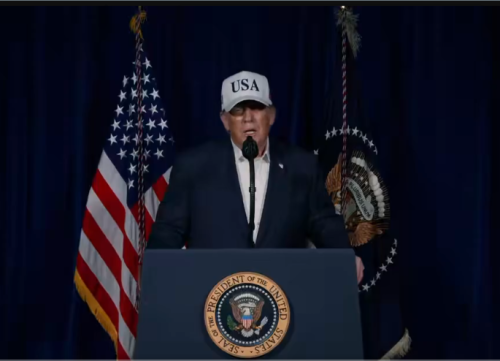
But Israeli officials privately acknowledge that ultimately it will be Trump who decides when the war ends. Dan Shapiro, a former US ambassador to Israel under the Obama administration, said that Trump may decide to seek an “early off-ramp” from the war.
“If President Trump decides that he’s reached the end of this operation before Netanyahu wants it to end, he’s still going to end it,” said Shapiro, of the Washington-based Atlantic Council think-tank.
President Trump faces domestic pressures that could affect his thinking as the war drags on and expands.
The operation is unpopular in the US, with only one in four Americans backing US strikes on Iran, according to Reuters/Ipsos polling. Primary votes began on March 3, 2026, in the battleground states of Texas and North Carolina that may decide who controls Congress after the autumn midterm elections.
With the crisis disrupting shipping and energy production, rising gas prices could become a daily reminder of the affordability crisis facing many Americans.
Gas is up 11 US cents (14 Singapore cents) per gallon in the US this week, with much higher spikes in global markets suggesting more increases for American consumers.
Inside the US, support for Israel has become a partisan issue, with some 59 per cent of Americans holding an unfavourable view of Israel’s government, up from 51 per cent a year ago, according to a Pew Research Centre poll from October.