Advertisement
Namibian legislators visit Kenya to learn parliamentary budgeting best practices
Tuesday 12th August, 2025 06:37 PM|
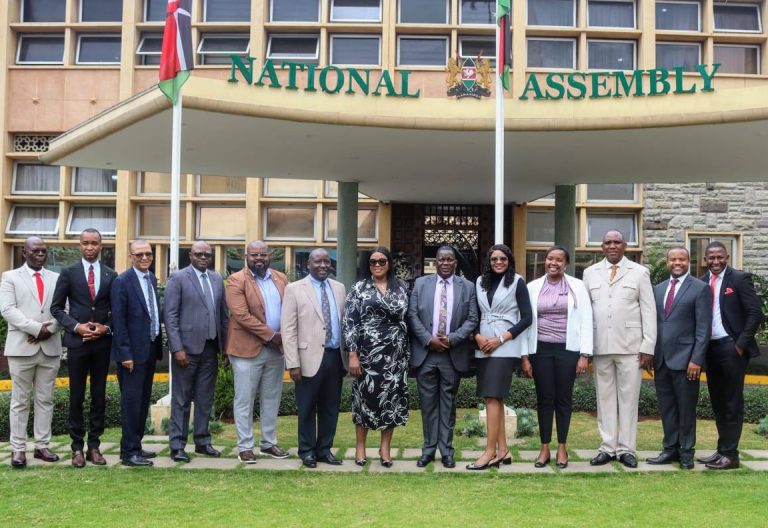
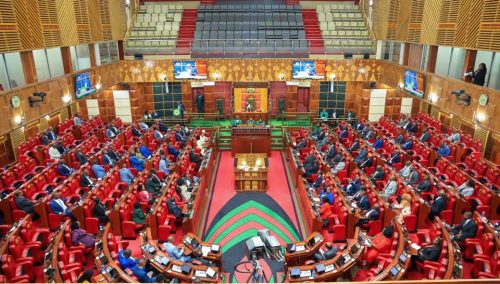
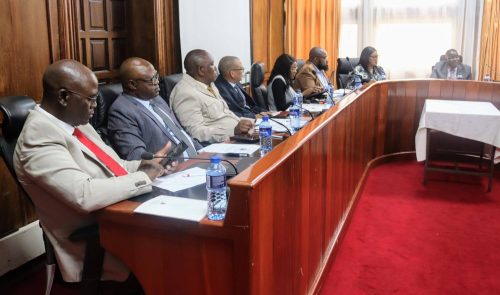
The National Assembly has hosted a delegation of Namibian legislators on a benchmarking visit aimed at learning from the country’s parliamentary budgeting processes.
In a statement posted on its Facebook account on August 12, 2025, Parliament announced that the group, made up of Members of Namibia’s Committee on Budget and Finance, met with Kenya’s Budget and Appropriations Committee at Parliament Buildings.
“The National Assembly of Kenya’s Budget and Appropriations Committee has hosted a delegation of Legislators from the Republic of Namibia who are in the country on a benchmarking visit. The Namibian delegation comprises Members of the Committee on Budget and Finance and is seeking to learn from Kenya’s parliamentary practices to strengthen their own budgetary systems,” the statement read.
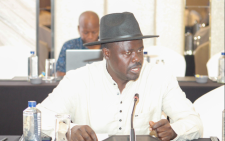
During the visit, the delegation was briefed on the committee’s mandate by the Vice-Chairperson of the Budget and Appropriations Committee, Robert Pukose.
Stakeholder engagement
You Might Also Like

In his address, Pukose emphasised the importance of stakeholder consultations in effectively managing the committee’s responsibilities, which include overseeing national budget expenditures, scrutinising money bills, and supervising the Parliamentary Service Commission and the Office of the Auditor-General.
“Pukose also highlighted the committee’s collaborative work with the Parliamentary Budget Office (PBO), emphasising that stakeholder consultations within the Legislature and the Executive are key in identifying funding gaps and priority areas,” the statement continued.
Step forward
Speaking during the visit, the Namibian team, led by their chairperson, Helaria Mukapuli, said the visit was an important step in building the capacity of their newly formed committee.
“This visit will facilitate knowledge exchange, transfer of skills, and learning of best practices and insights into parliamentary procedures, oversight mechanisms, and committee operations—ultimately contributing to better service delivery and stronger parliamentary governance,” Mukapuli said.
They further expressed admiration for the technical support that Kenya’s Parliamentary Budget Office provides in reviewing budgets, noting that such an office does not exist in Namibia.
“In Namibia, we don’t have a budget office, and that is actually our hope and belief—to start one. As legislators, we come from diverse professional backgrounds, so we need technical support staff to assist us in delivering our mandate,” Mukapuli added.
Echoing Mukapuli’s comments, Namibia’s Budget Committee Vice-Chairperson, Marius Sheya, praised Kenya’s inclusive approach to the budget process, remarking that in Namibia, budgetary processes are predominantly driven by the Executive.
“We are inspired by how the Budget Committee in Kenya is fully involved in the entire budget cycle, and also by how committees work in unity regardless of political affiliation,” Sheya said.
Author
Cy Muganda
View all posts by Cy MugandaLatest News



Advertisement
More on News
