Advertisement
Murkomen launches biometric system, cuts police clearance processing to 24 hours
Thursday 23rd July, 2026 03:06 PM|
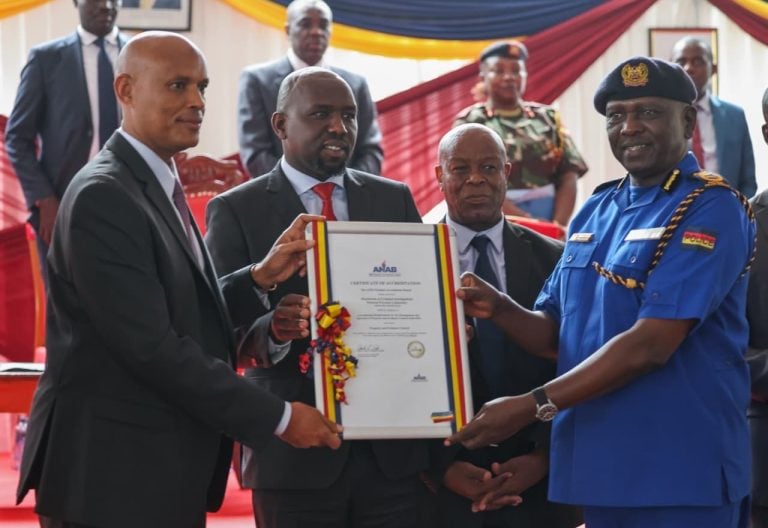
Kenya has reduced the processing time for police clearance certificates from 14 days to 24 hours following the rollout of a new Multi-Biometric Identification System (MBIS) across all 52 Huduma Centres.
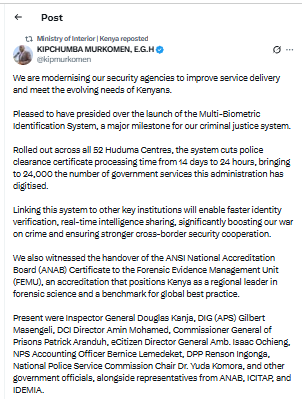
Interior Cabinet Secretary Kipchumba Murkomen said the system would improve identity verification, intelligence sharing and the delivery of security services to Kenyans.
Speaking on his X account on Thursday, July 23, 2026, after presiding over the launch of the system and the handover of the ANSI National Accreditation Board (ANAB) certificate to the Forensic Evidence Management Unit (FEMU).
Police clearance services go digital
The MBIS is expected to significantly speed up the processing of police clearance certificates by using biometric data to verify identities.
You Might Also Like



The rollout is part of the government’s wider digital transformation programme, which has seen thousands of public services moved online.
According to Murkomen, the number of government services digitised under the current administration has now reached 24,000.
“We are modernising our security agencies to improve service delivery and meet the evolving needs of Kenyans,” Murkomen said.
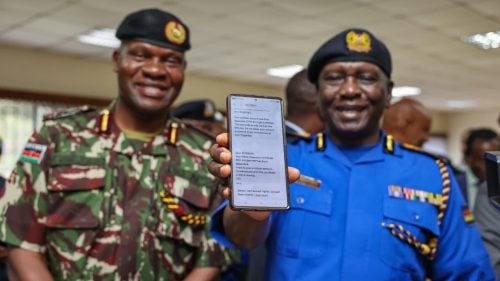
He said linking the biometric system with other key institutions would enable faster identity verification and real-time intelligence sharing.
“Linking this system to other key institutions will enable faster identity verification, real-time intelligence sharing, significantly boosting our war on crime and ensuring stronger cross-border security cooperation,” he said.
Murkomen says Kenya is safer
The launch came as the Interior CS defended the country’s security record amid criticism from former Deputy President Rigathi Gachagua.
Murkomen said Kenya was now safer and more secure, citing a reduction in terrorism, banditry and other criminal activities.
“Kenya is safer and more secure than ever before. There has never been a period with fewer incidents of terrorism, banditry and other criminal activities than now. The statistics speak for themselves,” he said.
He also defended Inspector General of Police Douglas Kanja against criticism of his leadership.
“There is no pending impeachment against you. It means that, as the Inspector General, you have the trust of the people of Kenya,” Murkomen told Kanja.
Forensic unit receives international accreditation
During the event, Murkomen also witnessed the handover of the ANAB certificate to the Forensic Evidence Management Unit.
The accreditation is expected to strengthen Kenya’s forensic investigation capabilities and position the country as a regional leader in forensic science.
Murkomen said the recognition would help improve the credibility and reliability of forensic evidence used in criminal investigations.
The government said the new biometric system would support faster service delivery while strengthening cooperation between security agencies and other institutions in the fight against crime.
New biometric system targets fake certificates
The new system is expected to go beyond speeding up the processing of Certificates of Good Conduct, with the DCI seeking to use biometric identification to combat identity fraud and fake certificates.
MBIS-ABIS Version 5 replaces the older fingerprint identification platform and links applicants’ biometric details to records in the DCI’s central database.
The system is expected to make it harder for individuals to obtain Certificates of Good Conduct using false identities, while helping detectives identify repeat offenders and detect attempts to register under different names using the same fingerprints.
The DCI processes about one million Certificates of Good Conduct annually, making faster and more secure verification increasingly important.
The biometric platform will also enable investigators to compare fingerprints recovered from crime scenes against stored records more efficiently, potentially helping detectives identify suspects faster and strengthen evidence used in criminal prosecutions.
Author
Latest News





Advertisement
More on News