Mudavadi visits Ethiopia amid World Bank’s warnings of looming water conflicts by 2050
By Aloys Michael, February 11, 2026Prime Cabinet Secretary Musalia Mudavadi is in Addis Ababa, Ethiopia, to represent the country at the 48th Ordinary Session of the African Union (AU) Executive Council.
His visit comes ahead of the 39th African Union (AU) Heads of State Summit, where African leaders are set to discuss urgent strategies for sustainable water management and sanitation across the continent.
The summit slated for February 14-15, 2026, comes amid growing warnings from the World Bank (WB) that water scarcity could spark conflicts across the continent by 2050.
According to the WB, climate-driven impacts on water, including droughts, floods, and pollution, may reduce GDP growth by up to 6 per cent across Africa, Asia, and the Middle East.
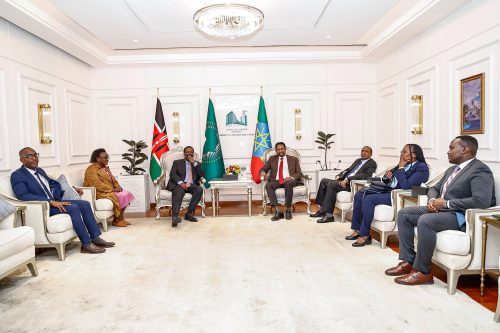
Former United Nations (UN) Secretary-General Kofi Annan cautioned that intense rivalries over freshwater might become the world’s next major source of conflict, surpassing even oil. In this context, Kenya is positioning itself at the forefront of efforts to foster collaboration and avert possible water wars.
“Fierce competition for fresh water may well become a source of conflict and wars in the future, replacing oil,” Kofi Annan stated in a speech addressing global leaders in 2001.
President William Ruto currently holds several influential positions, including AU Champion for Institutional Reform, Chair of the Committee of African Heads of State and Government on Climate Change (CAHOSCC), and Chair of the East African Community (EAC).
Through these roles, Kenya shapes continental policies on water security, climate resilience, and sustainable development.

The water war talks
Mudavadi is scheduled to hold bilateral talks with African leaders on the sidelines of the Executive Council, aiming to promote Kenya’s priorities in regional cooperation and conflict prevention.
Rising challenges such as climate change, rapid population growth, and uneven resource distribution are intensifying tensions both between nations and within local communities.
Disputes are particularly acute along major waterways, including the Nile, where Ethiopia’s Grand Ethiopian Renaissance Dam has heightened tensions with Egypt, which depends on the river for nearly 90 per cent of its freshwater needs.
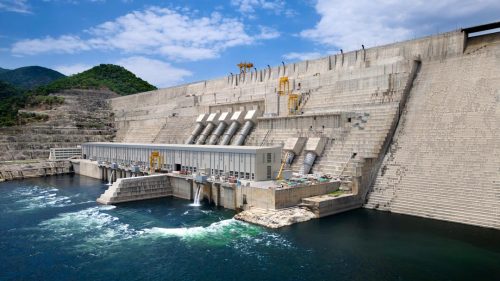
Other areas of concern include the Niger River basin, where upstream dam construction threatens downstream water access, and the diminishing Lake Chad Basin, which has sparked military confrontations between Nigeria and Cameroon over fishing rights and newly formed islands.
Moreover, water disputes are increasingly turning deadly. In regions like the Sahel and the Horn of Africa, prolonged droughts force pastoral communities into agricultural areas, triggering violent clashes over access to wells and grazing land.
In densely populated urban areas such as Nairobi’s Kibera slums, gangs often control limited water sources, leading to robberies and, in some cases, fatal attacks.
Meanwhile, in conflict zones like Sudan, armed groups have weaponised water by contaminating or destroying essential infrastructure, displacing vulnerable populations and exacerbating humanitarian crises.