MPs probe disappearance fears of over 27K metric tonnes of unsafe sugar
By Emmanuel Rono, May 12, 2026The National Assembly Committee on Trade, Industry and Cooperatives has launched a probe into the handling and whereabouts of over 27,839 metric tonnes of sugar imported into the country after concerns emerged that the consignment was unfit for direct human consumption.
The committee, chaired by Benard Shinali, on Tuesday, May 12, 2026, questioned officials from the Kenya Sugar Board over the movement and storage of over 27,000 metric tonnes of sugar imported by Mombasa Sugar Refinery Limited.
According to the committee, tests conducted by the Kenya Bureau of Standards established that the sugar only met parameters for raw sugar meant for further refining and was therefore not fit for direct consumption.
“There is no clearance document provided in your documentation. We need to see the document that authorised the movement of MSRL sugar from the Mombasa Warehouse to the Nairobi Warehouse. We require the answers urgently so we can know Kenyans’ lives are safe,” MP Shinali said.
Sugar has not been released into the local market
Appearing before the committee, Kenya Sugar Board CEO Jude Chesire and other officials defended the handling of the consignment, insisting that the sugar had not been released into the local market.
KSB Director for Regulation and Compliance Samwel Kembo told MPs that the sugar was initially stored in a customs bonded warehouse at the Kenya Ports Authority in Mombasa before transportation to Nairobi began.

. PHOTO/@sugar_board/X
“This sugar was never diverted or distributed in the country. The Sugar was well-secured and kept intact at the Kenya Ports Authority in Mombasa in a Customs bonded warehouse. The company obtained customs clearance on April 24 2026, and the loading commenced on May 2 2026. The first batch of 19 SGR wagons carrying a total of 26,220 bags arrived in Nairobi on 3rd May,2026,” Kembo said.
Failure to document
However, MPs faulted the board for failing to provide detailed records, including seal serial numbers, bonded warehouse details and documentation authorising the transfer of the sugar.
Marianne Keitany questioned the rationale behind moving the sugar from one bonded warehouse to another.
“If a release letter was given, why would you be moving them from one bonded warehouse to another bonded warehouse in Nairobi? Unless there is a diversion trick being done here,” Keitany said.
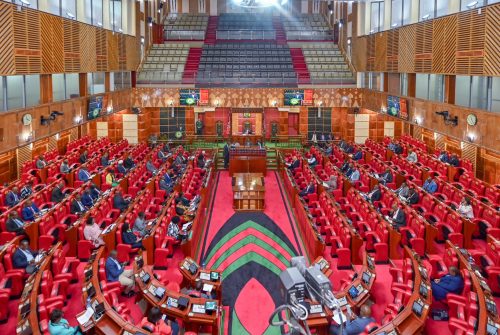
Assuring the Committee on the measures taken to ensure the security of the consignment. Chesire said that a multi-agency team has been constituted and is responsible for overseeing the release, transportation and utilisation of the raw sugar to produce white refined sugar for industrial use.
“We hired police officers to guard the consignment already in Nairobi, and it was locked and sealed. Those are the measures that we have ensured we meet the conditions provided by MAT in actually securing this consignment. The trucks that will be used to move the consignment to Kisumu must be electronically tracked,” Chesire said.
Mathare MP, Anthony Aluoch, warned the board against misleading Kenyans, saying previous consignments declared unsafe had still found their way into the market.