MPs blame police, weak laws for rising drug abuse
By Emmanuel Rono, April 10, 2026Members of Parliament (MPs) have criticised security agencies and weak legal frameworks, warning that Kenya risks losing a generation of young people to alcohol and drug abuse.
The concerns were raised during a session of the National Assembly’s Departmental Committee on Administration and Internal Security at Bunge Towers on Thursday, April 9, 2026, where lawmakers met officials from the Directorate of Criminal Investigations (DCI), the National Authority for the Campaign Against Alcohol and Drug Abuse (NACADA), and the Anti-Narcotics Unit (ANU).
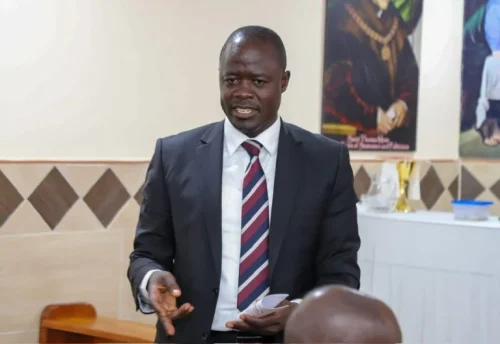
Led by Saku MP Dido Ali Rasso, who chaired the session, the committee questioned the legal grounding of current interventions, arguing that policies not anchored in law cannot effectively combat the growing crisis.
“Is this a national property owned by Parliament? Because in the absence of it being owned by Parliament, then it is not out there. You cannot enforce it,” Rasso said.
“In the absence of law, then you cannot effectively undertake the fight against alcohol and drug abuse.”
Drug distribution networks
Homa Bay Town MP Peter Kaluma painted a grim picture of the crisis, particularly in western Kenya, blaming rogue police officers for enabling drug distribution networks.
Kaluma cited instances where drug dens operate openly under police protection, alleging that some officers guard traffickers and even facilitate the sale of confiscated narcotics.
” You have a large body of skilled but unemployed young people being destroyed by drug abuse, especially in universities,” Kaluma said, alleging that some officers protect traffickers and facilitate the sale of confiscated narcotics.
According to Kisumu West MP Rosa Buyu, police officers as key beneficiaries of the illicit trade.
“All the strategies we are discussing will not work because the problem starts and ends with the police,” Rosa Buyu said. “Even when illicit alcohol is confiscated, by morning it is gone, yet it was under police control.”
DCI commitment
“Any officer found involved in drugs faces disciplinary and court action,” he said, adding that the Anti-Narcotics Unit is being strengthened through vetting and specialized training.
Amin also pointed to the complexity of cross-border drug trafficking, noting that networks span across East Africa, including Uganda, Tanzania, and Ethiopia, making regional cooperation critical.

NACADA Chief Executive Officer Dr Anthony Omerikwa acknowledged policy and legislative gaps, revealing that a national policy guiding alcohol and drug control has yet to be anchored in law.
“We stand guided. We will ensure it gets legitimacy and the force of law,” he said, attributing delays to technical and drafting challenges rather than Parliament.