Ksh6.5M for 14 days: Wafula Buke compares Nyayo House torture award to Ruto’s protest compensation
By Mustafa Juma, July 7, 2026Veteran pro-democracy activist Wafula Buke has questioned the government’s compensation framework for victims of recent anti-government protests, arguing that the amounts proposed for families of those killed fall short when compared to court awards granted to survivors of torture during the Nyayo era.
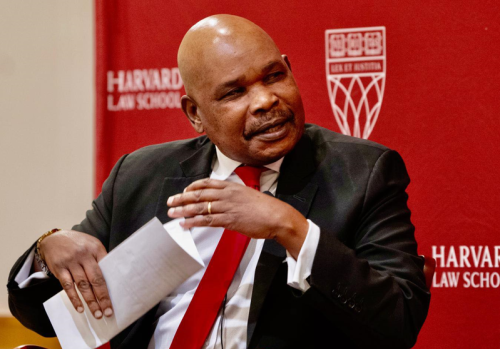
Speaking during a televised interview on a local TV station on the night of Monday, July 6, 2026, Buke drew on his own experience as a former political detainee, saying he was awarded Ksh6.5 million after being unlawfully detained and tortured at Nyayo House for 14 days.
“I was detained at Nyayo House for only 14 days and was awarded Ksh6.5 million in compensation. If Ksh6.5 million is for 14 days, then how much do the families of those who died in protest deserve?” Buke posed.
He questioned the government’s decision to peg compensation for families of deceased protesters at Ksh3 million.
“According to President Ruto, do they deserve only Ksh3 million?” he questioned.
Buke said several fellow victims of torture under the Moi regime received even higher compensation through the courts.
“I’m just saying this because I know other comrades who received as much as Ksh20 million, and they are still alive. Yet under President Ruto’s administration, a life is worth about Ksh3 million,” Buke said.

Ksh2 billion compensation programme
Buke’s remarks come weeks after President William Ruto received the Framework for Compensation of Victims of Protests and Riots, prepared by the Kenya National Commission on Human Rights (KNCHR) with input from an 18-member panel of experts chaired by constitutional scholar Prof. Makau Mutua. The framework stems from recommendations made under the bipartisan National Dialogue Committee (NADCO) process.
The government announced that it had set aside Ksh2 billion to compensate victims of human rights violations arising from protests and demonstrations between 2013 and 2025, including cases involving extrajudicial killings, torture, enforced disappearances, sexual violence, injuries and destruction of livelihoods.
While unveiling the programme, President Ruto acknowledged that financial compensation could never fully heal the suffering endured by victims and their families.
“The Ksh2 billion we have committed cannot replace a son or a daughter. It cannot restore years lost to trauma. It cannot fully compensate a family, a trader, or a community for all that has been taken from them,” the president said.
He also stressed that the compensation package was not intended to reward violence or criminal conduct during demonstrations but to address verified human rights violations.
How the compensation works
The Makau Mutua-led panel later published the compensation matrix, outlining payments based on the severity of harm suffered.
Under the framework, families of those killed receive Ksh3 million, victims with severe injuries receive Ksh1 million, victims with moderate injuries receive Ksh500,000, victims with minor injuries receive Ksh50,000, survivors of aggravated sexual violence receive Ksh1 million, and victims who suffered economic losses may receive up to Ksh50,000, while pending medical expenses can also be reimbursed under the programme.
Claimants are required to submit supporting documents such as post-mortem reports, medical records, police reports or witness statements, depending on the category of harm. The panel said the verification threshold is a “reasonable basis to believe,” rather than the stricter standard used in criminal trials.
Payments already underway
The compensation exercise has already begun.
In the first phase, the panel announced payments to 348 verified victims, disbursing Ksh448.7 million across six categories of harm.
The initial payouts included 115 families of deceased victims receiving Ksh345 million (Ksh3 million each), 24 severely injured victims receiving Ksh24 million, 137 victims with moderate injuries receiving Ksh68.5 million, 60 victims with minor injuries receiving Ksh3 million, eight survivors of aggravated sexual offences receiving Ksh8 million, and four victims compensated for economic losses.
The panel has since indicated that compensation will continue in phases until all verified claims are settled. More recently, it announced that over 500 victims had received a combined Ksh674 million under the programme, signalling an expansion of the exercise.
Mixed reactions
Although many families welcomed the government’s decision to begin compensating victims, the framework has also drawn criticism from legal experts and political leaders, with some victims claiming exclusion.
Constitutional lawyer Willis Otieno has argued that compensation should not replace accountability, insisting that authorities must identify and prosecute those responsible for unlawful killings and injuries during demonstrations.
Siaya Governor James Orengo also questioned the adequacy of the Ksh3 million compensation for fatalities, arguing that Kenyan courts have in some wrongful death cases awarded families between Ksh20 million and Ksh50 million, depending on the circumstances.
It is this comparison that Buke invoked, arguing that compensation awarded to victims of historical state abuses demonstrates that the value assigned to lives lost during recent protests should be reconsidered.