Advertisement
Kiambu leads as mob justice cases hit 845 nationwide since January 2025
Wednesday 25th February, 2026 04:23 PM|

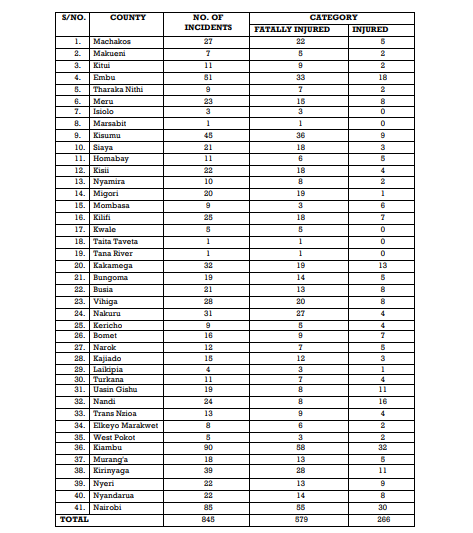
Kiambu County has recorded the highest number of mob justice incidents in the country since January 2025, according to the Ministry of Interior and National Administration.
In a statement to the Senate, dated February 23, 2026, the ministry said 845 incidents of mob injustice were reported nationwide, leading to 579 deaths and 266 injuries.
Kiambu tops the list with 90 cases. Out of these, 58 people died while 32 were injured.
Nairobi follows with 85 incidents, where 55 people were killed and 30 injured. Embu recorded 51 cases, Kisumu 45, and Kirinyaga 39.
You Might Also Like



The statement was issued in response to concerns raised by Kisumu Senator Prof. Tom Ojienda over the rising cases across the country.
Counties with highest cases
Besides Kiambu, other counties with high numbers include Nakuru (31), Kakamega (32), Vihiga (28), Machakos (27) and Kilifi (25).
The ministry tabled the figures in the Senate, breaking down the number of incidents and the casualties in each county.
“Honourable Speaker, the following are the reported incidents of mob justice and related fatalities in the country from January 2025 to date,” the statement reads.
Government response
The ministry said it has taken steps to improve police response and investigations.
It said police have deployed officers to respond quickly to mob incidents, especially in urban areas. The service has also expanded the Directorate of Criminal Investigations’ forensic and intelligence capacity.
“Deployment of police officers to respond quickly to incidents of mob injustice, especially in urban centers,” the ministry said.
It added that the Independent Policing Oversight Authority investigates police misconduct to improve accountability and build public trust.
The ministry said the government uses toll-free hotlines to allow the public to report crimes and emerging mob situations.
Addressing mistrust
The ministry admitted that mistrust in the criminal justice system fuels mob attacks.
“Mistrust in the criminal justice system, as some members of the public perceive investigations and court processes to be slow, ineffective or biased,” the statement says.
It said some communities lose faith when suspects are released, prompting them to take the law into their own hands.
To address this, the government is conducting community barazas and Nyumba Kumi meetings to urge residents to report suspects to police instead of attacking them.
It also said it is digitising police records, including the Occurrence Book, to improve transparency and allow the public to monitor cases in real time.
The ministry linked the rise in mob justice to the spread of “instant justice” videos on social media, drug abuse, poverty, unemployment and organised criminal gangs.
“Circulation of crime-related content and ‘instant justice’ videos on social media platforms triggers copycat incidents and normalizes violence,” the statement says.
To curb the trend, the government said it is cracking down on drug trafficking and criminal gangs, strengthening community policing and working closely with the Office of the Director of Public Prosecutions to ensure cases are handled in court.
The ministry said police stations are required to maintain standby teams to respond to incidents, including mob attacks, and station commanders must ensure swift action.
Author
Kenneth Mwenda
Kenneth Mwenda is a business, sports, and politics digital writer with over seven years of experience in journalism, covering breaking news, feature stories, and in-depth analysis across a range of beats.
For inquiries, he can be reached at [email protected]
View all posts by Kenneth MwendaLatest News








Advertisement
More on News