Advertisement
KHRC: November by-elections exposed deep rot in Kenya’s electoral system
Friday 05th December, 2025 12:54 PM|

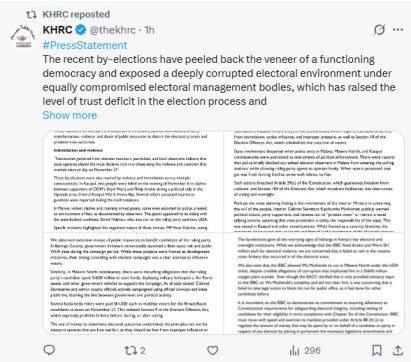
A new report by the Kenya Human Rights Commission (KHRC) and partner organisations paints a grim picture of the 22 by-elections held on November 27. What should have been routine democratic exercises instead revealed widespread manipulation, intimidation, bribery, and open abuse of state power.
According to the report, the by-elections peeled back the veneer of a functioning democracy and exposed how state institutions and some opposition actors planned and executed violations aimed at defeating the will of the people. The groups say these abuses created a trust deficit in the electoral system and raised serious doubts about the country’s readiness for the 2027 General Election.
“Testimonies gathered from election monitors, journalists, and local observers indicate that state agencies played the most decisive role in orchestrating the violence and coercion that marked election day on November 27,” the report reads.
Violence and intimidation
The report documents coordinated violence across several constituencies. In Kasipul, two people died and several others were injured during clashes between supporters of ODM candidate Boyd Were and independent candidate Philip Aroko. Observers noted that armed groups operated freely, with some attacks occurring in the presence of police.
You Might Also Like


In Malava, witnesses reported roaming armed goons, some escorted by police officers, who appeared to back UDA candidate David Ndakwa. Former MP Peter Kaluma, serving as an observer, suffered a head injury after an attack at Agoro Sare Primary School. His bodyguard also lost his firearm during the incident.
Similar scenes unfolded in Mbeere North, where polling agents were assaulted on their way to stations. Groups carrying crude weapons clashed at Siakago Social Hall during vote counting, and journalists had their phones confiscated.
Candidates like Seth Panyako said state-linked groups stormed hotels and campaign bases to intimidate opponents. Police seized vehicles carrying crude weapons in Khwisero and Kasipul, raising concerns about organised efforts to influence the vote.
Local administrators also issued threats. A chief in Malava warned women and youth groups that supporting the opposition would invite trouble from Nairobi.
Senior state officials, including Musalia Mudavadi and Moses Wetang’ula, told voters that losing UDA aspirants would receive state appointments-comments that frightened social programme beneficiaries who feared losing support if they voted against the ruling coalition.
Bribery, violence, oversight failures
The report says bribery was widespread, with cash handouts distributed openly. KHRC notes that state and county officials used government vehicles to move money and mobilise voters. In Mbeere North, claims surfaced that the ruling party candidate used military aircraft, state vehicles, and significant public resources during the campaign.
Observers also recorded distribution of mattresses and blankets branded “GOK” to elderly voters in Malava. Boda boda riders received payments of Ksh1,000 each to mobilise support for preferred candidates.
In Mbeere North and other constituencies, voters were encouraged to photograph their marked ballots to prove compliance with bribery arrangements. Senior state officials, including Cabinet Secretaries Alfred Mutua and Geoffrey Ruku, visited polling stations where they were not registered, creating pressure on voters and staff.
The Interior Ministry’s warning against citizens protecting votes also discouraged lawful oversight. Overall voter turnout fell to 20 percent, which the report links to fear, intimidation, and a sense of futility among young voters.
KHRC criticises the IEBC, police, and oversight bodies for failing to prevent or punish violations. The commission faults the IEBC for ignoring widespread bribery and for allowing candidates with unresolved corruption allegations to run. It also condemns the police for acting as agents of political enforcement and faults IPOA for remaining silent despite evidence of abuses.
The organisations urge the IEBC to admit failure, investigate offences, and enforce Chapter Six and campaign financing laws. They call on police to stop aiding political interests, and on IPOA to launch investigations into police conduct. They also recommend mapping future hotspots, restoring voter confidence, and taking steps to ensure a safe and fair election environment ahead of 2027.
Author
Kenneth Mwenda
Kenneth Mwenda is a business, sports, and politics digital writer with over seven years of experience in journalism, covering breaking news, feature stories, and in-depth analysis across a range of beats.
For inquiries, he can be reached at [email protected]
View all posts by Kenneth MwendaLatest News



Advertisement
More on News