Advertisement
Kenya’s TB progress at risk as funding cuts threaten medication supplies
Tuesday 29th July, 2025 03:42 PM|

Kenya’s fight against tuberculosis (TB) is facing a critical moment.
After years of public health progress that led to a 41% reduction in TB cases and a 66% drop in related deaths, funding cuts now threaten to undo the gains.
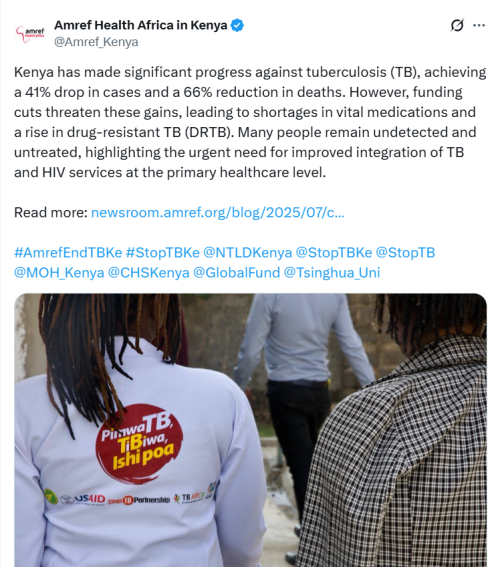
“Kenya has made significant progress against tuberculosis (TB), achieving a 41% drop in cases and a 66% reduction in deaths. However, funding cuts threaten these gains, leading to shortages in vital medications and a rise in drug-resistant TB (DRTB). Many people remain undetected and untreated, highlighting the urgent need for improved integration of TB and HIV services at the primary healthcare level,” read an Amref post on X dated July 29, 2025.
With shortages of essential drugs and testing kits, the country is witnessing a silent surge in drug-resistant TB (DR-TB) as many people go undiagnosed and untreated.
You Might Also Like



Data from the Ministry of Health shows that over 124,000 people are affected by TB annually in Kenya. However, in 2024, only 96,000 were notified, leaving nearly 28,000 cases undetected. Health experts warn that each missed case can infect up to 15 others yearly, increasing community risk.
Though the treatment period for DR-TB has been reduced from 18 to 6 months, lack of medication threatens treatment continuity, particularly in informal settlements where access is already limited.
In Nairobi’s Kibra settlement, Amref Health Africa has been at the centre of TB care for decades. Originally a cholera treatment site, the Kibra Amref Health Centre now offers integrated TB, HIV, and primary healthcare, serving over 50,000 clients annually.
In 2024 alone, Kibra recorded 327 TB cases, with nearly a third managed at the Amref facility. Still, Nairobi’s 14,000 recorded cases reflect an estimated 40% detection gap.
CHPs key in frontline response
Community Health Promoters (CHPs) remain central to Kenya’s TB response, especially in informal settlements. Armed with limited resources, over 200 CHPs affiliated with Amref go door-to-door identifying potential TB cases, ensuring adherence through Directly Observed Therapy (DOT), and offering psychosocial support.
“Our CHPs go door-to-door, identify cases early, and ensure people stick to treatment. Six months of consistent care saves lives,” said Sara Chandi, the Sub-County TB Coordinator.
Their efforts are especially vital now, with clinics under pressure due to declining donor support and limited domestic financing. The crisis has pushed many to rely on incomplete treatments, raising fears of more DR-TB cases emerging.
Patients face stigma
Beyond the physical illness, TB takes a toll on mental health. Mildred Musili, a TB survivor, recalls struggling with depression during her treatment journey. She credits Amref’s wellness sessions and small stipends for helping her cope with both the disease and societal stigma.
“TB is not just a medical condition—it breaks you emotionally,” she said.
The National TB, Leprosy, and Lung Disease Program is calling for more support from partners like the Global Fund and stronger integration of TB and HIV services at the primary healthcare level. As Immaculate Kathure noted, “It’s not just about visibility; it’s about saving lives.” Without urgent action, the country risks sliding backwards in its fight against TB.
Author
Latest News






Advertisement
More on News
