Kenya’s food crisis deepens as hunger persists beyond drought recovery – report
By Aloys Michael, July 18, 2026Kenya was expected to be one of the success stories emerging from the Horn of Africa’s devastating drought. Improved rainfall, recovering livestock herds and better harvest prospects had raised hopes that food insecurity would ease after years of climate-driven hardship.
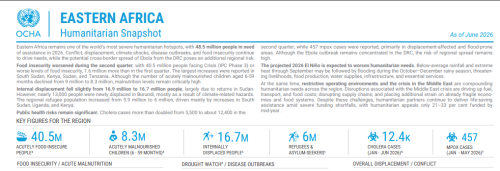
Instead, millions of Kenyans are still struggling to put food on the table. According to the latest Eastern Africa Humanitarian Snapshot published by the United Nations Office for the Coordination of Humanitarian Affairs (OCHA), 4.1 million people in Kenya are facing acute food insecurity, making the country one of the region’s fastest-deteriorating humanitarian hotspots.
The report identifies Kenya among the countries that recorded the largest increases in food insecurity during the second quarter of 2026, alongside South Sudan, Sudan and Tanzania.
The findings challenge a long-held perception that East Africa’s food emergencies are concentrated primarily in conflict-affected countries such as Sudan and Somalia. Instead, Kenya is becoming part of a broader and increasingly interconnected “hunger belt” stretching from northern Tanzania through Kenya and into southern Ethiopia.
“One of the world’s most severe humanitarian hotspots, with 48.5 million people expected to require humanitarian assistance in 2026. Across the region, 40.5 million people are facing Crisis (IPC Phase 3) or worse levels of food insecurity, an increase of 1.6 million people compared to the previous quarter,” the report reads.
Kenya’s worsening food security situation cannot be explained by drought alone. Instead, multiple pressures are converging to create a more complex and persistent crisis.
Climate Change is driving extreme weather
While some parts of Kenya have received better rainfall, climate volatility continues to undermine livelihoods.
OCHA warns that the projected 2026 El Niño cycle could worsen humanitarian conditions across Eastern Africa. Below-average rainfall and extreme heat are expected through September, potentially followed by flooding during the October-to-December rainy season.
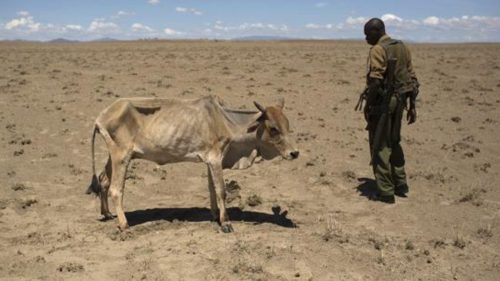
For pastoralist and farming communities in counties such as Turkana, Marsabit, Wajir, Garissa and Mandera, the result is often a cycle of recurring losses. Livestock weakened by drought remain vulnerable to disease and water shortages, while crops that survive dry conditions may later be destroyed by floods.
Food availability does not always translate into food access, as many low-income households continue to struggle with elevated prices for staple foods, transport and agricultural inputs. OCHA notes that disruptions linked to the ongoing crisis in the Middle East are increasing fuel, transport and food costs across the region, placing additional pressure on already fragile economies and food systems.
For families already spending a large share of their income on food, even modest price increases can push them deeper into hunger.
Regional conflicts are creating ripple effects
Conflict remains a major driver of humanitarian needs across Eastern Africa. Instability in Sudan, South Sudan and other parts of the region continues to disrupt trade routes, livelihoods and population movements. OCHA reports that the regional refugee population has risen to 6 million people, driven largely by increases in South Sudan, Uganda and Kenya.
These movements place additional pressure on food systems, local services and humanitarian resources across the region.
Food systems across the East African Community (EAC) are deeply interconnected through trade, migration and shared climate risks. Northern Tanzania supplies maize to Kenyan markets during periods of shortage, while livestock trade links pastoralist communities across Kenya, Ethiopia and Tanzania. Disruptions caused by drought, flooding, conflict or price shocks in one country increasingly affect food availability and affordability across borders.
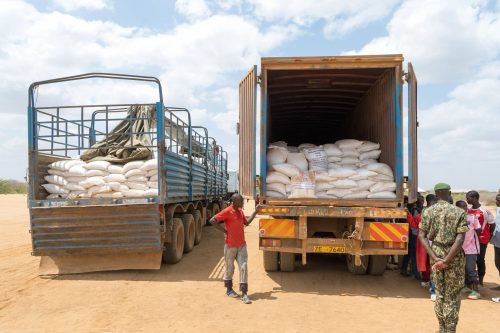
The report’s identification of Tanzania among the countries experiencing significant increases in food insecurity is therefore particularly important. It suggests that pressures are emerging simultaneously across multiple parts of the regional food system.
As climate change intensifies, these cross-border vulnerabilities are likely to become even more pronounced. The region’s food crisis is occurring alongside other humanitarian challenges.
OCHA reports that cholera cases more than doubled during the second quarter, while mpox outbreaks continued to affect vulnerable communities. Across Eastern Africa, 8.3 million children aged six to 59 months are acutely malnourished, highlighting the severe impact of prolonged food insecurity on child health and development.
Meanwhile, humanitarian agencies face significant funding constraints, with regional appeals only 21 to 33 per cent funded by mid-year, limiting their ability to respond to growing needs.
The future of hunger in East Africa
The emerging hunger belt stretching from northern Tanzania through Kenya into southern Ethiopia highlights a growing reality for East Africa: hunger is no longer driven by drought alone.
Climate change, inflation, conflict spillovers, rising fuel costs, population displacement and fragile food systems are combining to create a more complex and persistent crisis. Even when rains return, millions of households remain vulnerable to economic and environmental shocks.
Unless governments accelerate investments in climate-smart agriculture, irrigation, water infrastructure, regional food trade and social protection programmes, food insecurity is likely to remain a defining challenge across the region.
For Kenya and its EAC neighbours, the challenge is no longer simply surviving the next drought. It is building resilient food systems capable of withstanding a future shaped by constant climate and economic shocks.