Kenya still under money laundering watchlist as African peers exit
By Kenneth Mwenda, October 25, 2025Four African countries – South Africa, Nigeria, Mozambique and Burkina Faso – have been removed from the Financial Action Task Force’s (FATF) grey list, leaving Kenya still flagged for weaknesses in its fight against money laundering and terrorist financing.
The announcement was made at the FATF plenary meeting in Paris on Friday, October 24, 2025, where global delegates reviewed progress made by countries under increased monitoring. The Paris-based watchdog said the four African nations had completed their agreed reforms and successfully passed on-site inspections that confirmed steady progress.
FATF President Elisa de Anda Madrazo described the outcome as a positive story for the continent, commending the countries for strengthening their systems to detect and prevent illicit financial flows.
She noted that South Africa had revamped its tools to trace suspicious transactions, Nigeria had improved coordination among state agencies, Mozambique had boosted financial intelligence sharing, and Burkina Faso had strengthened oversight of financial institutions.
Officials from the delisted countries celebrated the decision.
“It marked a major milestone in Nigeria’s journey towards economic reform, institutional integrity and global credibility,” Nigerian President Bola Ahmed Tinubu said.
South Africa’s tax chief Edward Kieswetter said the move was encouraging but warned that the work was far from over, calling the delisting a milestone, not a finish line.
Nigeria and South Africa were placed on the grey list in 2023, followed by Mozambique in 2022 and Burkina Faso in 2021. Their removal now signals growing confidence in Africa’s efforts to fight financial crimes.
Kenya still under scrutiny
However, Kenya remains on the FATF grey list after being flagged in February 2024. The watchdog cited deficiencies in the country’s anti-money laundering (AML) and counter-terrorism financing (CFT) systems. These weaknesses expose Kenya to illicit financial flows, including corruption, tax evasion, trade misinvoicing, and terrorist financing.
The listing has had far-reaching consequences. In June 2025, the European Commission added Kenya to its own list of high-risk third countries for financial crime. This means that banks, auditors and financial institutions in the European Union must now apply stricter checks when dealing with Kenyan clients.
The move has increased compliance costs for Kenyan businesses and delayed cross-border transactions. Experts warn that it could discourage investment and make it harder for Kenyan companies to access trade finance or open accounts in Europe.
In response, President William Ruto signed the Anti-Money Laundering and Countering of Terrorism Financing Laws (Amendment) Bill, 2025, along with the Insurance Professionals Bill 2024, on June 17, 2025.
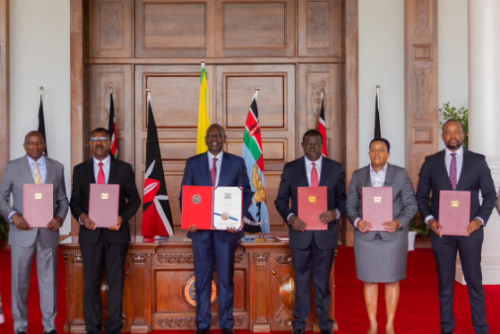
The amendments aim to close loopholes in areas such as property transactions, shell companies, and financial oversight, while strengthening supervision across sectors including banking, insurance, retirement benefits, and betting.
Officials said the reforms are intended to align Kenya’s legal framework with FATF and ESAAMLG recommendations, improving transparency and accountability.
According to Transparency International, Kenya loses close to Ksh253 billion every year through illicit financial flows. the grey listing should act as a wake-up call for the government to strengthen law enforcement and improve transparency in financial dealings.
Staying on the list too long could damage Kenya’s reputation as a regional financial hub. It signals to investors and trading partners that the country’s financial system is not yet strong enough to detect or prevent the movement of dirty money.
More than 200 countries follow FATF’s standards, which set the global rules for preventing money laundering and terrorist financing. Being removed from the list often improves investor confidence and reduces transaction scrutiny in global markets.