Kenya records 45% drop in TB cases
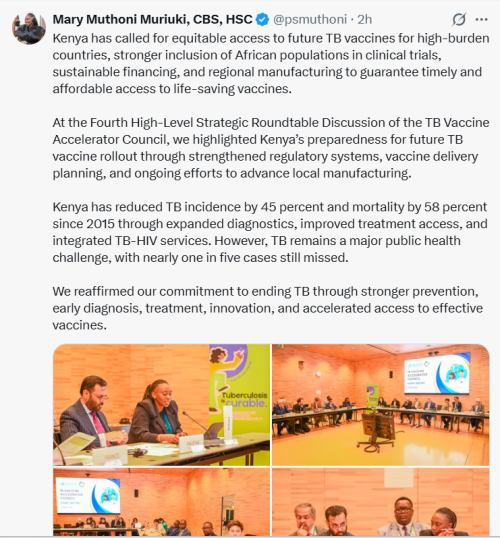
By Faith Lagat, May 19, 2026Kenya has reported a 45 per cent reduction in tuberculosis (TB) incidence and a 58 per cent decline in TB-related deaths since 2015, driven by expanded diagnostics, improved treatment access, and integrated TB-HIV services.
The progress was highlighted by Principal Secretary for Health Mary Muthoni during the Fourth High-Level Strategic Roundtable Discussion of the TB Vaccine Accelerator Council on Tuesday, May 19, 2026.
According to the Ministry of Health, Kenya diagnosed and initiated treatment for 90,900 TB cases in 2025, representing 81 per cent of the estimated burden.
However, health officials say nearly one in five cases remains undetected, pointing to continued gaps in screening, diagnosis, and case identification.
“Kenya has reduced TB incidence by 45 per cent and mortality by 58 per cent since 2015 through expanded diagnostics, improved treatment access, and integrated TB-HIV services. However, TB remains a major public health challenge, with nearly one in five cases still missed,” read the X post in part.
TB gains and vaccine preparedness
Speaking at the forum on May 19, 2026, Muthoni called for equitable access to future TB vaccines, particularly for high-burden countries. She also urged stronger inclusion of African populations in clinical trials, sustainable financing, and regional manufacturing to ensure timely and affordable vaccine access.
She noted that Kenya is preparing for future vaccine rollout through strengthened regulatory systems, expanded vaccine delivery planning, and efforts to support local manufacturing capacity. The Ministry of Health reaffirmed its commitment to ending TB through prevention, early diagnosis, treatment adherence, innovation, and accelerated access to vaccines.
The government’s TB response aligns with broader health reforms under Taifa Care, which focuses on Universal Health Coverage through strengthened primary health care systems and community-based interventions.
Community health and workforce expansion
Kenya continues to scale up community health services as part of its disease prevention strategy. The country currently supports more than 107,000 Community Health Promoters (CHPs) who are trained, digitally equipped, and provided with monthly stipends. These workers deliver household-level care, conduct early disease detection, support referrals, and promote preventive health services across counties.
At the 79th World Health Assembly in Geneva, Kenya showcased its community health model, highlighting the role of a structured and digitalised workforce in improving health outcomes and expanding access to underserved populations.
Funding concerns
Despite the progress, concerns have been raised over reduced funding for TB programmes. In March 2026, Members of Parliament flagged cuts to the National Tuberculosis, Leprosy and Lung Disease Programme (NTLD-P), which has seen its budget reduced from about $10 million (Ksh1.3 billion) to $7.7 million (Ksh1 billion) over two years.
Officials warned that the reduction could affect key interventions, including shorter treatment regimens for drug-resistant TB, preventive therapies, digital X-ray services, training, and community diagnostics. Health officials also raised concerns about delayed staff payments and reduced awareness campaigns targeting high-risk groups.
Lawmakers cautioned that funding cuts across TB, HIV, and malaria programmes could slow progress and risk reversing gains made over the past decade. Kenya continues to rely on sustained financing, partnerships, and community-led interventions to close detection gaps and advance toward ending TB as a public health threat.