Joho pledges transparency in Mrima Hill mining project
By Kenneth Mwenda, January 10, 2026Mining and Blue Economy Cabinet Secretary Hassan Ali Joho has pledged transparency and accountability in the proposed mining of rare earth minerals at Mrima Hill in Kwale County, amid growing local and international interest in the resource-rich forest.
In a post on X on Saturday, January 10, 2026, Joho said the government had assured Kwale County leaders that the project would follow an open and competitive tendering process. He described Mrima Hill as set to become Kenya’s first mining project to be awarded through such a system.
“We assured the Kwale county leadership that the Ministry will uphold transparency and accountability throughout the project, with Mrima Hill set to become Kenya’s first mining project subjected to an open and competitive tendering process,” Joho wrote.
He added that the government had committed to early and continuous community consultation, closer cooperation between the national and county governments, respect for local culture, and the protection of livelihoods and social stability.
Joho’s remarks followed a consultative meeting with Kwale leaders held on Friday, January 9, where he confirmed that the project would be handled as a matter of national strategic importance. He said Mrima Hill hosts minerals critical to modern infrastructure development and the global energy transition.
“Our obligation as the national government is to ensure that these resources are extracted safely, transparently and sustainably for the long-term prosperity of Kwale and the country as a whole,” he said.
Global interest, local tensions
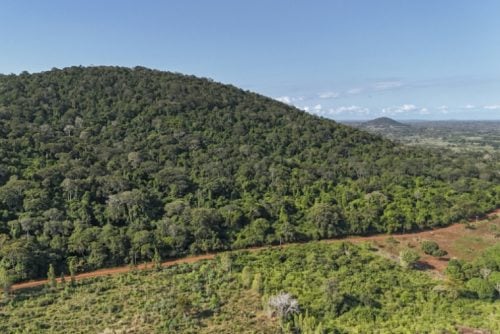
Mrima Hill, a forest covering about 390 acres near Kenya’s Indian Ocean coastline, sits on vast rare earth deposits. A 2013 estimate by Cortec Mining Kenya, a subsidiary of Pacific Wildcat Resources, valued the minerals at more than $60 billion, including large deposits of niobium, a metal used to strengthen steel.
The site has attracted growing attention from global powers. According to a report published in October 2025, officials and investors from the United States, China and Australia have shown interest in the area, driven by rising global demand for rare earths and China’s tightening control over exports.
That interest has fuelled anxiety among local communities, most of whom belong to the Digo ethnic group. Residents have raised concerns over possible displacement, loss of sacred sites, and exclusion from future mining benefits.
Past attempts to develop the site were also marred by controversy, including the revocation of Cortec’s mining licence in 2013 over environmental and licensing issues.
Kenya later imposed a temporary ban on new mining licences in 2019 amid concerns about corruption and environmental damage. The government has since introduced reforms aimed at improving transparency and attracting investment, with a target of growing the mining sector’s contribution to GDP to 10 percent by 2030.