Jimi Wanjigi to Ruto: You swore to protect the Constitution, not pour blood over it
By Kenneth Mwenda, June 25, 2026Safina Party leader Jimi Wanjigi has sharply criticised President William Ruto over the government’s handling of protests, police conduct, and media freedom as Kenya marked the second anniversary of the June 25, 2024, Gen Z demonstrations.
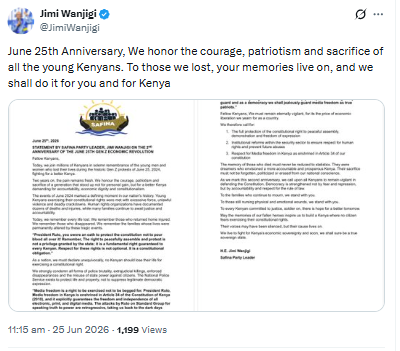
In a strongly worded statement posted on his X account on Thursday, June 25, 2026, Wanjigi accused the government of failing to protect constitutional rights and warned against the continued use of force against citizens exercising their freedoms.
“President Ruto, you swore an oath to protect the constitution, not to pour blood all over it!” Wanjigi said in the statement.
The Safina Party leader spoke as the country remembered the young Kenyans who died during the anti-Finance Bill protests of June 2024. The demonstrations became one of the most significant political moments in recent Kenyan history after thousands of young protesters stormed Parliament following the passage of the Finance Bill 2024.
The protests forced President Ruto to withdraw the controversial bill after nationwide anger over new tax proposals and the rising cost of living.
Wanjigi said the memories of those events remain painful for many families across the country.
“Today, we join millions of Kenyans in solemn remembrance of the young men and women who lost their lives during the historic Gen Z protests of June 25, 2024, fighting for a better Kenya,” he stated.
He praised young Kenyans for standing up for accountability, economic dignity and constitutionalism.
According to Wanjigi, the June 2024 protests changed Kenya’s political direction by showing the growing influence of young people in national politics.
“The events of June 2024 marked a defining moment in our nation’s history,” he said.
“Young Kenyans exercising their constitutional rights were met with excessive force, unlawful violence and deadly crackdowns.”
Human rights organisations documented dozens of deaths and injuries during the demonstrations, while several families continue to demand justice over alleged police brutality, disappearances and unlawful killings linked to the protests.
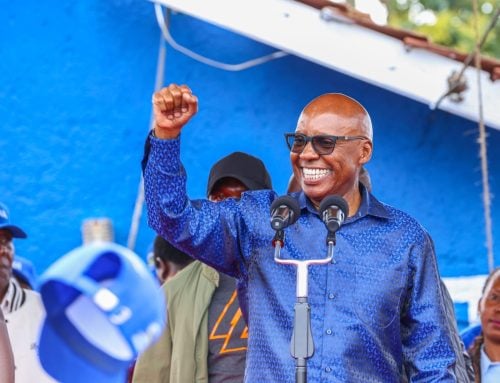
Wanjigi said no Kenyan should lose their life for exercising a constitutional right.
“As a nation, we must declare unequivocally, no Kenyan should lose their life for exercising a constitutional right,” he stated.
He condemned police brutality, extrajudicial killings and enforced disappearances, saying security agencies must protect citizens instead of intimidating them.
“The National Police Service exists to protect life and property, not to suppress legitimate democratic expression,” Wanjigi added.
His statement came as Nairobi experienced heavy security deployment during the June 25 anniversary demonstrations.
Heavy security across Nairobi
Police barricaded roads leading to Parliament Buildings and several sections of Nairobi’s Central Business District. Barbed wire surrounded Parliament while anti-riot police officers guarded key government installations.
Security officers also mounted roadblocks along Waiyaki Way, Mombasa Road, Thika Road and Ngong Road as authorities attempted to stop protesters from accessing the city centre.
The security measures revived memories of the dramatic events of June 25, 2024, when protesters overpowered police and entered Parliament after lawmakers passed the Finance Bill.
Parts of Parliament were vandalised and sections of the building were set on fire as MPs fled through underground tunnels connecting Parliament Buildings and Bunge Towers.
Interior Cabinet Secretary Kipchumba Murkomen defended the security deployment and said police had instructions to protect peaceful protesters while taking action against criminals and violent groups.
“For those who will engage in peaceful protests tomorrow, police are ready to give you security and protection so that you can have a peaceful march,” Murkomen said during a security briefing on June 24, 2026.
Despite those assurances, many businesses in Nairobi’s CBD remained closed while commuters struggled to enter the city because of blocked roads and heightened security checks.
Media freedom under threat
Wanjigi also used his statement to defend media freedom amid the growing dispute between President Ruto and Standard Media Group.
The president recently accused the media house of publishing negative headlines to undermine his administration. The dispute sparked debate over press freedom and criticism of the government’s relationship with independent media.
In his statement, Wanjigi cited Article 34 of the Constitution of Kenya, which guarantees freedom and independence for electronic, print and digital media.
“Media freedom is a right to be exercised, not to be begged for,” Wanjigi said.
He accused the government of attempting to silence critical journalism.
“The attacks by Ruto on Standard Group for speaking truth to power are retrogressive, taking us back to the dark days which we fiercely fought,” he stated.
Article 34 of the Constitution bars the state from interfering with editorial independence or penalising journalists for their reporting. Constitutional experts have often described the provision as one of the strongest protections for media freedom in Kenya’s democratic system.
Wanjigi argued that respecting media freedom remains essential for accountability and democracy.
“The freedoms we enjoy today, we shall religiously guard and as a democracy we shall jealously guard media freedom as true patriots,” he added.
The Safina Party leader called for full protection of the constitutional right to peaceful assembly, demonstrations and freedom of expression.
He also demanded reforms within the security sector to prevent future human rights abuses and ensure accountability among police officers.
Wanjigi urged Kenyans to remain vigilant in defending the Constitution and democratic freedoms.
“Democracy is strengthened not by fear and repression, but by accountability and respect for the rule of law,” he stated.
He expressed solidarity with families mourning loved ones killed during the protests and those still recovering from injuries and trauma linked to the demonstrations.
“To the families who continue to mourn, we stand with you. To those still nursing physical and emotional wounds, we stand with you,” Wanjigi said.
The June 25 anniversary has once again highlighted unresolved questions about police accountability, protest rights and government response to dissent in Kenya.
The Gen Z protests reshaped public debate around taxation, governance and economic hardship. They also demonstrated the growing political influence of digitally organised youth movements.
Two years later, the anniversary continues to draw emotional reactions across the country as families remember victims and activists demand justice.
Wanjigi said the sacrifices made during the protests should never be forgotten.
“Their voices may have been silenced, but their cause lives on,” he stated.