Advertisement
Israel and Hezbollah continue strikes despite ceasefire agreement
Saturday 20th June, 2026 02:59 PM|

Several people have reportedly been killed by Israeli airstrikes on southern Lebanon, less than 24 hours after a new ceasefire between Israel and Hezbollah was announced.
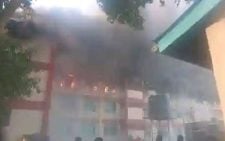
Officials in the Nabatieh district said attacks had killed 16 people and injured at least a dozen more, after Israeli warplanes, drones, and artillery targeted numerous areas.
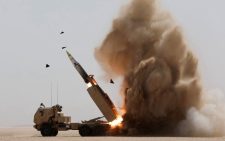
The Israeli military said it struck “Hezbollah terrorist targets” after the group fired over 50 projectiles at Israeli forces in the region.
Washington has criticised Israel’s ongoing operations in Lebanon, which was drawn into the US-Iran war when Hezbollah launched rockets into Israel in retaliation for a strike that killed Iran’s supreme leader.
You Might Also Like

Washington also fears that the continuing tensions between Israel and Lebanon could undermine the US peace deal with Iran, which includes a commitment to end fighting on “all fronts” including Lebanon.
US envoy, Steve Witkoff, is reported to be heading to Switzerland for initial talks with Iran to help cement the agreement.
While it may have helped prevent a wider regional escalation for the time being, the deal leaves unresolved the central disputes at the heart of the conflict, including Israel’s military presence in southern Lebanon and the future of Hezbollah’s weapons.
A Hezbollah official told the BBC it does not recognise the ceasefire that was announced by US officials on Friday afternoon, and it rejects the Israeli objective to operate freely inside Lebanon.
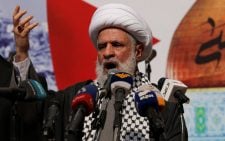
Senior Hezbollah official Hassan Fadlallah said his group had the right to respond to Israeli attacks.
“What concerns us is that the enemy fully and comprehensively respects the ceasefire, and doesn’t attempt to attack our country and villages or seek to occupy any new position,” he said, as quoted in Lebanon’s state-run National News Agency (NNA).
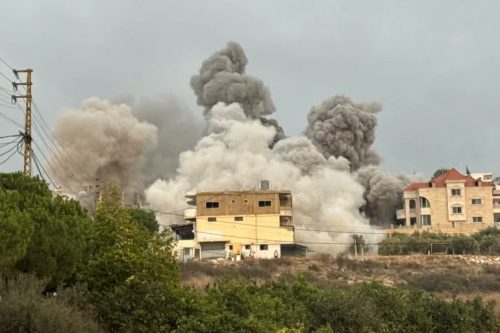
Ceasefire strains persist again
Previous ceasefires between Israel and Hezbollah have still seen near-daily cross-border strikes, with both sides accusing each other of violating the agreement.
Before Friday’s ceasefire was announced, Israel said it had no intention of withdrawing its forces from Lebanon and had insisted that its conflict with Hezbollah was separate from the war on Iran.
Earlier on Friday Lebanon’s health ministry said 47 people were killed and 97 wounded in Israeli air strikes, while the Israeli military said four of its soldiers were also killed.
Those strikes came a day after the US and Iranian presidents signed an initial peace deal aiming to end the war, including in Lebanon, with immediate effect.
The two countries first agreed to a ceasefire in April, but this failed to stop the fighting. Prime Minister Benjamin Netanyahu ordered the Israeli military to intensify its strikes on Hezbollah and advance deeper into Lebanon, after Hezbollah struck communities in northern Israel with drone and rocket attacks.
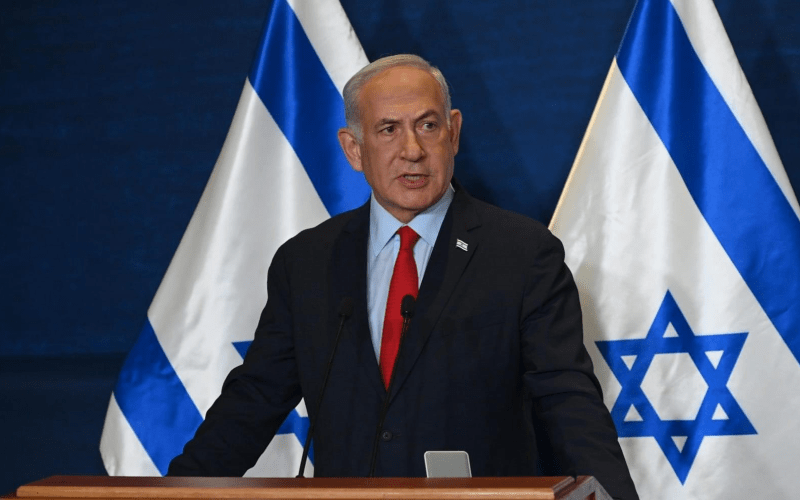
Ceasefire commitments have been repeatedly renewed since then, but followed by airstrikes and attacks from both sides.
Netanyahu has been under domestic pressure to continue military action against Hezbollah, an Iran-backed Shia Muslim political and military group in Lebanon.
Hezbollah has vowed to continue its attacks while Israel’s occupation of southern Lebanon persists.
Earlier this week, the White House criticised the Israeli government’s military operation in Lebanon, saying it risks scuppering the peace deal. But speaking on Friday as he unveiled a new Air Force One jet, President Donald Trump praised Netanyahu, calling him a “warrior”.
Lebanon was drawn into this conflict in march, when Hezbollah launched rockets and drones into Israel. In response, Israel launched a bombing campaign across Lebanon. It is occupying around 5% of the country’s territory in the south, with the aim of driving back Hezbollah fighters from its northern border.
Around a million people remain displaced, while dozens of communities in the south have been completely destroyed.
Author
Latest News





Advertisement
More on News