IRC urges swift issuance of IDs to support refugee rights
By Aloys Michael, July 27, 2025The International Rescue Committee (IRC) has intensified its appeal for enhanced access to identity cards for refugees, as the government advances efforts to integrate them into society.
Speaking during a refugee leaders’ consultative meeting in Nairobi on Sunday, 27 July 2025, Irene Shiundu, IRC’s regional policy and advocacy advisor, emphasised that refugee identity cards are essential for accessing vital services such as healthcare, education, legal aid, and employment opportunities.
Currently, the government provides the refugee ID, but according to Shiundu, it is very hard to get.
“The process has many bottlenecks. Those who have been able to access it have done so with the help of human rights organisations, and many have given up along the way,” she said.
With the refugee ID, they will be able to get the KRA PIN, Social Health Authority health cover, travel documents, and legal services.
Shiundu said they want the government to come up with a step-by-step process that refugees need to follow to help them get the documents easily.
“At the moment, some are accessing these services using the refugee IDs. But even those who have them are following a very strenuous process, making many give up,” Shiundu remarked.
The IRC, which has been aiding people affected by humanitarian crises since its founding in 1933 by Albert Einstein, currently operates in over 40 countries worldwide. Its push for easier access to refugee documentation aligns with its broader mission to help people survive, recover, and rebuild their lives with dignity.
Speaking at the event, Fatima Ali, a refugee from Daadab, said many youths have missed employment and scholarship opportunities due to a lack of documents.
“Without this document, they cannot apply for scholarship opportunities and cannot even interact with the host communities,” she said.
Ali said some refugees are also unable to access some services issued by UNHCR due to a lack of documentation.
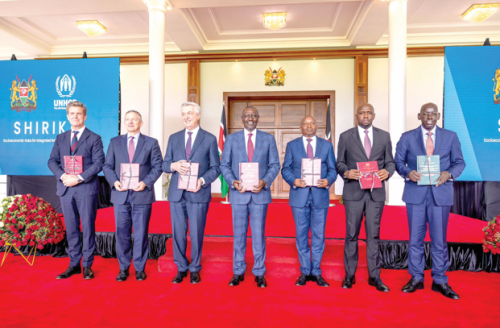
In March 2025, President William Ruto launched the Shirika Plan, which seeks to devise a plan to accommodate the refugees within communities.
The plan seemingly borrows from Poland’s way of hosting refugees.
“The Shirika Plan is our bold, homegrown solution that amplifies the African Union’s call for African solutions to not only Africa’s problems but also global challenges as well,” Ruto said during the launch.
“The plan’s strategy to transform refugee camps into integrated settlements gives inclusion a new expression by promoting the creation of opportunity in a manner that intentionally benefits refugees and host communities alike.”
He said the new plan fulfilled the government’s strategy to include refugees in county development plans by integrating them into the education, healthcare, and financial systems.
“As I speak to you, more than 70,000 refugees are enrolled for universal health coverage under the Social Health Insurance Fund, while IDs for refugees are recognised by the Integrated Population Registration System,” the president noted.