Advertisement
Iran races to Turkey talks as Trump threatens military action
Friday 30th January, 2026 08:21 AM|
Iran’s foreign minister, Abbas Araghchi, will travel to Ankara for talks aimed at preventing a US attack, as Turkish diplomats seek to convince Tehran it must offer concessions over its nuclear programme if it is to avert a potentially devastating conflict.
Turkey’s president, Recep Tayyip Erdoğan, proposed a video conference between Donald Trump and his Iranian counterpart, Masoud Pezeshkian – the kind of high-wire diplomacy that may appeal to the US leader, but would be anathema to circumspect Iranian diplomats. No formal direct talks have been held between the two countries for a decade.
Araghchi’s visit on Friday comes against the backdrop of urgent international diplomacy and increasingly aggressive threats from both sides. Senior defence and intelligence officials from Israel and Saudi Arabia were also in Washington for talks on Iran this week, Axios reported on Thursday.
The US defence secretary, Pete Hegseth, said at a cabinet meeting on Thursday that his department would be able to deliver on any military instructions given by Trump. “They [Iran] have all the options to make a deal,” he said. “They should not pursue nuclear capabilities. And we will be prepared to deliver whatever this president expects.”
You Might Also Like
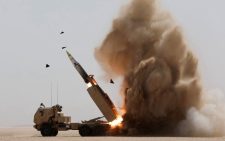
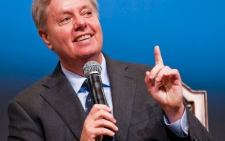
Trump has warned Iran that time is running out, vowing that any US attack would be violent and far more extensive than the US intervention in Venezuela.
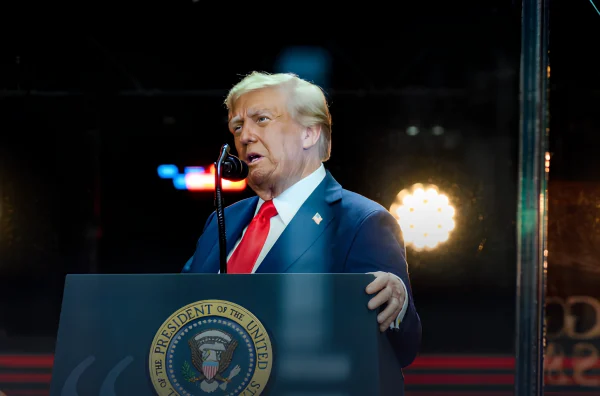
Speaking on Thursday night at the Kennedy Centre, Trump struck a more conciliatory tone, saying he was planning to talk to Iran.
“We have a lot of very big, very powerful ships sailing to Iran right now, and it would be great if we didn’t have to use them.”
Iran has remained defiant, with army chief Maj Gen Amir Hatami announcing that since the 12-day war in June, Iran has revised tactics and built 1,000 sea and land-based drones. He said the drones and Iran’s extensive ballistic missile arsenal could provide a crushing response to any attack. Iran’s greatest military weakness is its air defences.
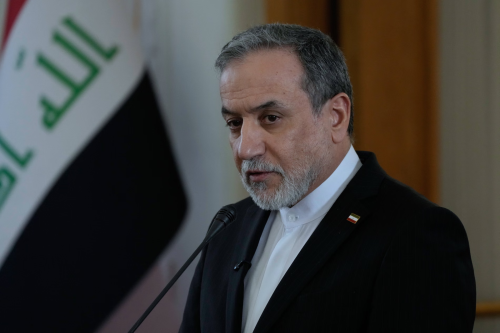
Marco Rubio, the US secretary of state, said on Wednesday that about 30,000 US military personnel were “within the reach of an array of thousands of Iranian one-way UAVs and Iranian short-range ballistic missiles”.
A senior Iranian official told Reuters that Iran was “preparing itself for a military confrontation, while at the same time making use of diplomatic channels”.
The Kremlin urged both sides to recognise there was still time for diplomacy, but Turkey appears to have taken up the mantle of the main mediator, as an increasingly apprehensive Middle East eyes a looming conflict that could easily spread across the region.
Inside Iran, those voices that have called for authorities to make concessions are being drowned out in an increasingly polarised society, in which one section is demanding the leadership stand up to America, and another is intent on provoking the regime’s collapse.
In an attempt to bind a wounded society back together, Pezeshkian has acknowledged the anger over the suppression of the protests by saying a full list of those killed in the ensuing government crackdown will be published in conjunction with grieving families. But such is the current level of distrust inside Iran, and the power of the security services, that it is doubtful Pezeshkian will be able to convince Iranians or international observers that the death toll was not in the tens of thousands.
US administration officials have insisted that Iran fully understood Washington’s specific demands concerning the handover of its highly enriched uranium stockpile to a third party, an end to domestic uranium enrichment, limits on its missile programme and an end to support for proxy groups. All four of these demands will be hard for Iran to accept.
Speaking to the media Turkey’s foreign minister, Hakan Fidan, said: “It is wrong to attack Iran. It is wrong to start the war again. Iran is ready to negotiate in the nuclear file.”
He admitted Iran faced challenges at the bargaining table. “It might seem humiliating for them. It will be very difficult to explain not only to themselves but also to the leadership. So if we can make things better tolerated, I think it will help,” he said.
Fidan argued Iran also had to present a new face to the Middle East, saying he had been “very frank” with the Iranians that they “need to create trust in the region [and] they need to pay attention to how they are perceived by the regional countries”.
Fidan met the US ambassador to Ankara and special representative for Syria, Tom Barrack, on Thursday.
Author
Latest News





Advertisement
More on News