Interior PS Omollo launches private security training institute in Kisumu
By Kepher Otieno, August 12, 2023PS Internal Security Raymond Omollo has launched the first Private Security Training Institute in Kisumu.
He declared that all private security firms in the country must be registered or be denied operating licenses.
“The guards must also be retrained in paramilitary skills which will be standardized, in conformity with the law and global security guards operating standards,” he said.
Provision of PRSA
He explained that these provisions were in line with the Private Security Regulatory Authority Act,(PRSA), 2016, which is now being actualized by the government.
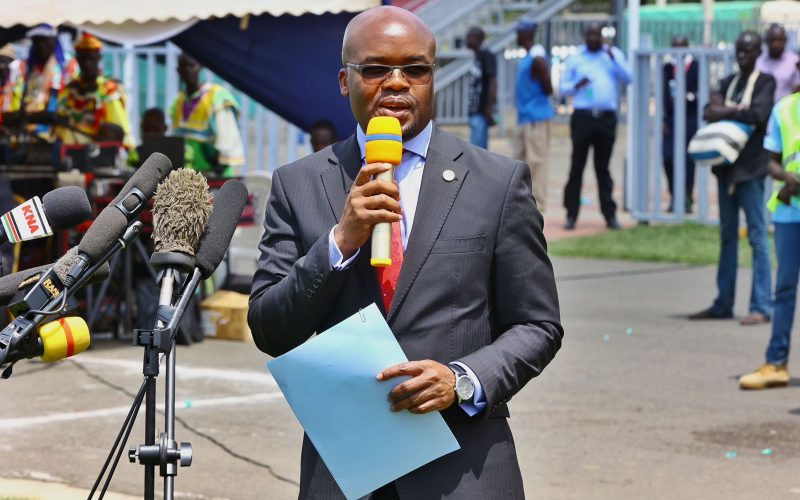
Omollo was speaking during the pass-out parade for the first 200 beneficiaries of the guards retraining program at the newly commissioned Cute and Mohen (C and M), a private security training institute in Kisumu.
According to the PSRA Act of 2016, any person or firm offering private security services shall be registered by the Authority in accordance with this Act. (1).
He acknowledged the role that the private Security firms played in building the national economy but said they must be duly registered to ensure sanity in the sector.
The PRSA sector, he noted, was playing a pivotal complementary security role to the police force.
The PS disclosed that as of July last year, there were about 700,000 private security guards in close to 2,000 companies across the country.
The Private Security firms, he said, were contributing close to Sh100 billion each financial year, a significant amount that showed this was a productive service sector.
“The industry currently employs close to one million people and records an annual revenue of KSh100 billion, and this highlights how critical the sector is for the economy in terms of job creation and contribution to Kenya’s GDP growth,” Omollo said.
However, he noted that citizens, entities, businesses, and even organizations in the country need to be human enough to safeguard private security guard welfare, particularly in terms of their remuneration and working conditions, without berating their work or job.
“Fair compensation will not only demonstrate our collective respect for their dedication but also foster a motivated and committed security personnel,” the PS said.
The PS said they had initiated the process of issuing security force numbers to private security officers who have successfully completed training in accordance with the private security training curriculum.
Omollo said: ” The trained guards will be issued with a special forces code that they will be required to produce whenever seeking employment in the security industry.”
The special code is aimed at closely monitoring the activities of the guards and ensuring their conformity with law and order.
“This number will serve as a distinctive identifier, designed to streamline the recognition of private security officers by the general public and also to facilitate the government’s ability to monitor and manage licensed private security personnel effectively, ” Omollo said.
He affirmed that the standardized training for private security guards and enhancement of regulations and standards within this sector will not only ensure the safety and well-being of our citizens but also contribute to the stability and resilience of our nation.
“Today we witness yet another huge step forward in our reforms agenda for the private security sector, which remains a critical cog in the larger national security framework,” Omollo said.
He asserted: “This essential step will not only foster a higher level of professionalism within the industry but also provide a structured framework for monitoring and regulating their activities while on duty.”
Omollo further said:” We recognize that private security guards can be cogent partners for the maintenance of law and order. That is why we have come out strongly to prescribe this move to better track, evaluate, and elevate the quality of their services within our communities.”
He endorsed C and M Private Security Training Institute in Kisumu County as the first accredited Private Security Training Institution in the Lake Region.
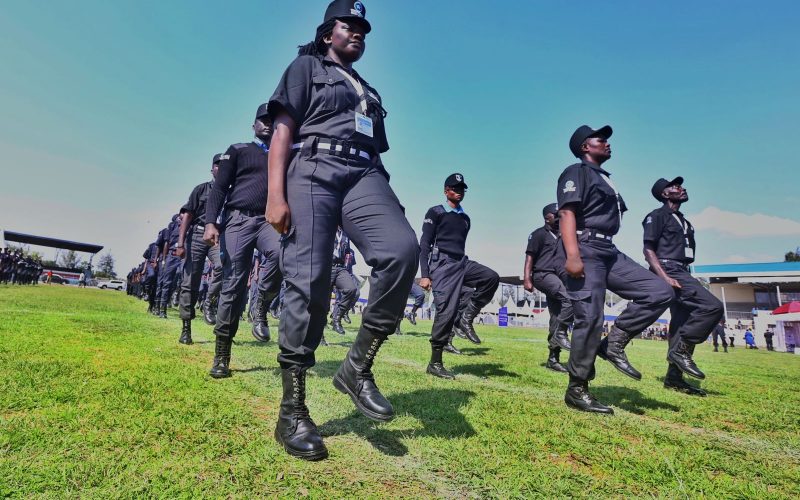
“C and M not only meets the growing demand for well-trained professionals but also raises the bar by ensuring the highest level of professionalism, competence, and integrity in the private security sector. We expect private security training institutions to meet national training standards and international best practices in order to generate skilled labour not just for the Kenyan market but also for the global market,” Omollo claimed.
He invited more local and foreign investors, interested in the sector to come and help improve the foundation of the local PRSA sector and bolster its capacity-building skills.
PRSA Director General
The PS spoke as the Director General of PRSA Fazul Mohammed assured the guards that after the retraining they would push for their wages to increase.
“Your wages will not be minimal but it will be a living wage because that will take into consideration the key roles you play including being risk averse to look after people’s valuables or enterprises worth millions and even guarding personalities,” Mohammed said.
Currently, over 1800 security firms operating in Kenya have been locked out in a new registration exercise that has rendered hundreds of guards jobless.
In a recent gazette notice, Mohamed noted that only 183 firms were authorized to operate in the country having met the PRSA threshold. The rest were yet to comply.
The government has been trying to regulate the sector, even suggesting setting up a minimum wage for guards at Sh27,000 a month, a proposal still under review.
This is because some of the industry players have been paying the guards what is not commensurate to their workloads and the risks thereto that come with their work.
PRSA noted that when the guards are charged with highly risky tasks and not paid well, yet looking after valuable property the risks become even higher than their work.
The new training model, the Kisumu-based PRSA Director Elizabeth Ayoo and the Principal Michael Baraza said was tailored made to make sure that the guards are equipped with all round skills.
This includes and is not limited to teamwork, emergency response and coordination mechanisms, discipline, leadership skills and organisation, effective communication systems, and metal detection methods, among others.
Baraza, who is a former Nyanza Regional DCI boss is now the Head of the Kisumu-based C and M, training institute, riding on his treasury of security skills.
He said nearly all security firms in Kisumu have applied or seconded their staff and guards for the retraining to allow them to be certified and given unique force codes.
“We have a standard curriculum developed by PSRA. The training is condensed to cover at least 3 to 4 weeks, maximum,” Baraza said.
Ayoo lauded the State for coming up with control and regulatory mechanisms akin to Insurance Regulatory Authority(IRA), terming it good.