Advertisement
Inside Murkomen’s push for a new framework to regulate public protests
Monday 15th June, 2026 02:19 PM|

Interior Cabinet Secretary Kipchumba Murkomen has revealed that the government is considering a new framework to regulate public demonstrations in Kenya, drawing lessons from policing models in the United States and the United Kingdom.
The proposed changes come amid growing debate over how authorities should manage public protests while protecting constitutional freedoms and maintaining public order.
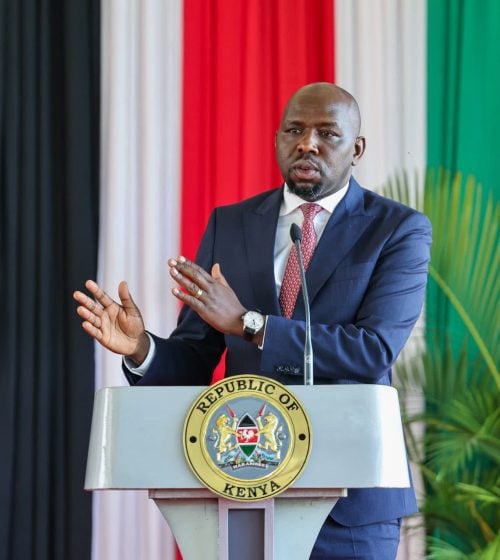
Speaking at State House on Monday, June 15, 2026, during the presentation of a report on the Framework for Reparations for Victims of Human Rights Violations, Murkomen said the government was committed to upholding the right to peaceful assembly but wanted clearer mechanisms to deal with criminal elements who infiltrate demonstrations.
“The right to assemble, demonstrate, and picket must be implemented fully as enacted in the Constitution. However, it is important we have a clear framework that allows Kenyans to enjoy their right, and we can be able to differentiate goons from those enjoying this right,” the CS said.
You Might Also Like


His remarks come at a time when Kenya continues to grapple with questions surrounding the management of protests, particularly following recent demonstrations that have at times descended into clashes, property destruction, and allegations of excessive use of force by security agencies.
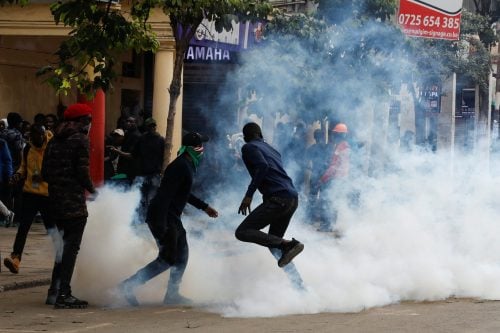
PHOTO/@channelafrica1/X
Article 37 of the Constitution guarantees every Kenyan the right to assemble, demonstrate, picket and present petitions to public authorities peacefully and unarmed.
However, the government argues that existing laws do not adequately address situations where criminal actors take advantage of protests to engage in violence, looting, or attacks on security personnel.
Murkomen disclosed that the ministry’s thinking has been influenced by benchmarking visits to New York and London, where Kenyan officials studied how authorities balance democratic freedoms with public safety.
According to the CS, authorities in the United Kingdom take a firm stance against individuals who engage in criminal conduct during demonstrations, particularly those found carrying weapons.
“If they see any demonstrator carrying any weapon, they take the severest measures against those criminals,” he stated.
The Interior Ministry is now exploring how similar principles could be incorporated into Kenya’s legal and operational framework without infringing on constitutional rights.
Beyond crowd management, Murkomen said the government was also impressed by the technological capabilities deployed by law enforcement agencies in the US and UK.

These lessons are expected to inform the rollout of the Nairobi Metropolitan Police Unit (NMPU), a new security initiative aimed at strengthening policing within the capital region.
One of the areas under consideration is the New York Police Department’s (NYPD) use of real-time intelligence and data-driven policing.
The NYPD operates command centres that integrate information from surveillance systems, emergency calls, field reports and criminal databases, allowing officers to respond quickly and deploy resources efficiently.
The push for reforms follows the government’s recent announcement that it has begun reviewing laws governing demonstrations.
Murkomen says the review seeks to strike a balance between safeguarding constitutional freedoms and protecting lives, businesses and public infrastructure.
If adopted, the proposed framework could significantly reshape how protests are organised and policed in Kenya, setting the stage for renewed debate over the delicate balance between civil liberties and public security.
Author
Latest News








Advertisement
More on News