IEBC holds virtual meeting to address low diaspora voter turnout
By Arnold Ngure, August 8, 2025The Independent Electoral and Boundaries Commission (IEBC) has held a virtual meeting with the Diaspora Technical Working Group (DTWG) to address issues of low voter turnout abroad.
In a statement on Friday, August 8, 2025, IEBC commissioner Alutalala Mukhwana, who is in charge of the voter education, partnerships, communication, and stakeholder engagement committee, stated that the engagements deeply affect the future of the country.
“IEBC commission led by commissioner Mukhwana Alutalala, Chairperson of the Voter Education, Partnerships, Communication and Stakeholder Engagement Committee (VEPCSEC), today held a virtual consultative meeting with the Diaspora Technical Working Group (DTWG) to explore strategies for enhancing diaspora participation in the 2027 General Election,” the statement reads.
Collaborative approach
Alutalala emphasized the importance of a unified and collaborative approach to finding practical solutions to the challenges affecting diaspora voters.
“This is not just about the Commission or the diaspora – it’s about the country’s future,” he noted.
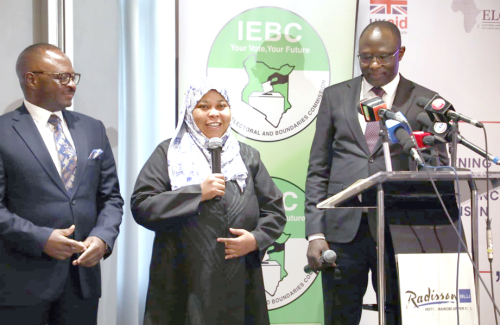
Danson Mukile, the Lead of DTWG, called for reforms, citing low diaspora turnout in past elections.
Mukile attributed the poor turnout to various legal and logistical challenges, including limited polling stations (which are restricted to embassies), restrictive registration requirements, and high travel costs due to the vast distances to embassies.
More polling stations abroad
To address these issues, several reforms were proposed, including expanding polling locations beyond Kenya’s missions abroad, deploying biometric registration systems abroad, intensifying civic education, and leveraging technology to reduce costs, particularly for diaspora voters in countries like the United States and Canada.
In the 2022 general elections, Raila Odinga got 3,727 diaspora votes compared to President William Ruto’s 2,190, out of the 10,443 registered diaspora voters across the United States, United Kingdom, UAE, Germany, Qatar, South Sudan, Tanzania, Uganda, Rwanda, Burundi, and South Africa.
With the elections two years away, the IEBC is rushing to engage all stakeholders and regain public trust in time for the general polls.
IEBC is also having a full in-tray, with pending by-elections necessitated by deaths, appointments, and nullified elections.