Advertisement
How Iran war strains US diplomacy, leaving Trump in limbo
Wednesday 04th March, 2026 12:12 PM|

The largest U.S. diplomatic drawdown in the Middle East since the Iraq War began more than two decades ago is creating an apparently unplanned-for crisis for the Trump administration as the United States and Israel strike Iran in a widening conflict.
The State Department has been forced to close several embassies to the public, shut down at least one consulate, order the departure of embassy staff and families from at least six nations, and advise Americans in 14 countries to leave the region immediately, despite the war closing major airports and causing widespread flight cancellations.
Nonetheless, the department said Tuesday that more than 9,000 Americans had safely returned from the Middle East since the weekend, many of them without government assistance, and that it was actively assisting those who have reached out for help, including by securing military aircraft and charter flights.
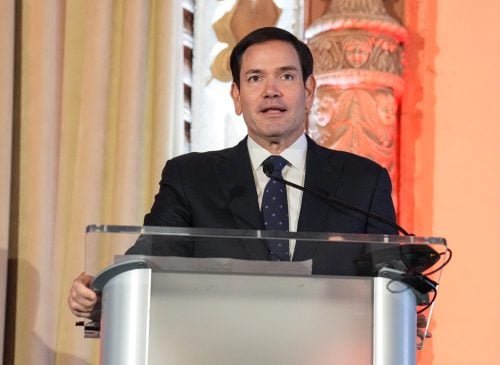
“We’ve had a couple instances in which we have planes in the air, and on the way, and unfortunately, the airspace gets closed, and they have to turn back around,” Secretary of State Marco Rubio told reporters.
You Might Also Like


The department has been in contact with nearly 3,000 Americans wanting to leave the region or seeking information about how to depart, Dylan Johnson, assistant secretary of state for public affairs, said on X.
Rubio, who spoke on Capitol Hill before briefing lawmakers on the latest developments, said 1,500 people had actually requested help in leaving.
Charter flights were being arranged from Jordan, Saudi Arabia and the United Arab Emirates. In countries where airports or airspace were closed, the department said, it is organising land travel to countries where flights are available, including Egypt and Oman.
Still, emergency reductions in embassy staffing and post closures since the strikes on Iran began on the weekend have put a severe strain on the ability to help U.S. citizens in need of assistance that might usually be considered routine.
Consular services are unavailable in many places, and the personnel reductions have limited crucial official engagements with allied and partner governments during the war, including in Bahrain, Jordan, Kuwait, Lebanon, Pakistan, Qatar and Saudi Arabia.
The biggest war after Iraq
The scale of the American drawdown in the region rivals, if not exceeds, what was done in the run-up to and the immediate aftermath of the Iraq invasion in 2003. Back then, the State Department reduced its staffing in more than a dozen countries and advised U.S. citizens to leave or seriously consider leaving countries throughout the Middle East, North Africa and South Asia from Morocco to Pakistan.
On Monday, Americans were told in a hastily drafted announcement posted on X to leave Bahrain, Egypt, Iran, Iraq, Israel, Jordan, Kuwait, Lebanon, Oman, Qatar, Saudi Arabia, Syria, the United Arab Emirates and Yemen, even though commercial flights and other transportation have been disrupted.
Author
Latest News








Advertisement
More on News